cross stitch, diy, how to, tutorials, Uncategorized

How to Frame Your Cross Stitch Projects

First of all, I’d like to thank everyone for your great support on my Love to Quilt cross stitch pattern! I’m happy to see that so many of you are excited about it.

Because I designed Love to Sew, Love to Quilt and a series of upcoming cross stitch projects to fit standard store-bought frames, I’m sharing this ‘how to’ as to eliminate the need for expensive custom framing. 🙂

This DIY tutorial will have you finishing projects in no time, in addition to showing off your work looking as if you had it professionally done.

On to the tutorial…

Before starting your cross stitch project: 1. Know the finished size of your project. 2. Determine the frame size ahead of time. 3. Make sure your Aida fabric is cut large enough for wrapping around the frame backing. For example, before beginning I knew my project would fit into a 3″ x 4″ frame.

First, I started with a piece of 14 count Aida fabric cut roughly at 5 1/4″ wide by 6″ tall. You’ll notice from the edges that I used a pinking rotary blade to reducing fraying, thus eliminating the need to use tape.

Once my project was stitched and pressed, I placed it over the cardboard backing to determine how much needed trimmed. I cut leaving a 1 ¾” border on each side which left enough to wrap it around the cardboard and stitch it snug.

The frame I purchased came with corrugated cardboard; it’s not strong enough for stretching so I cut a piece of heavier non-corrugated cardboard in its place. An important note here…make sure you cut the cardboard accurately. If not, your project won’t sit straight in the frame. I recommend using a rotary cutter.

Once the cardboard was cut, I noticed the ugly brown color was visible through the holes. Not wanting that, I glued a piece of white stock paper to the front for a more pleasing background.

If you want a lofty look, adhere interfacing according to manufacturer’s directions.

Once your cardboard is ready, lay out your project centered over it. I counted squares from top to bottom and side to side for centering accuracy. If your cross stitch is pretty large, counting may be difficult, measure instead.

Next, double-thread a needle, making sure it’s not too big for the holes in the fabric. Any thread will do; I used Aurifil 100% cotton. Once you have the fabric centered, start at the top inside edge of one folded side. Start stitching down about 4 squares from side to side, evenly working your way down the length of the project.

Avoid sewing through a fabric hole as they tend to pull (see where I did and how it pulled). It’s best to poke the needle through the center of a solid square as it’s tight and will hold firm.

I threaded my needle as long as I could without tangling, but I did run out and had to tie another section on (it can be seen in the photo). Tie the knot tightly to prevent slipping. Also, make sure the knot isn’t where you’ll have to pull it through the fabric (it won’t go). Be sure to pull each stitch fairly tight, as you want it taut.

Once the sides are complete, don’t knot your thread just yet. Put a few stitches in the to-be-folded-over section to help it stay in place, making it neater when folding later. You can see the stitches below.

Using the same method, connect the top and bottom.

It’s nearly done! You’ll see there’s a bit of pull on the center which is OK, it means it’s all tight enough.

The final step is to put a couple of tiny stitches on the sides. This helps to securely close the bottom and top section. Simply pick up a couple of threads from the fabric and tack them to a couple of threads on the side fabric. Do this for all 4 folded ends.

BEFORE STITCHING

AFTER STITCHING

That’s it, a professionally-looking framed project!

I purchased this frame at Michael’s. It measures 3″ x 4″ and is a perfect size and color. Because Love to Quilt is just a bit more tall than wide, a rectangular frame was a better choice than square.

I hope this helps you with your next cross stitch project, and hopefully saves you time and money, too. 😉

diy, fabric project, how to, sewing, tutorials, Uncategorized

Clothespin Bag Tutorial

I’d always loved hanging clothes outside while living in PA, but for the past 12 years I’ve really missed the crispness of line-dried clothes. Since a clothesline isn’t feasible where I’m at now, I purchased a drying rack instead.

Afterwards, I quickly discovered the need for a clothespin bag. I found a few tutorials, blended my favorite parts and made my own version.

Here’s what I did to make mine.

First of all, sizes can vary! Since I can’t dry a lot at once, I needed a smaller bag for fewer pins. Once you decide on bag size, choose your clothes hanger size. For a smaller bag, you’ll need a baby clothes hanger, for larger bag, an adult size hanger.

I had a wooden hanger that measured 12″ which was too big, so my husband cut it down to 9″, evenly taking pieces from each side.

For fabric, I used leftover backing yardage from my On Point Nine Patch quilt for the front and back. For the lining, I used red Shabby yardage by Riley Blake. Fat quarters will also work. Whatever you use, you’ll need 2 each of 2 coordinating fabrics.

To get started, on plain paper, trace your hanger around the top and mark the side, but add a bit more to the sides for some give (approximately 1/4″ per side). This will determine the top shape and width.

Decide your length. I made the length about an inch longer than the width, based on how many clothes pins I would need to fit inside. Add 1/2″ around all sides for seam allowance.

When determining the hole, think about your hand size and allow for pins in your hand to fit easily in and out. Place the hole about 2 1/2″ from the top and centered from side to side.

This is what my pattern looked like before cutting.

Before cutting fabric, cut out the hole on the pattern.

To make the front panel, place the front and lining pieces right sides together. Pin down the pattern using plenty of pins around all edges. Cut outside edges.

Draw a line on the fabric, tracing the circle (do not cut a hole in the fabric). Next, sew along the drawn circle line.

Once sewn, cut out the hole leaving a narrow seam allowance. Clip several small slits in the seam to help it lie flat.

Turn the two pieces right side out and press. Sew a 1/8″ top stitch around the circle.

To help keep the layers together, run a zigzag stitch around the entire outside edge. This will also help reduce fraying.

To make the back panel, place the back and lining pieces wrong sides together. Pin the pattern down then cut along the outside edges, ignoring the hole—don’t cut it out!

To complete the bag, place the front panel on the back panel with the outsides facing. Line up all sides, pin and sew a 1/2″ seam allowance.

Make sure to leave a small opening, approximately 1/2″ to 1″, at the top for the clothes hanger hook. The opening size will depend on the type of hanger. My thin metal hook required a smaller opening.

For extra reinforcement, backstitch on both sides of the hook opening and in the bottom corners.

Before turning right side out, cut off all four corners making sure to not cut any stitches. Once you turn the bag out, poke out corners with a blunted object. Press.

Lastly, insert your hanger.

My finished bag measures 9 1/2″ x 11″

Enjoy your cute clothespin bag and your freshly dried laundry!

diy, fabric project, home decor, sewing, Uncategorized

Easy Decorative Pillows

After years of the same 2 pillows on my bed, I decided to make new. As usual, using what I already have, I went through my storage drawers and found perfect fabric go-togethers for 3 new pillows.

I planned to make 2 – 16″ x 16″ squares pillows and 1 – 10″ x 18″ lumbar pillow to be placed in front.

For the lumbar pillow, I used a fat quarter from Art Gallery’s Paperie collection. This line is years out of print now, and I’ve had it for a very, very long time.
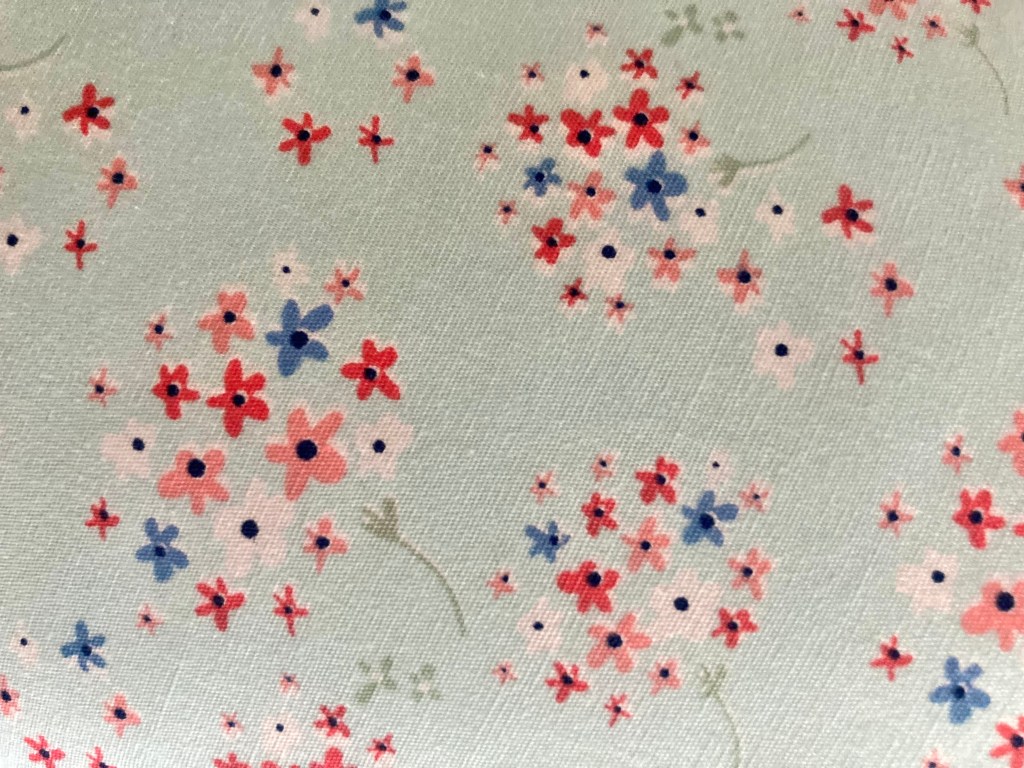
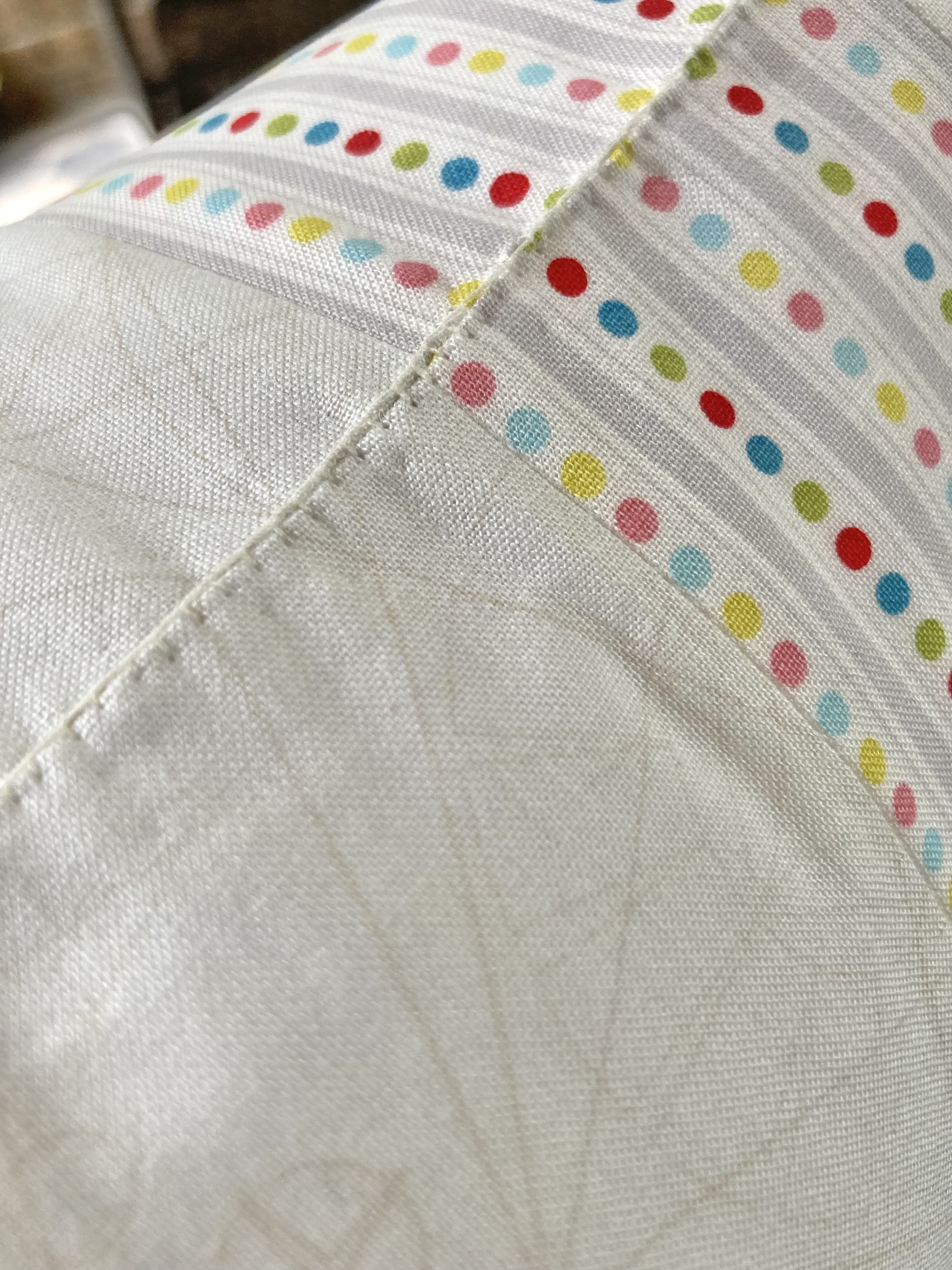
Also years ago, I was drawn to the Compass print from Andover Fabrics. I’d purchased around a yard so I chose that and a striped polka-dot print from I can’t remember who…
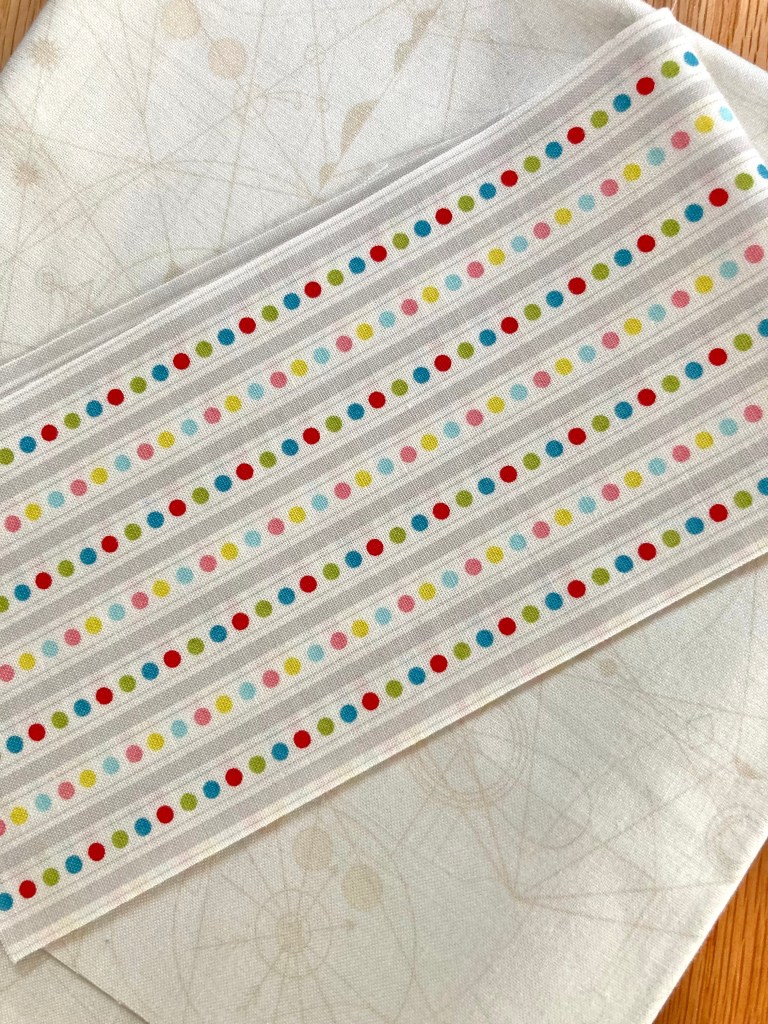
I didn’t sew in zippers, not for any reasons other than 1. they usually show on the bottom unless they’re invisible (don’t have any, don’t know how to sew them). 2. I made pillows recently and hand-sewed the bottom with an intricate blanket stitch which worked well. Additionally, they’re decorative so no need to remove covers for laundering.

For details on how I made the lumbar pillow, reference my Make Your Own Custom-Sized Tossed Pillows post.

For the 16″ pillows, I needed 4 sides which = 12 striped strips and 16 background strips total. I cut all strips 2 7/8″ x 16 1/2″. Using a 1/4″ seam allowance I made 4 panels.
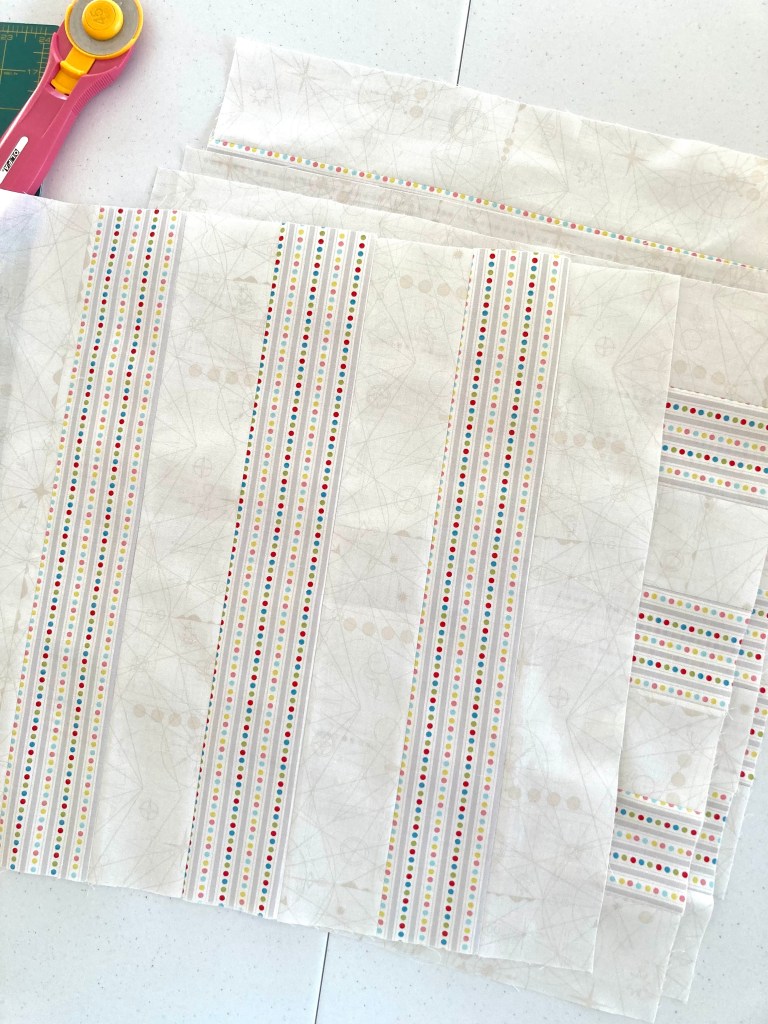
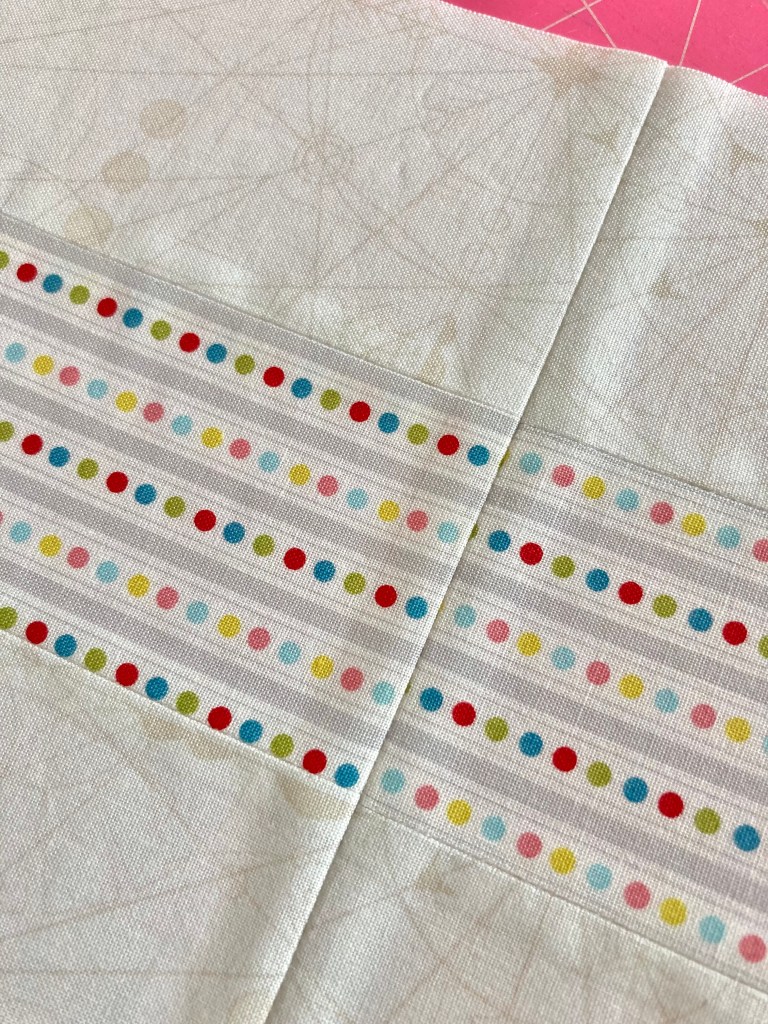
I sewed 2 panels together at the top using the side of my standard foot for the seam allowance. This method allowed me to line up my seams nicely.

To prevent seams from showing through to the front, also to give more loft, I ironed on Pellon Fusible Fleece 987 for a smooth finish.
After attaching the fusible fleece, I sewed the sides and a portion of the bottom, leaving a large enough hole to fit a 16″ square pillow form. I also cut away corners and pushed them out using a blunted stick.

Once the forms were inserted, I pressed a seam at the opening on both panels, pinned them closed, ran a basting stitch then removed pins.
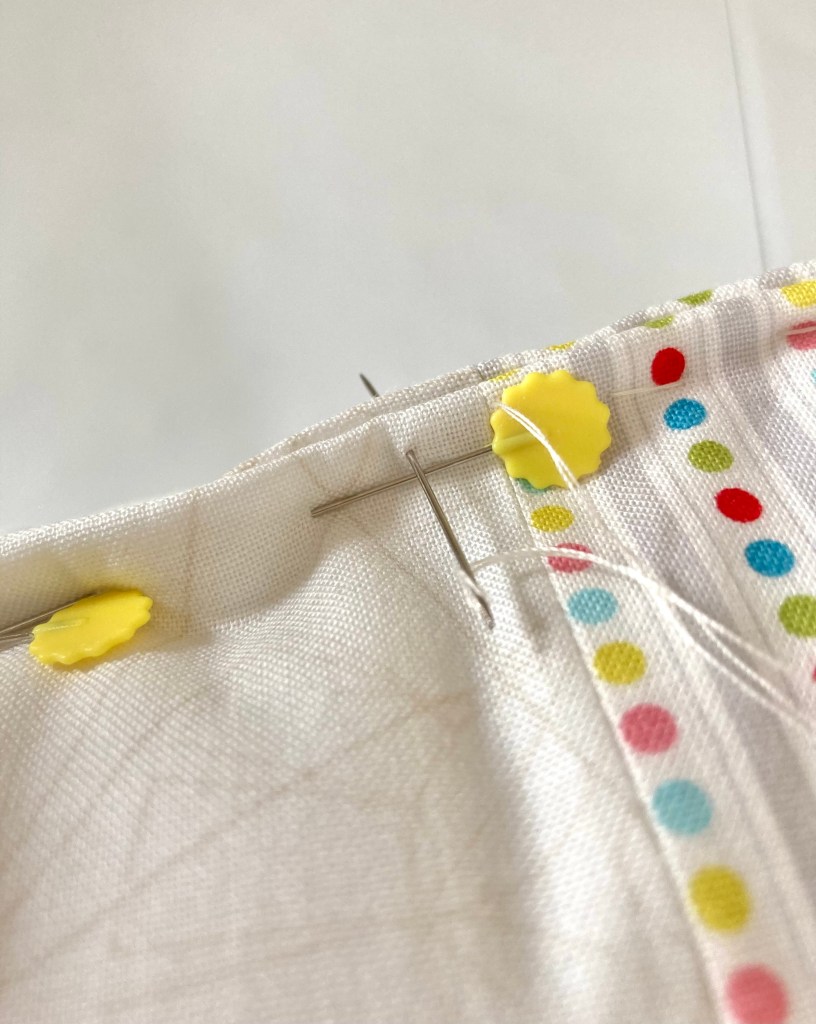
Remember this stuff?
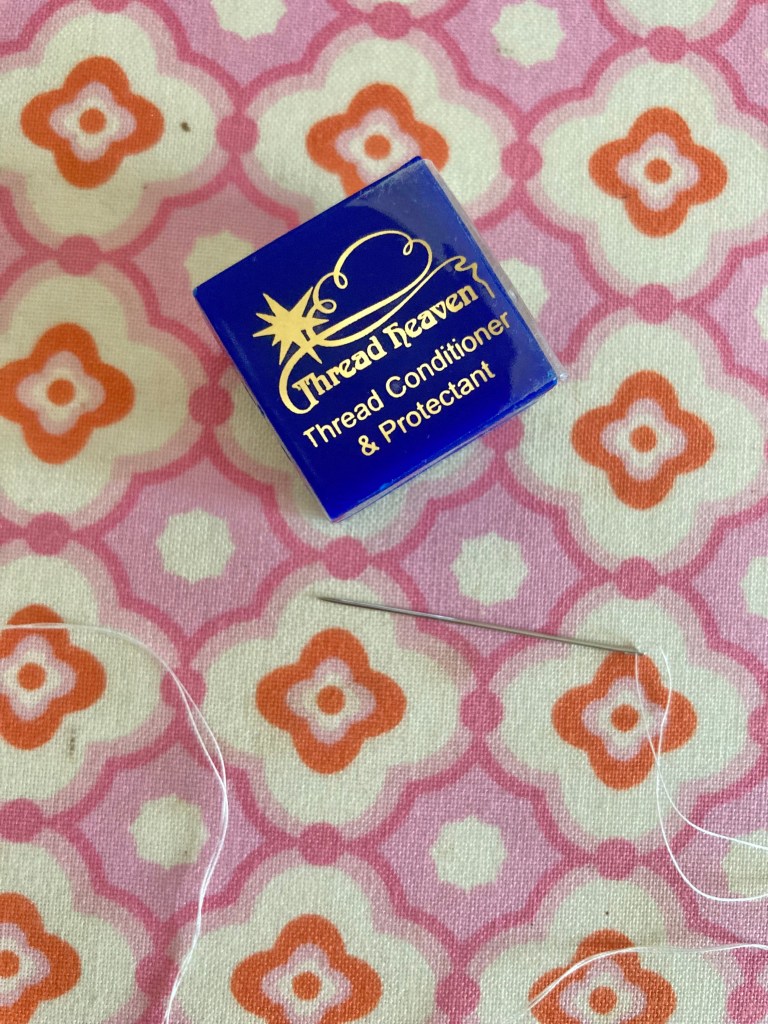
I don’t think it’s made anymore, but one box will last f o r e v e r. I’ve had this for several years and still have plenty left. Since I no longer sew bindings on by hand, I haven’t used it in a long time. But let me tell you, it works like a champ!

Here’s a look at my hand-sewn seams…
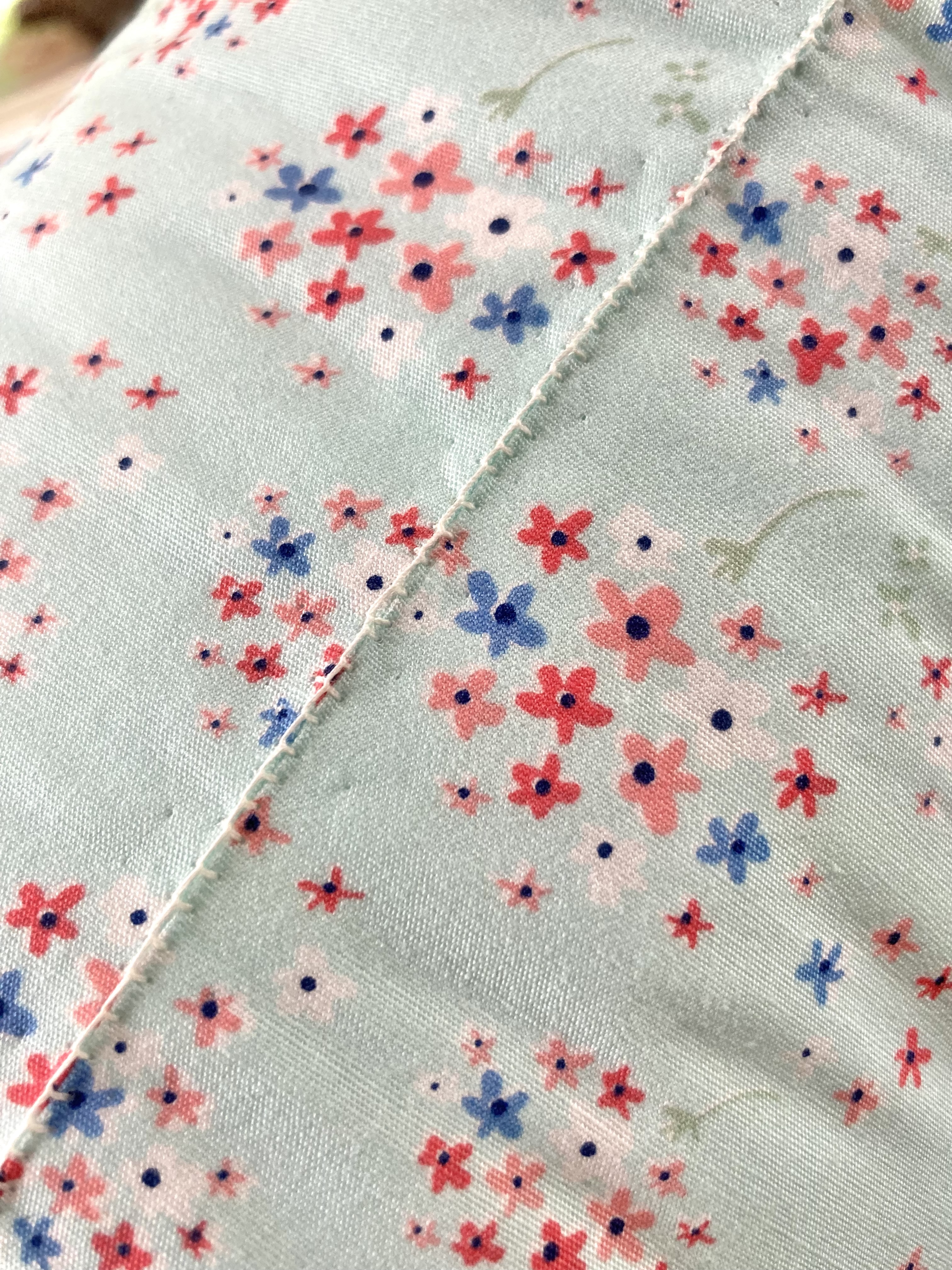
I was pretty pleased with the results. And it didn’t take all that long either.

Here’s a look at my finished pillows…
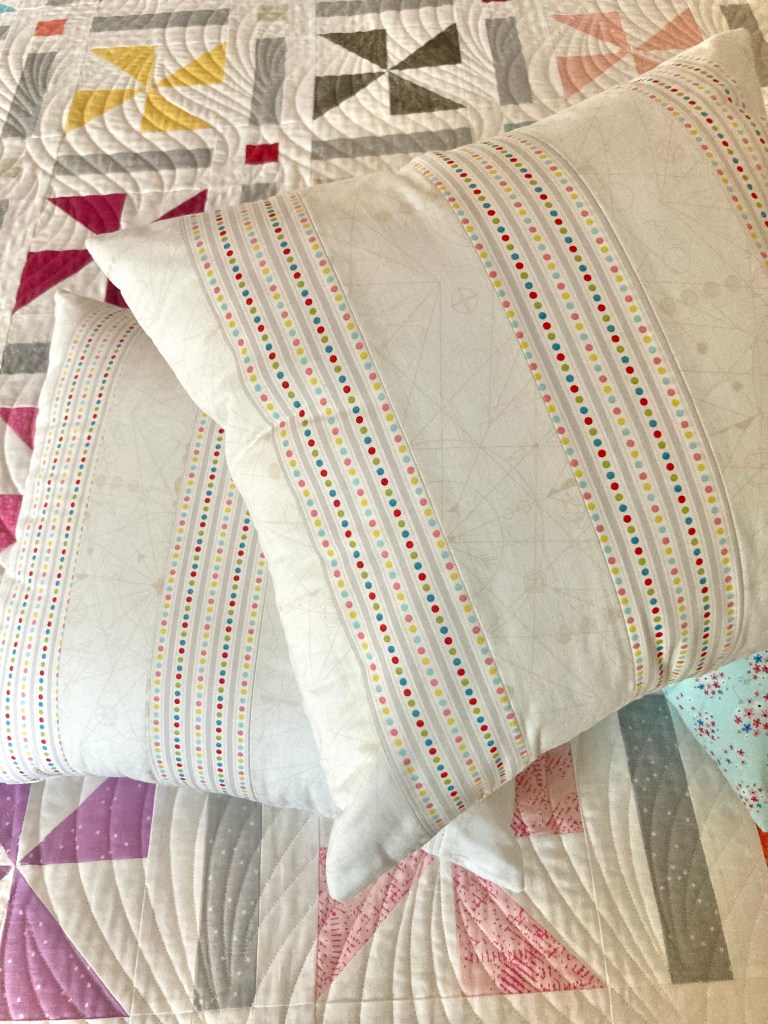
A fresh, crisp look. Love it.
diy, fabric project, tutorials, Uncategorized

Re-cover Your Portable Ironing Board

A few years ago I upcycled a plywood board that was used for delivering an irrigation pump. Not only was it the perfect size for a portable ironing board, it only needed two small holes plugged to ready it for its next purpose.

A new re-cover was long over due, so I got supplies ready and chose some pretty fabric for the top. Since winter is on the way, I decided to use a stylish pink, orange and white fabric to help brighten my space on darker days. Of course, this lovely print will do all year around.

The next step was to sew an approximate half inch seam along each edge.

Next, I removed the staples and took off the old top. I expected to see stained batting, but since I’ve stopped using a leaky iron it was still like new; I didn’t have to replace it (I did add an extra layer though).

After pressing my cover, my husband stapled on the batting then the fabric cover. After several staples and about ten minutes, I had a finished ironing board.

It’s so cheery!

To date, I have re-covered this board four times and each time it gives my sewing room a refreshed look. And it’s functional too. 😉

For more information on my exact process, here’s the blog post tutorial.

Note: I am not endorsed by any product I have photographed in this post; they are items I like, use and wanted to share information on.

diy, quilting, Uncategorized

Make Your Own Precuts from Scraps

I am certainly not one to waste fabric. As a person who loves fabric and knows all too well how expensive it is, I like to save what I can, even really small pieces. If you’re not one for waste either, here’s an easy tip on how you can get the most out of your fabric and money.

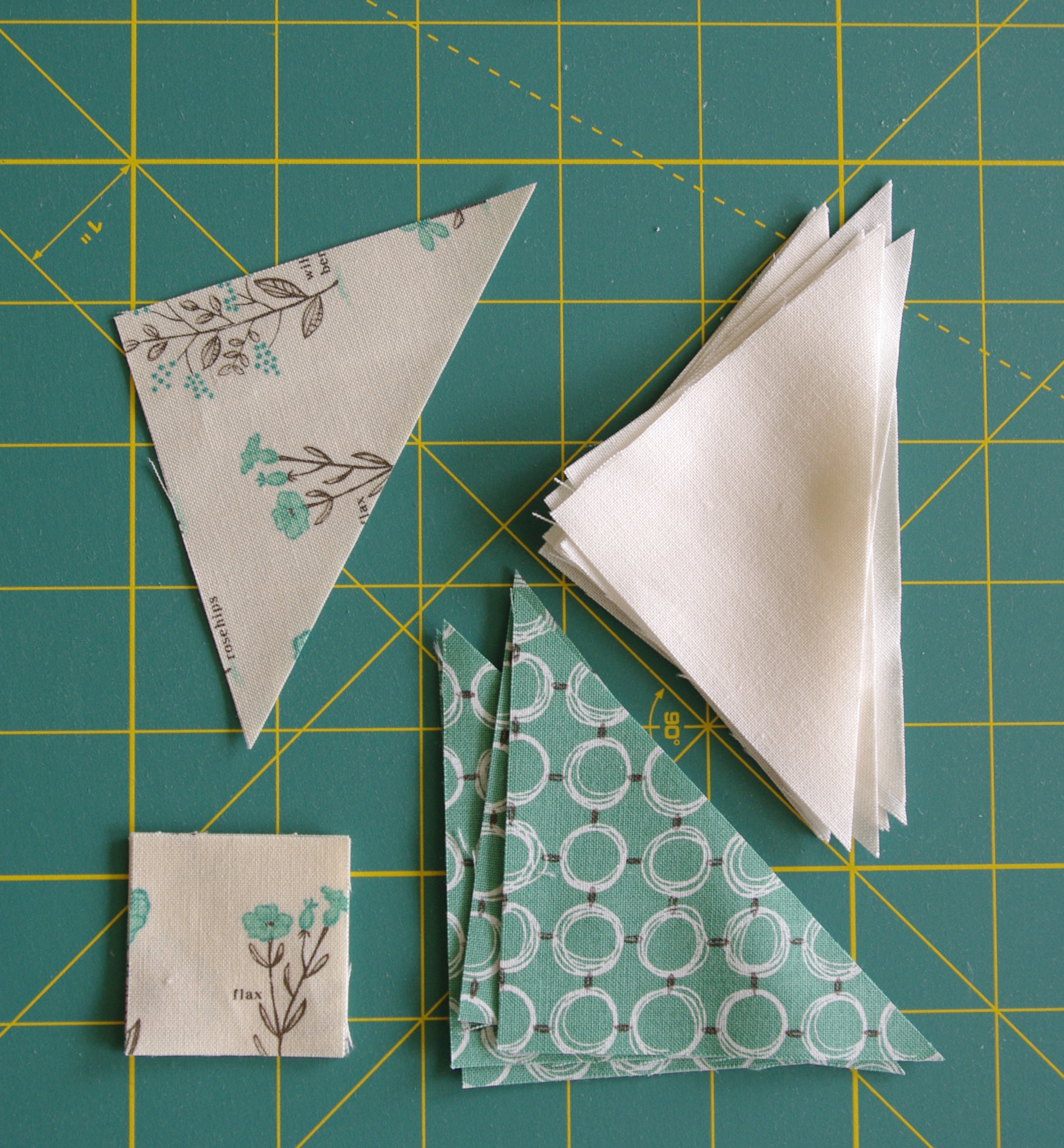
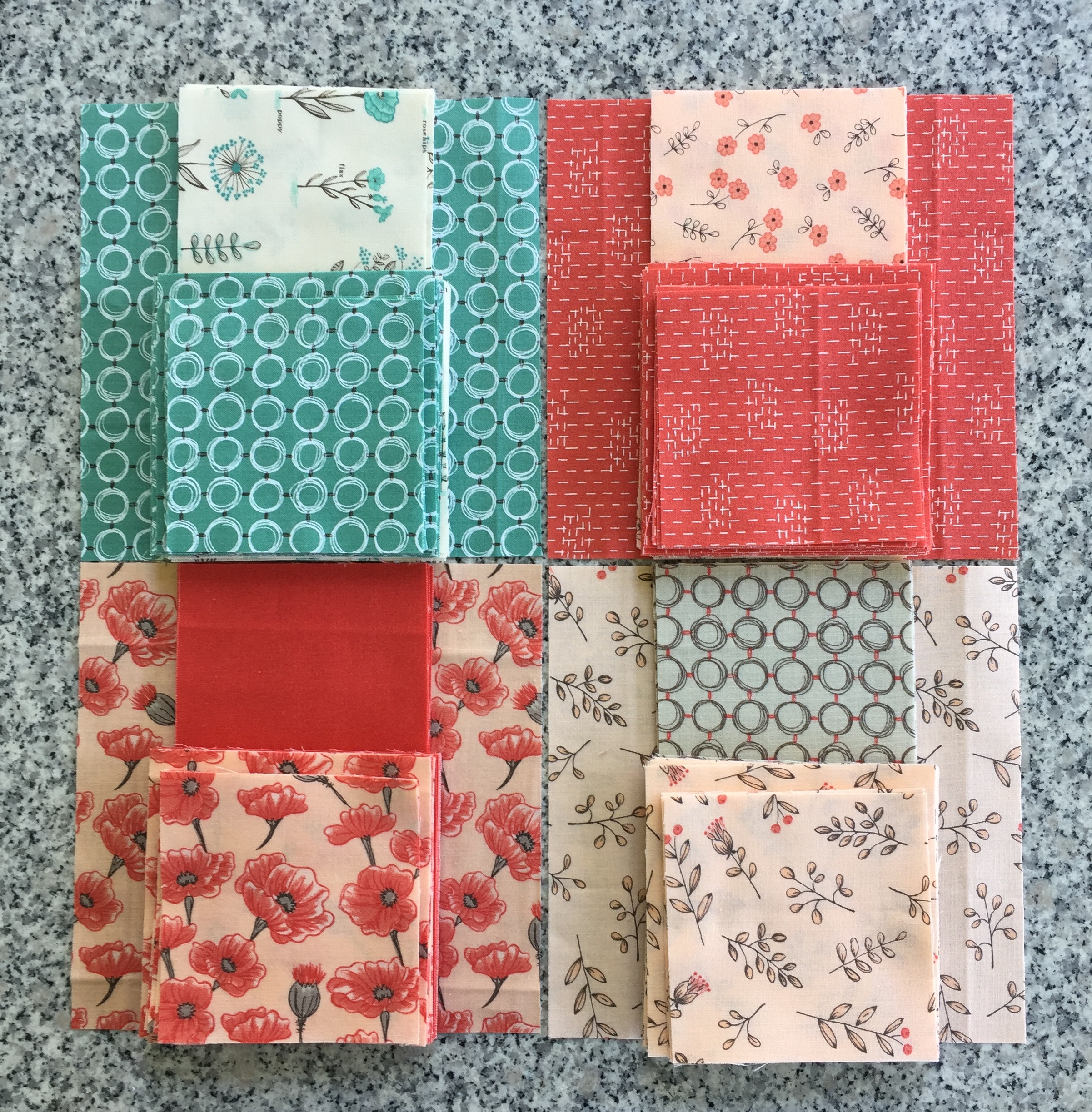
Le Pavot by Sandy Gervais for Moda Fabric

We know that most quilting projects will leave us with left over scraps, maybe from trimming away corners or just from the initial cutting. If you don’t want to throw away perfectly good fabric, why not cut it for future use by making your own precuts?

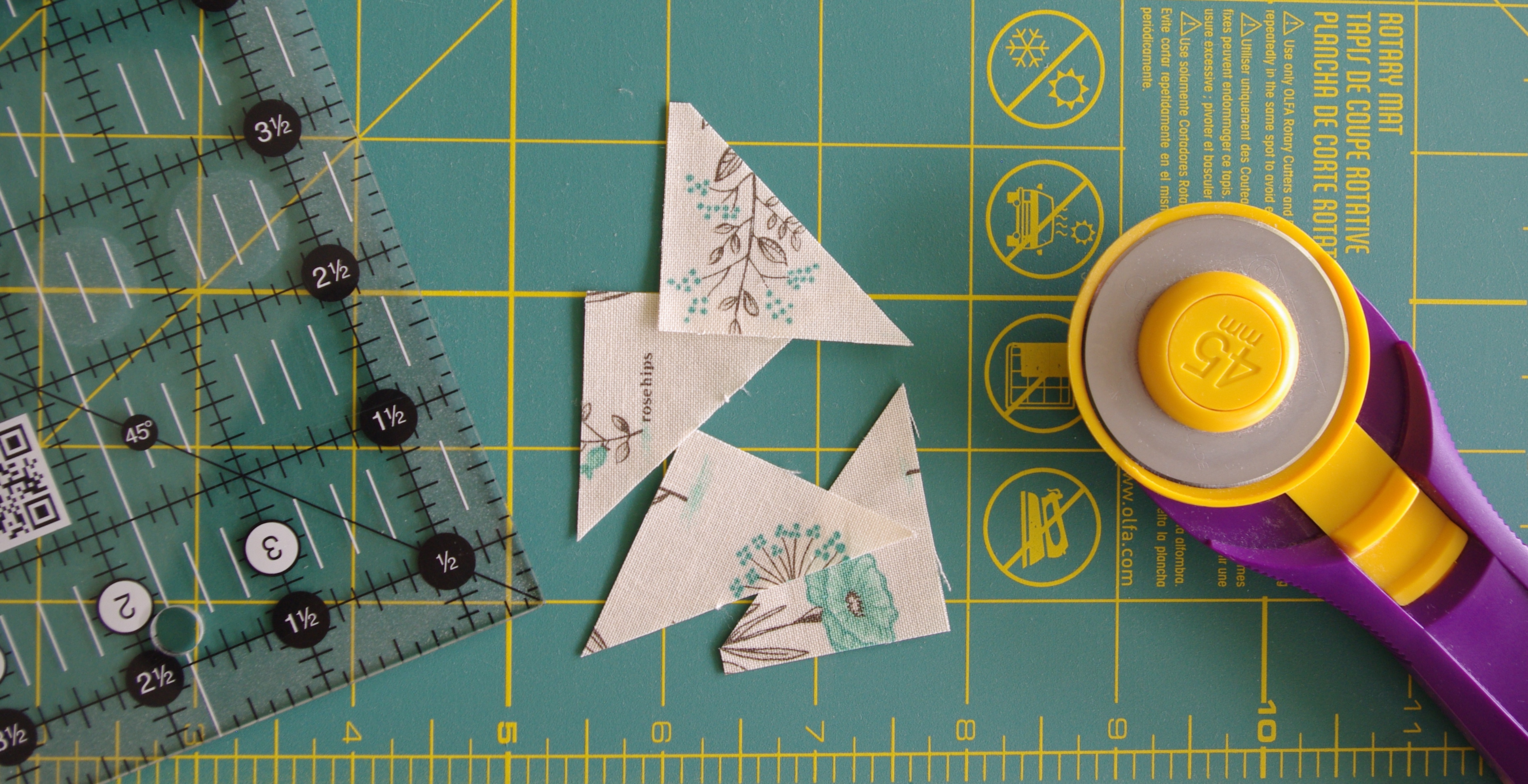
Here’s an example of my latest ‘made myself precuts.’ The quilt pattern I’m currently making requires several flying geese units that leave a lot of cut-away corners. Because the units are pretty large, the cut-away corner triangles (approximately 2″ x 4″) are big enough to allow me to cut out one 1 ½” square from each piece.

After cutting out the 1 ½” squares, there’s barely any fabric left leaving minimal waste. Easy and economical, right?

For me, the biggest challenge with doing this is deciding when to cut the fabric. Because I’m usually excited to keep on sewing the project at hand (it’s hard to take extra time to cut scraps) but I usually do it as I go along so I don’t forget what they’re for, and I know it’ll save time later. It’s personal preference whether you cut as you go, or later on.

Keep in mind that you can make a variety of sizes of your own precuts based on the size of scraps you have left over from your quilting projects. Anything goes…

Since I have been doing this for quite a while, I have saved myself a lot of time and fabric – it’s definitely a win-win situation!

diy, tutorials, Uncategorized

DIY Quilt Ladder Tutorial

Don’t you just love those beautiful leaning ladders for displaying quilts? I know I do, but I didn’t want to pay upwards of $200 for one. I knew my husband and I could do a DIY for a LOT less, and we did, we made ours for under $20!

Here’s what we had to buy:
(4) ¾″ × 1 ½″ × 6′ Select Pine boards = $3.83 each
Total cost of $15.32 (+ tax)

1 box (of 25) 1 ½″ construction wood screws
Total cost of $2.17 (+ tax)

We purchased the boards and wood screws at Home Depot. Any big box hardware store should carry all other supplies and tools.

I should note that that was our price was less than $20 because we had the additional necessary items on hand: paint brush/foam brush, wood stain, polycrylic protective finish, paint, primer, a variety of sandpaper and the tools. If you don’t have these items, it will cost more, but nowhere near what a retailer is asking.

I was so happy with the first one, I asked my husband to help out again and we made a second one. I finished them differently; the first one I stained and the second one I painted white. That way, I can move them around the house and always have a fresh, new look.

This was a fun project for both of us. It was really rewarding to make something for our home that not only is attractive, but useful, too. I also found that working with wood was relaxing and rather enjoyable. 🙂

The time spent on each ladder varied. Estimated time on construction was about 2 ½ hours and it took about 3 – 3 ½ hours to sand, stain and apply polyurethane. It was much more time consuming to paint. I applied one coat of primer and four coats of paint, which took several hours, but was worth it. I love both results.

IMGP8215.jpg

Finished ladder measures 6′ H × 19″ W × 1 ½″ D.

If you’d like to make your own, click here for my downloadable PDF DIY Quilt Ladder Tutorial. The tutorial is easy-to-follow with step-by-step instructions and plenty of photos.

Here’s to creating and saving a ton of money at the same time!