quilting, quilts, Uncategorized

The Making of a Hunter’s Star Quilt

In 2017 I told my daughter I would make her a bed size quilt, but to be honest I never got around to it that year. Enter 2018 and I knew I had to keep my word. That said, I had her choose both the fabric and the quilt pattern because if I was going to take a lot of time to make something so big (and expensive), I wanted her to be happy with it.

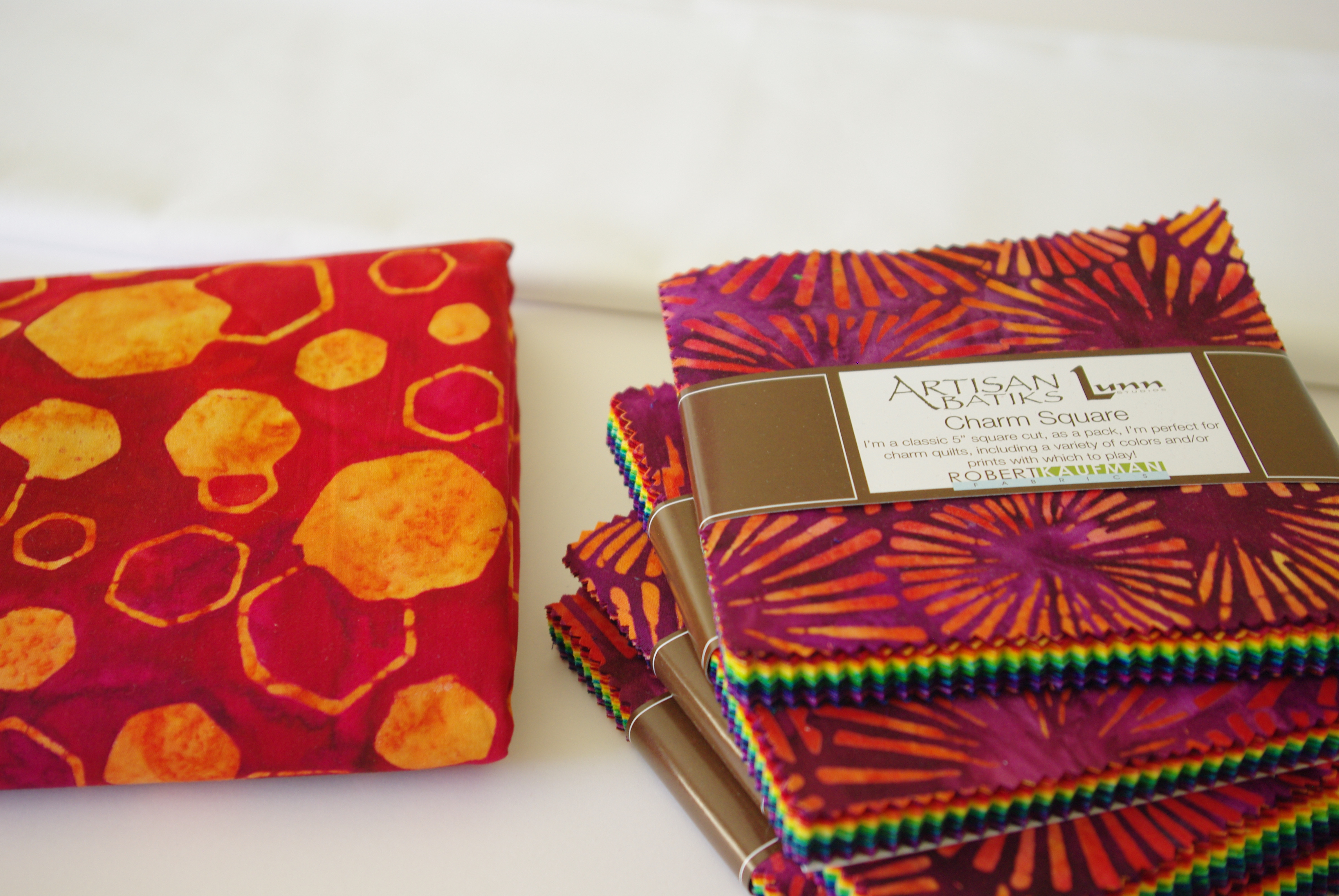
After searching around she decided on Robert Kaufman’s Artisan Batiks/Retro Metro by Lunn Studios. This would be my first time working with batiks and I was ready to try something new.
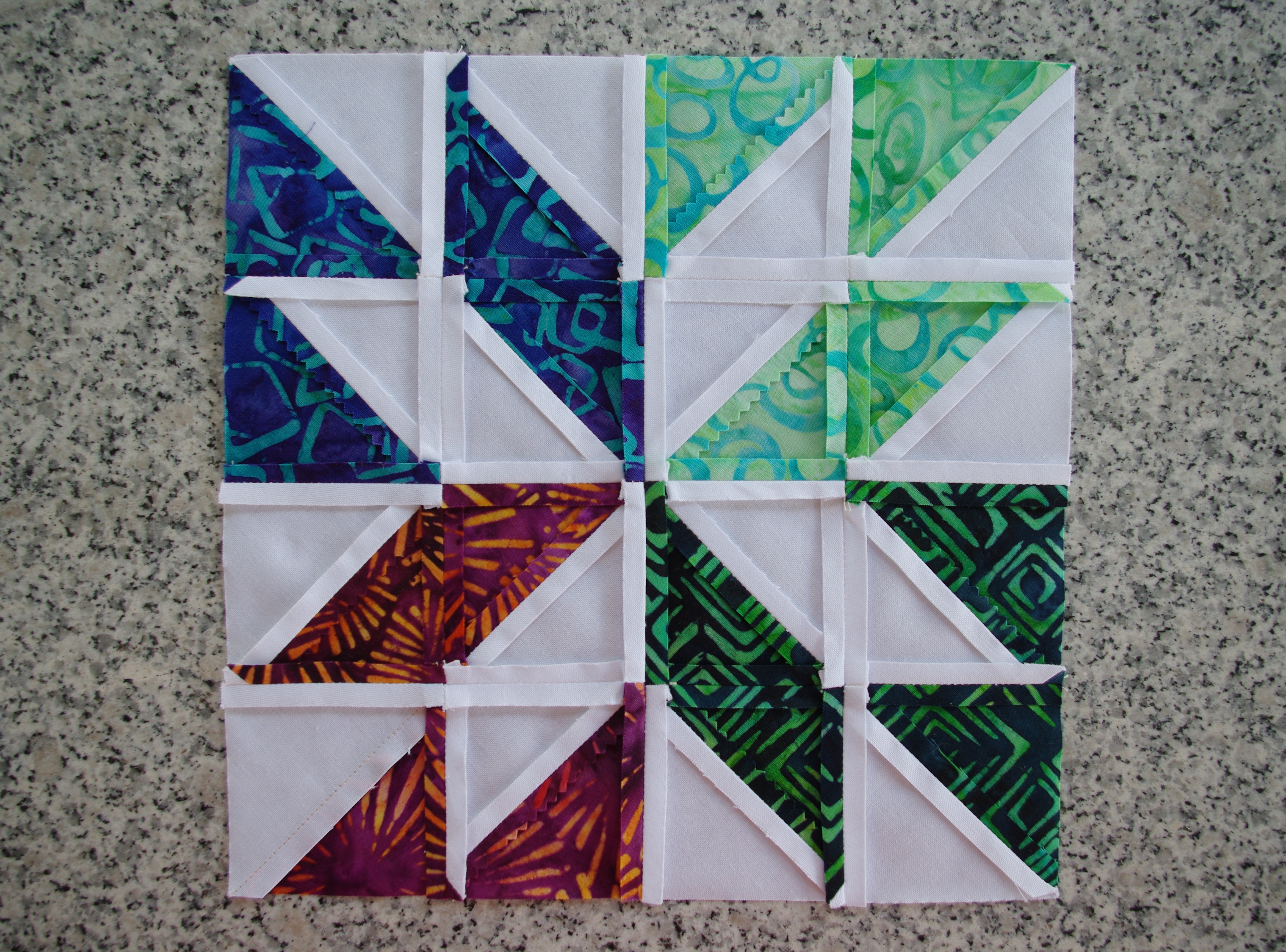
Her pattern choice was the Hunter’s Star quilt based on the video tutorial by Missouri Star Quilt Company. We all love Jenny Doan, don’t we? I know I’m a fan of her videos and patterns, and store too, for that matter. The video tutorial I followed is Hunter’s Star Made Easy. It’s a great tutorial but there were a couple of things I found challenging and I’d like to share them with anyone who decides to make this quilt from the video.

First, making the half square triangles (HSTs). By using the method in the tutorial you need to know that all the fabric edges will be on the bias! Meaning everything is going to be stretchy so handle with care. Personally, I don’t like making HSTs this way because of that, but in this case I just used extra caution. If you’re a beginner quilter be aware if and when you use this method.

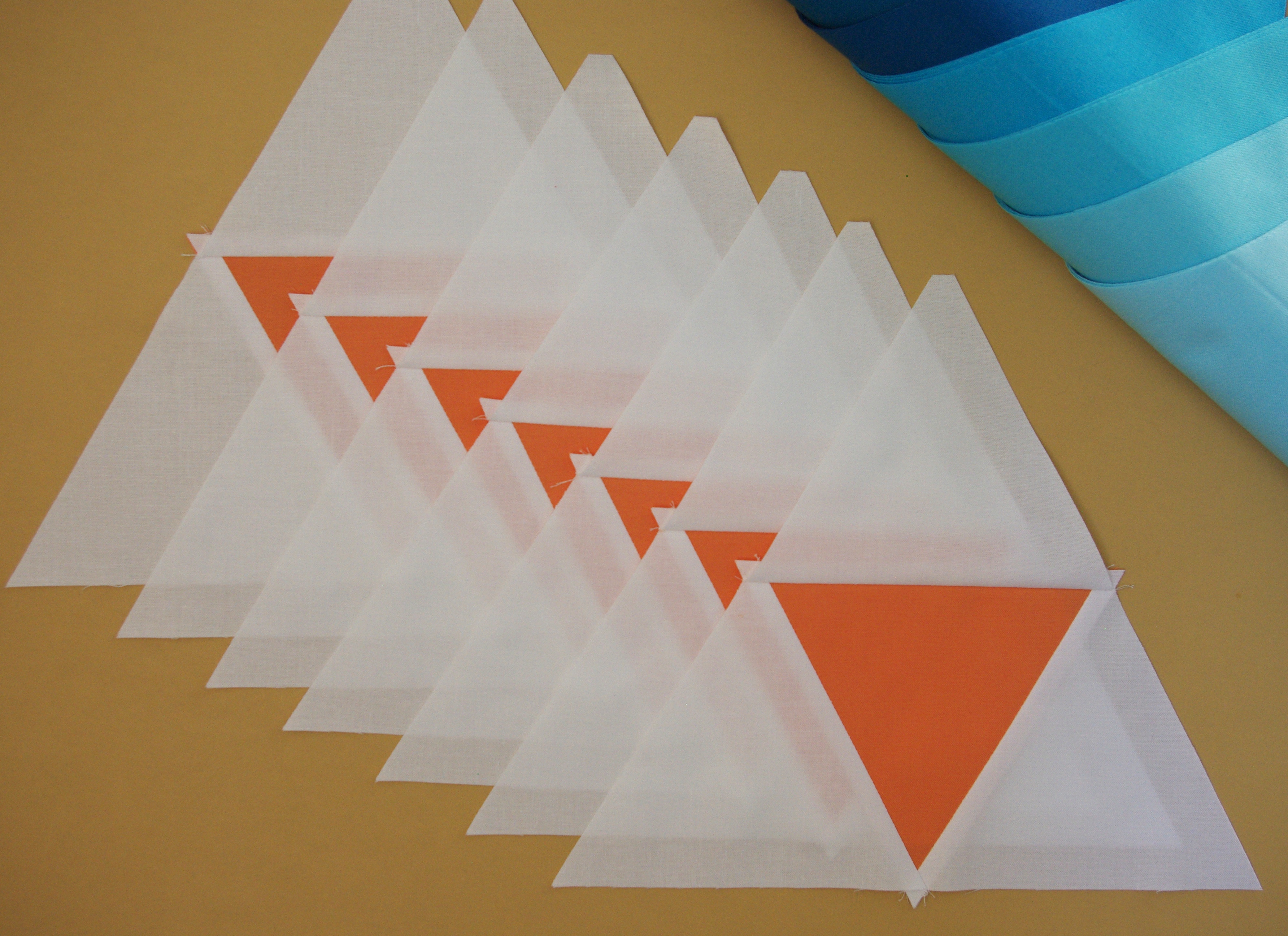
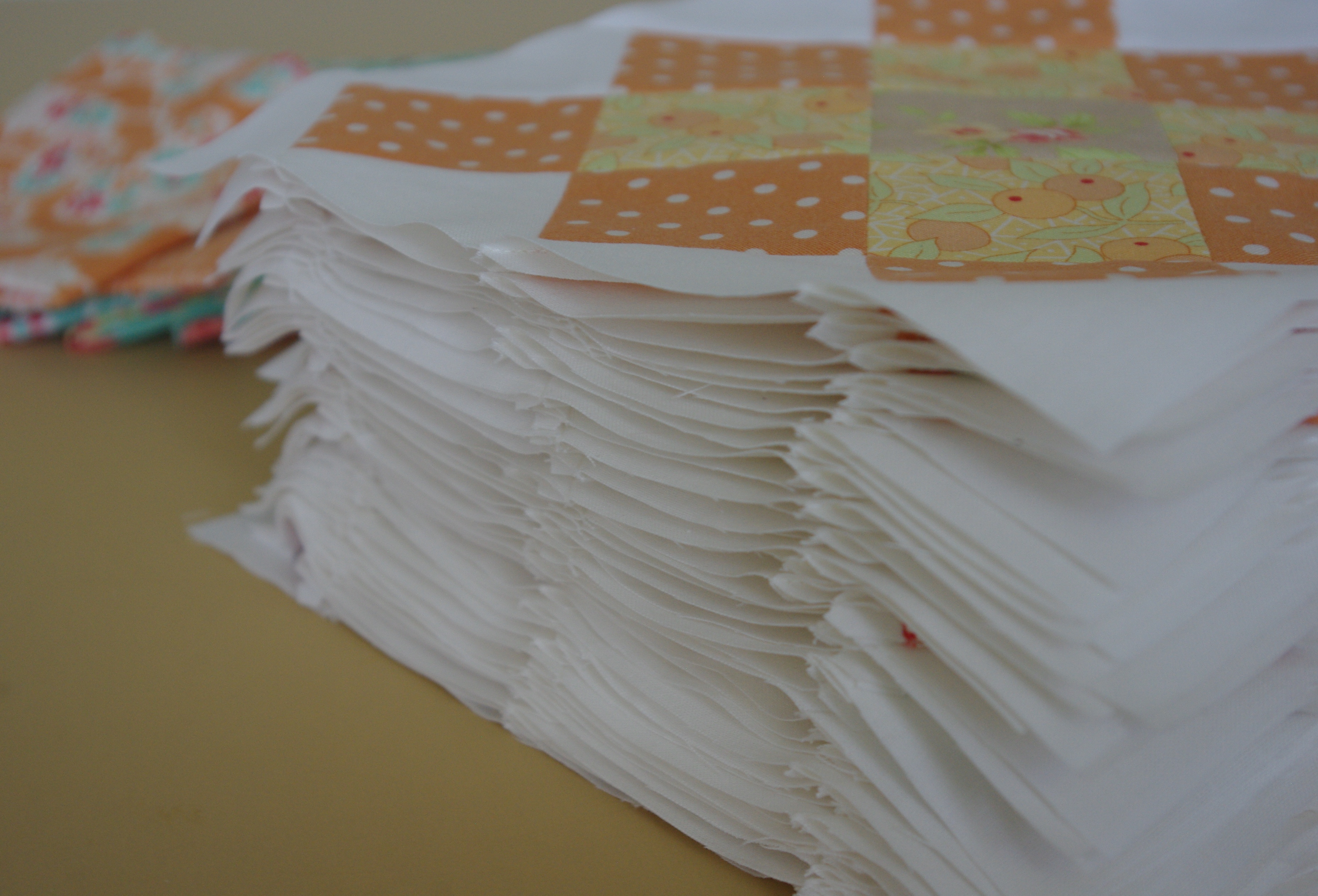
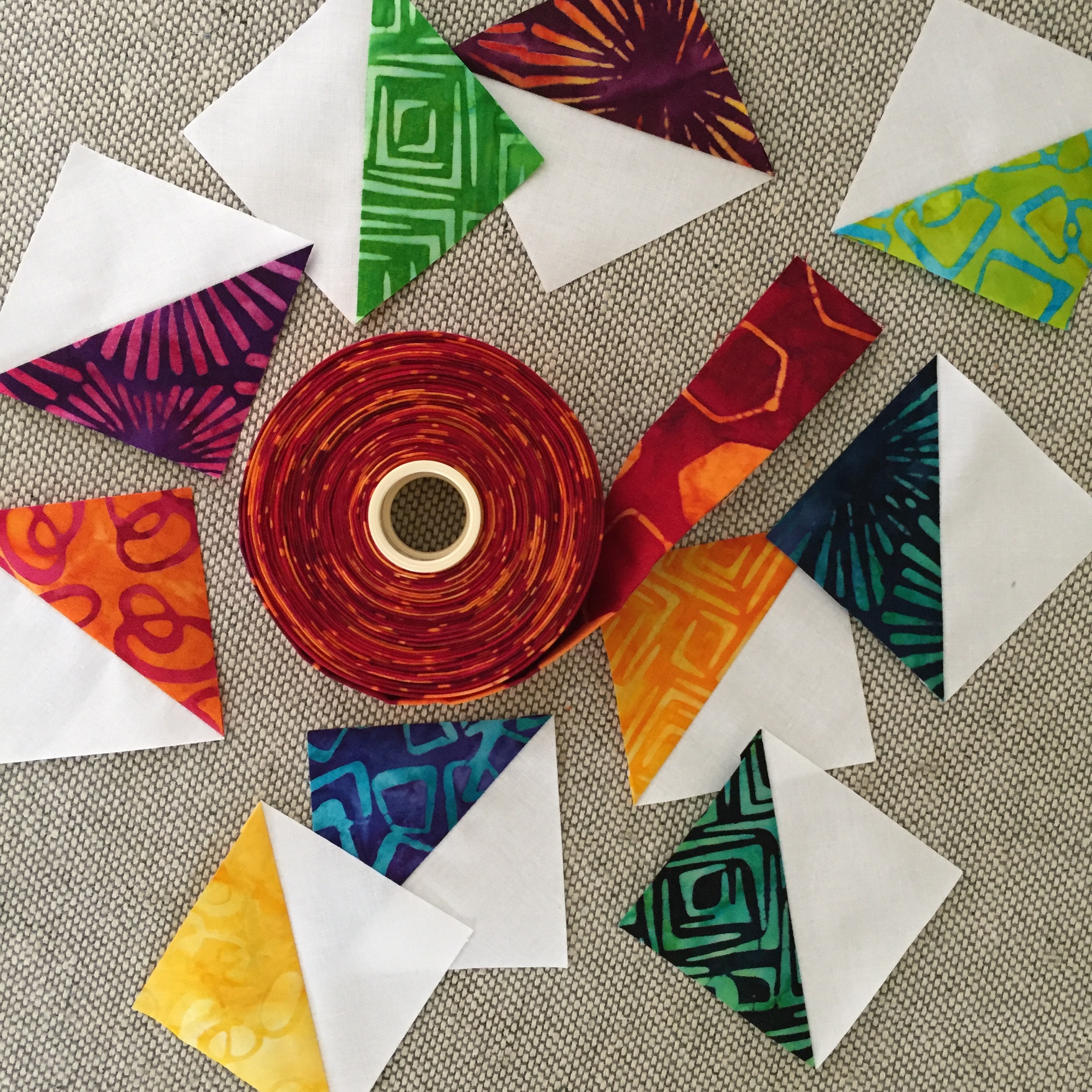
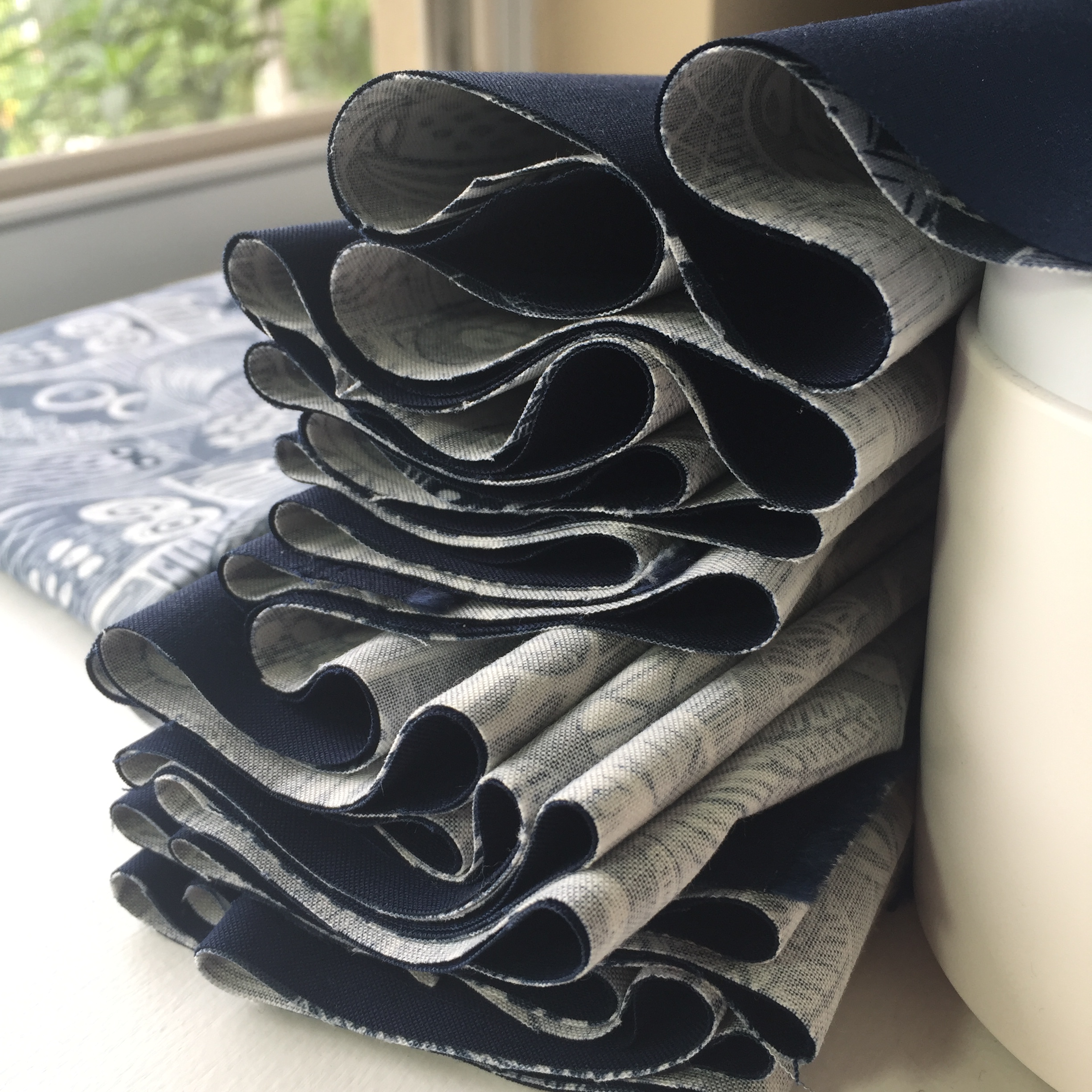
I needed 720 HSTs for the entire quilt, that’s a lot! Here’s a stack of just 168, trimmed and ready for blocks.

How to press your seams is important, and I found it worked best pressing the HSTs seams open—but—if you’re using a Bloc-Loc ruler, trim them first, then press seams open. I pressed a few open first and they were off, so I didn’t end up with a ¼” seam once sewn. It wasn’t until afterwards that I realized why that happened, but thankfully I didn’t do too many.
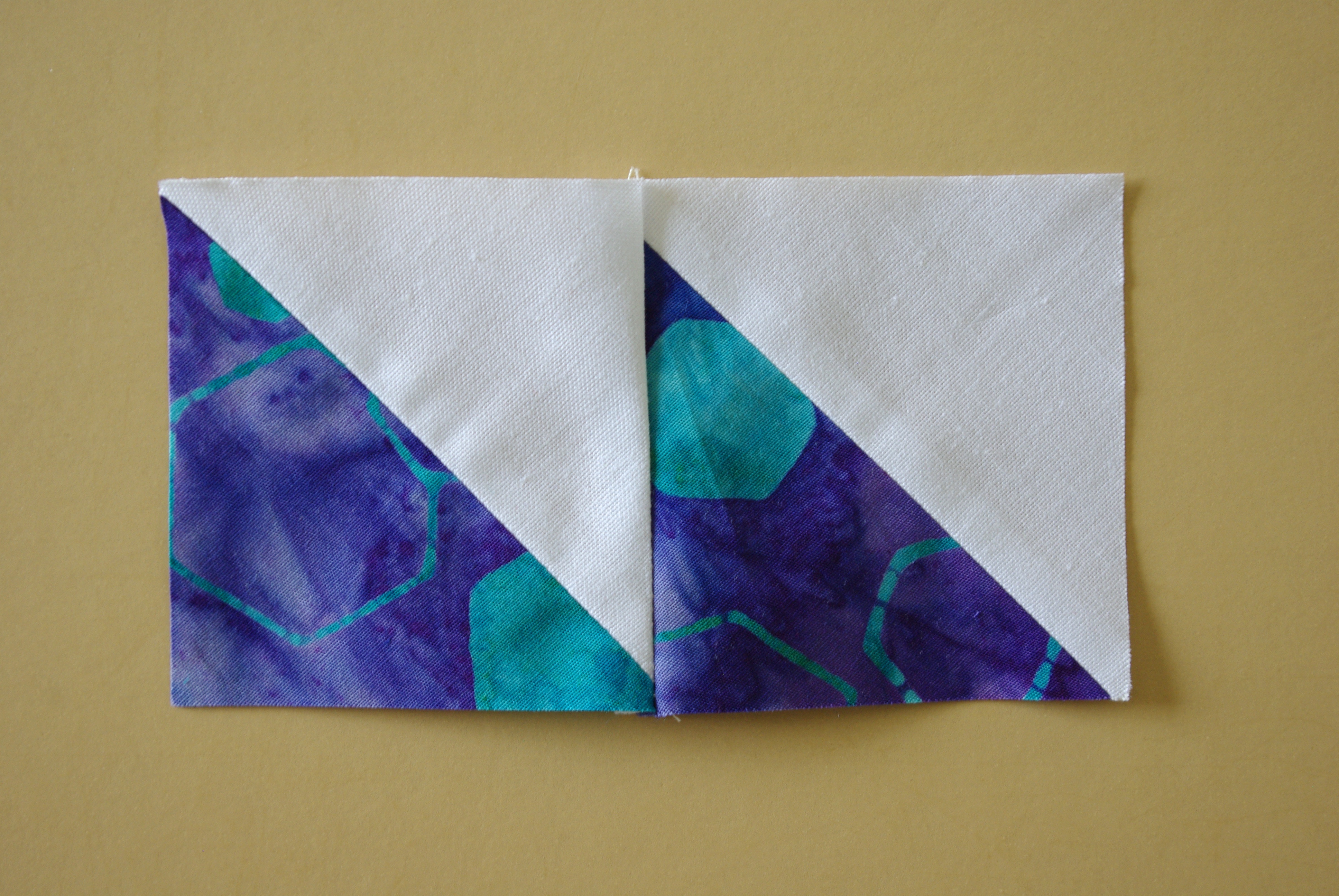
After I got that right everything lined up nicely! The pressed open seams made for a nice, flat lying block.
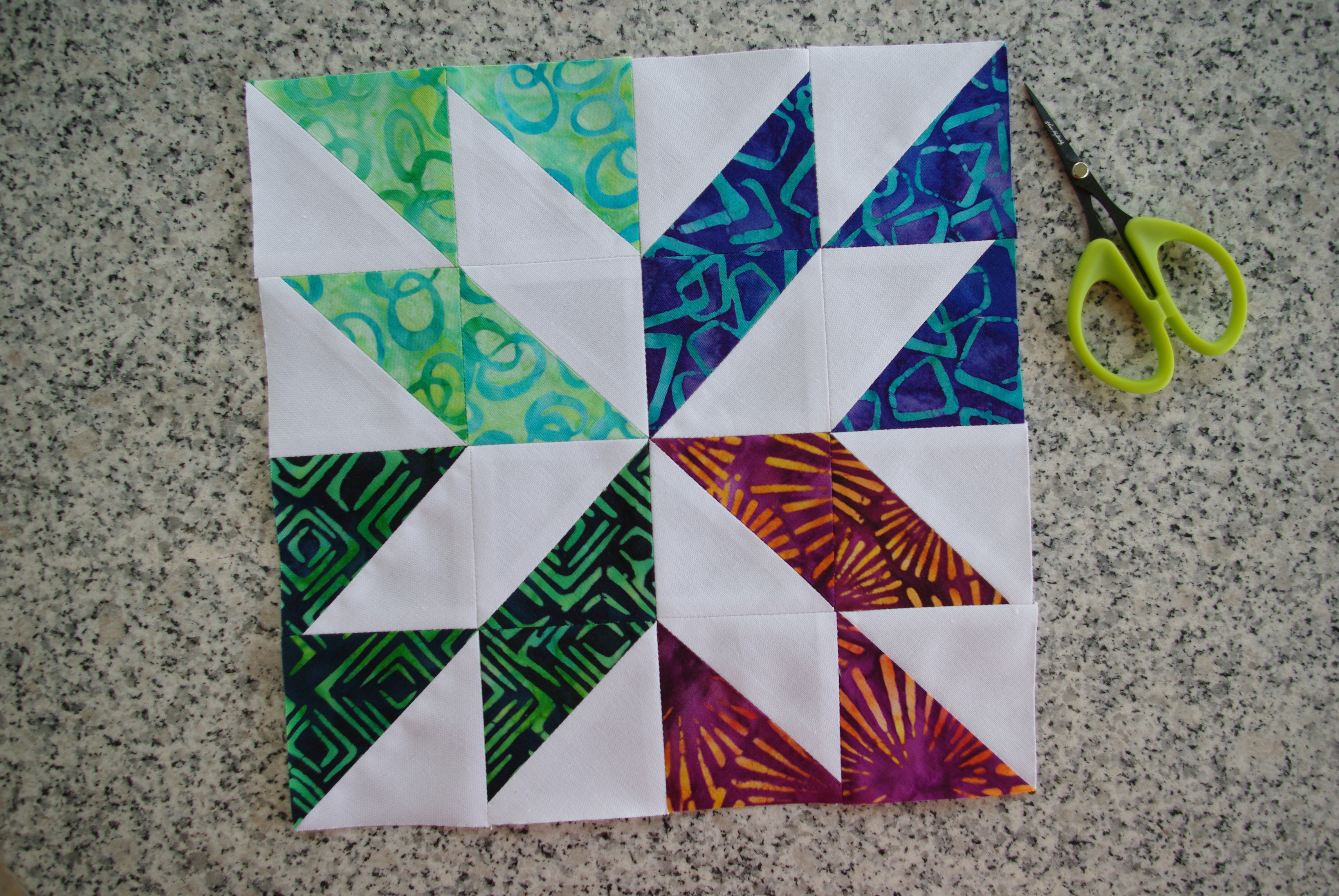
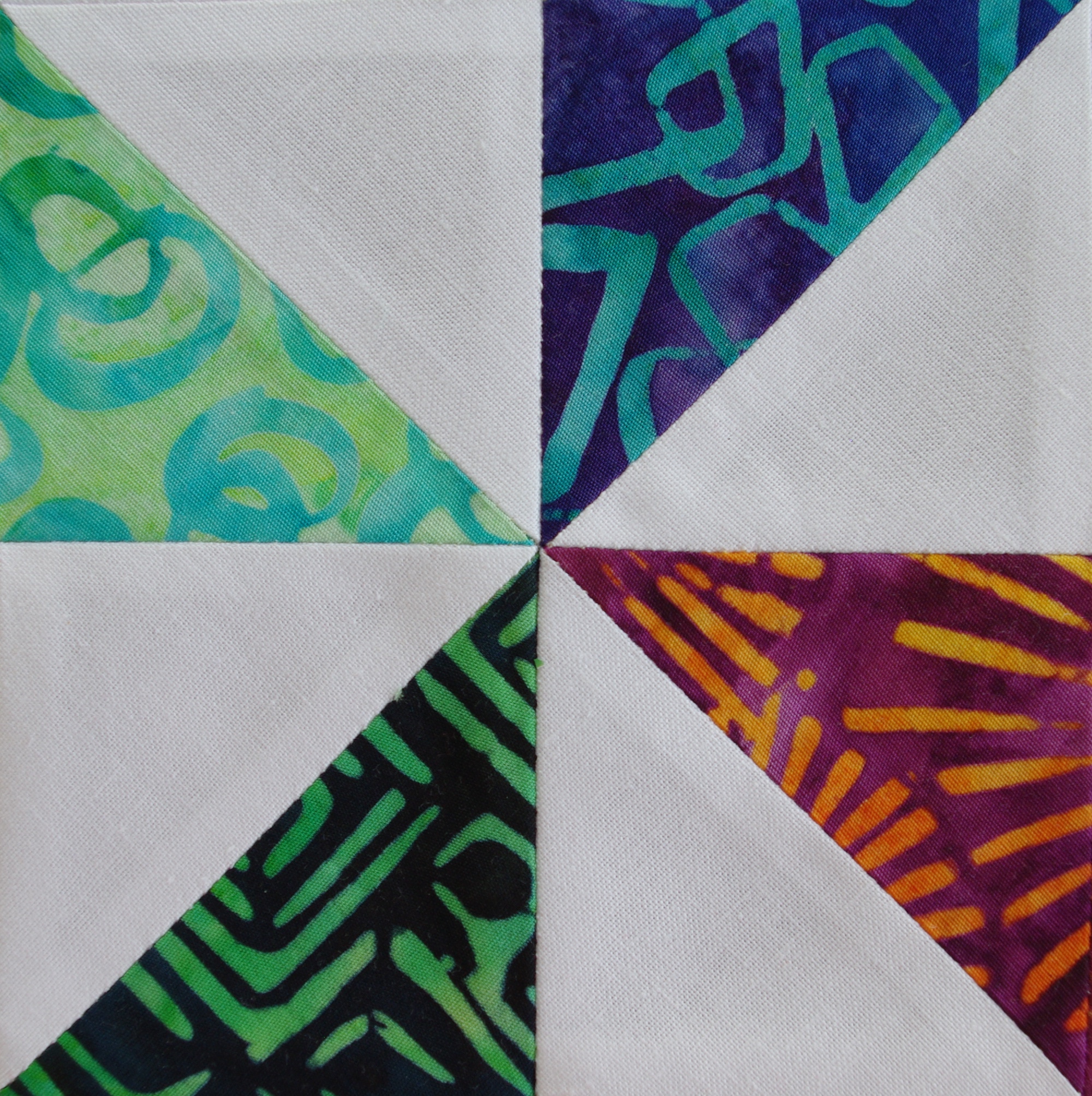
Here are a few more tips from my experience that are really useful.

After laying out the blocks, take a photo. It’s easy to get blocks turned around and having a photo reference is a lifesaver.

Pin, pin, pin! Some quilters don’t like to pin because it slows them down. I like the accuracy of pinning so I’ll take the extra time. It’s definitely worth it.
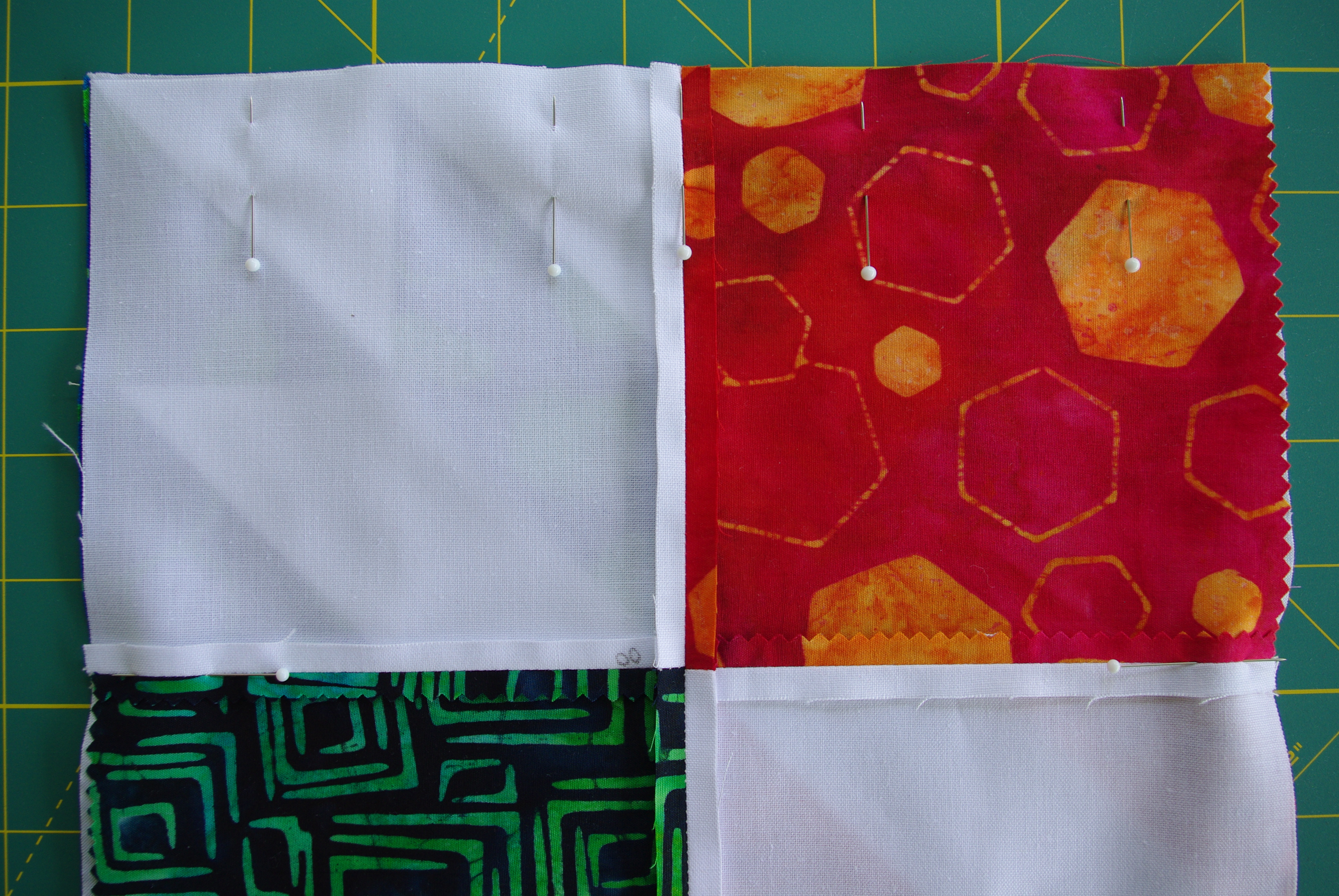
Before I began sewing rows together I numbered the back of each block in the seam, in order per row using a Frixion pen (you can see my sideways #8 in the above photo). If you end up making a mistake, having had the blocks numbered will definitely help. I actually sewed one entire row upside down AND backwards! I was glad I had the blocks numbered as it helped me fix the problem and it helped me to realize I had done it wrong.

I also pinned at both side seams and the center seams within the top block before I sewed my rows together. This keeps everything aligned.
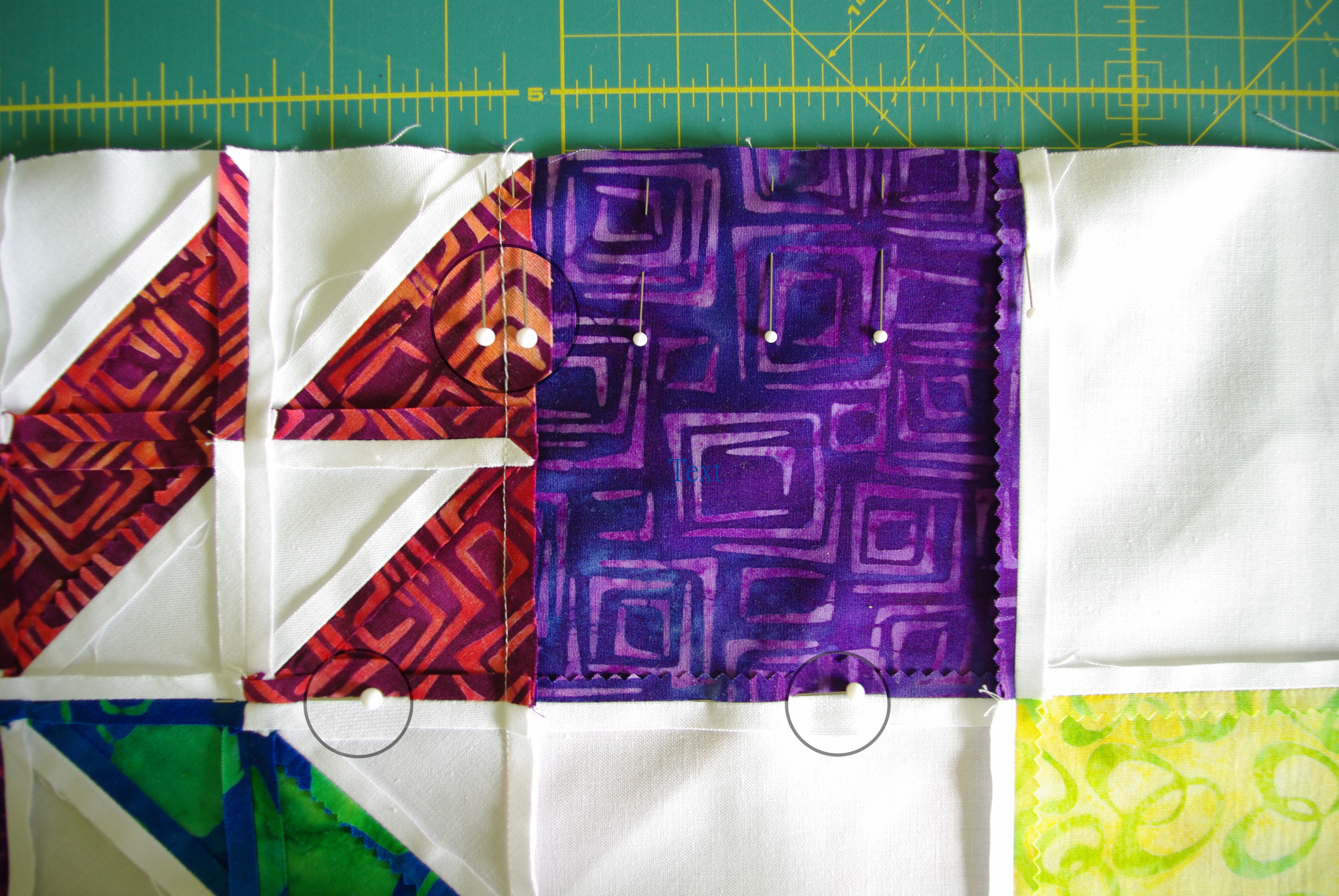
Lastly, when I sewed the blocks into rows, I pressed seams to the four patch. That way, blocks in every other row were pressed opposite and my seams nested perfectly. Also, when I sewed my rows together I pressed seams to the row that had the most four patch blocks because pressing the star block seam flat cooperated better.

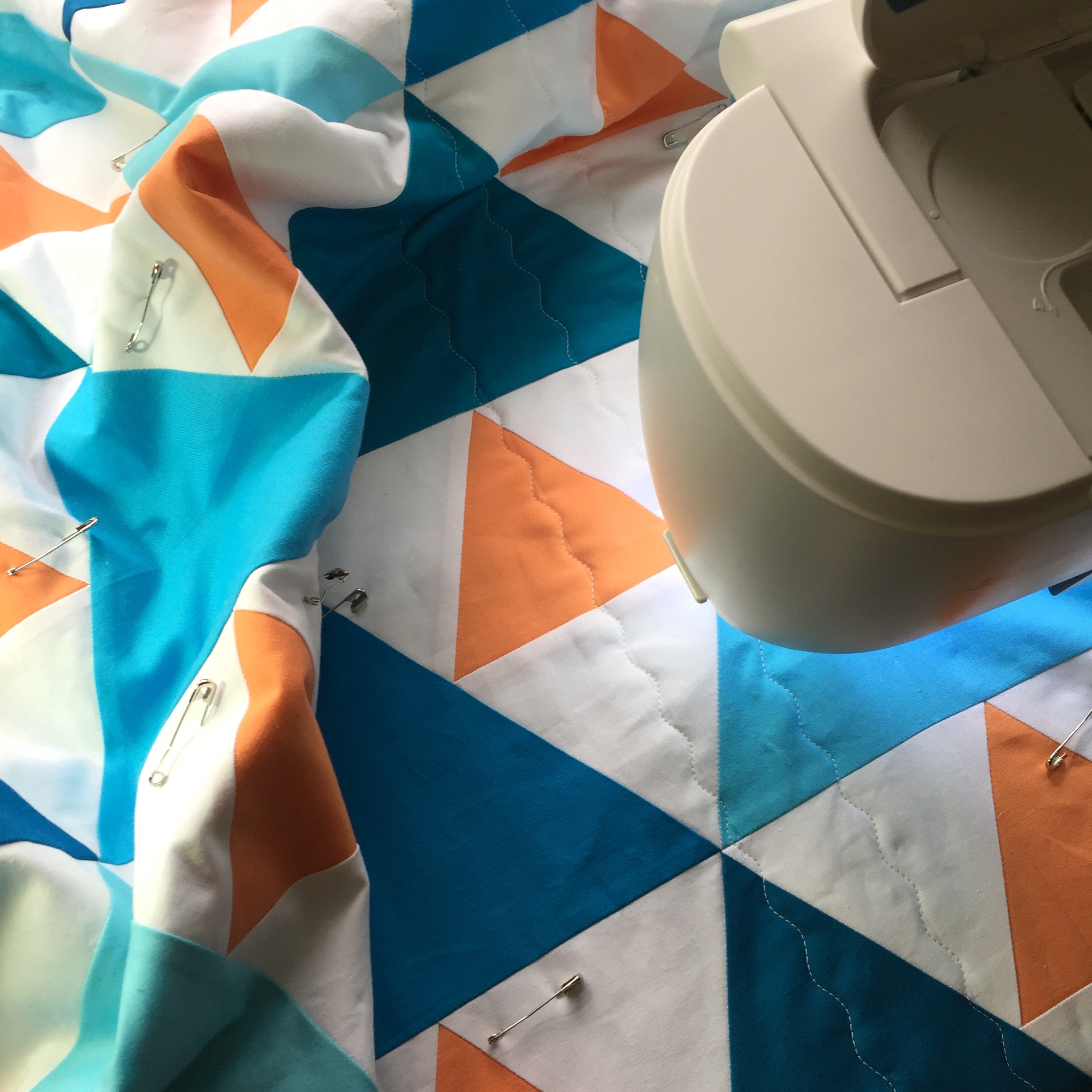
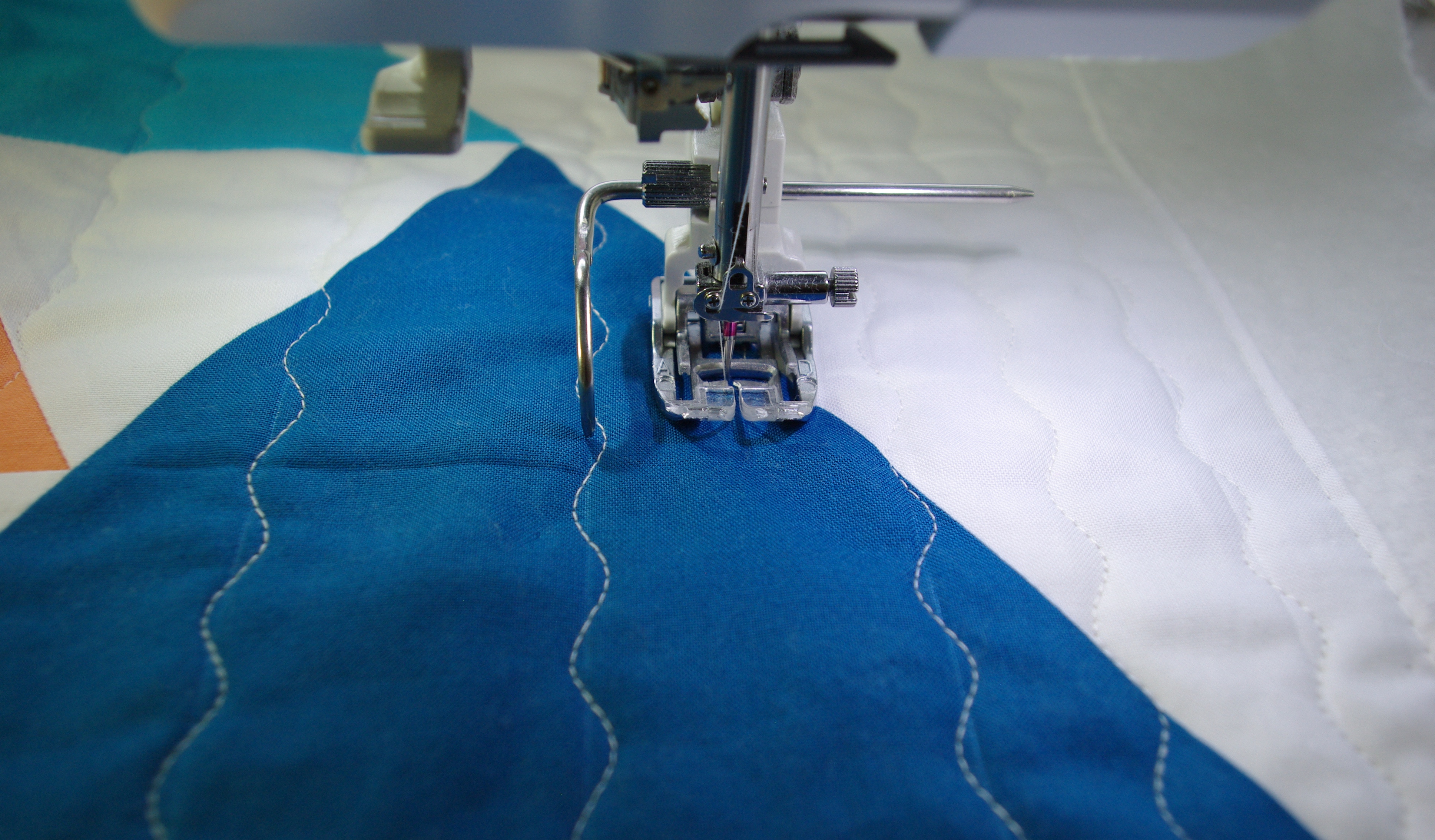
Here are a few photos of my process as I went along.
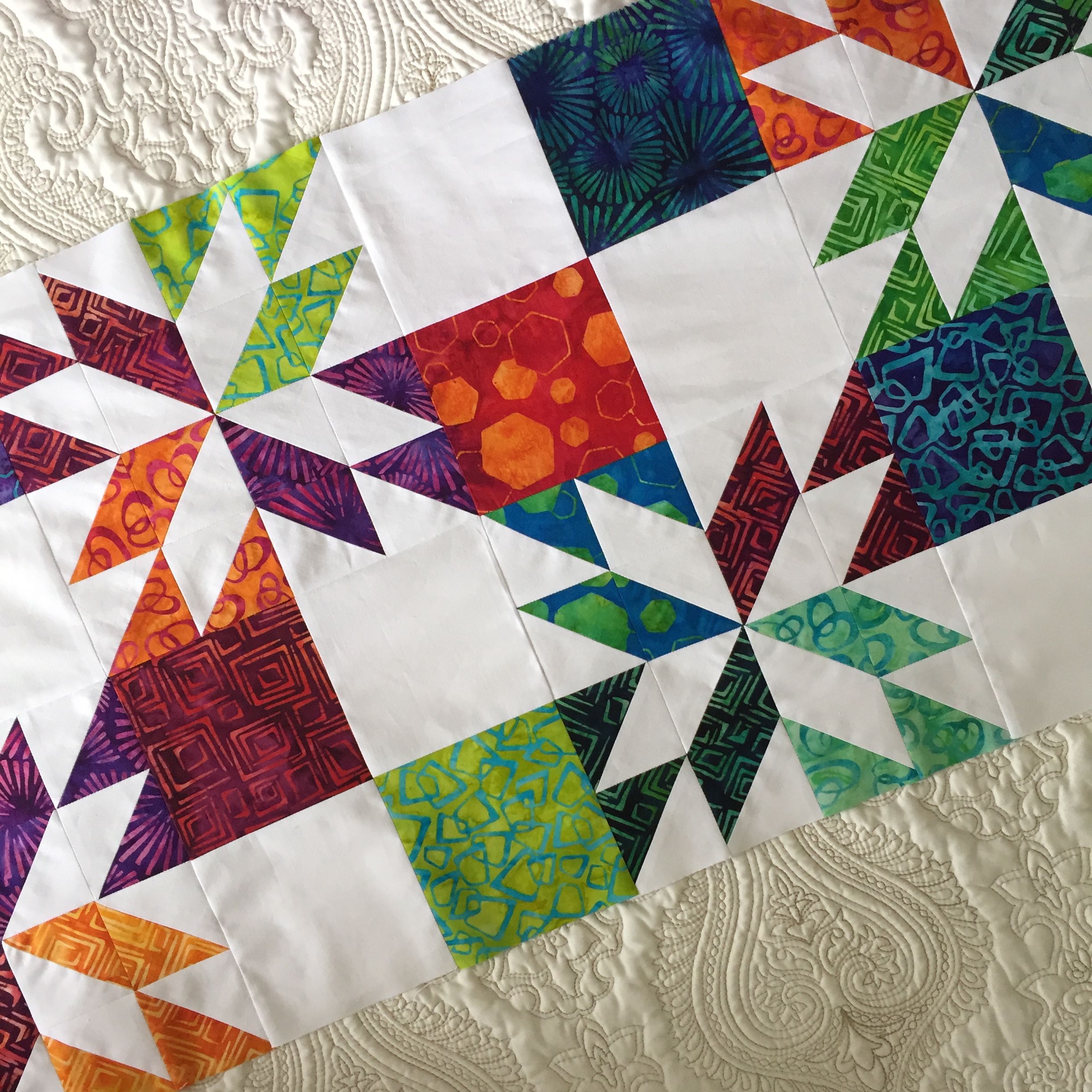
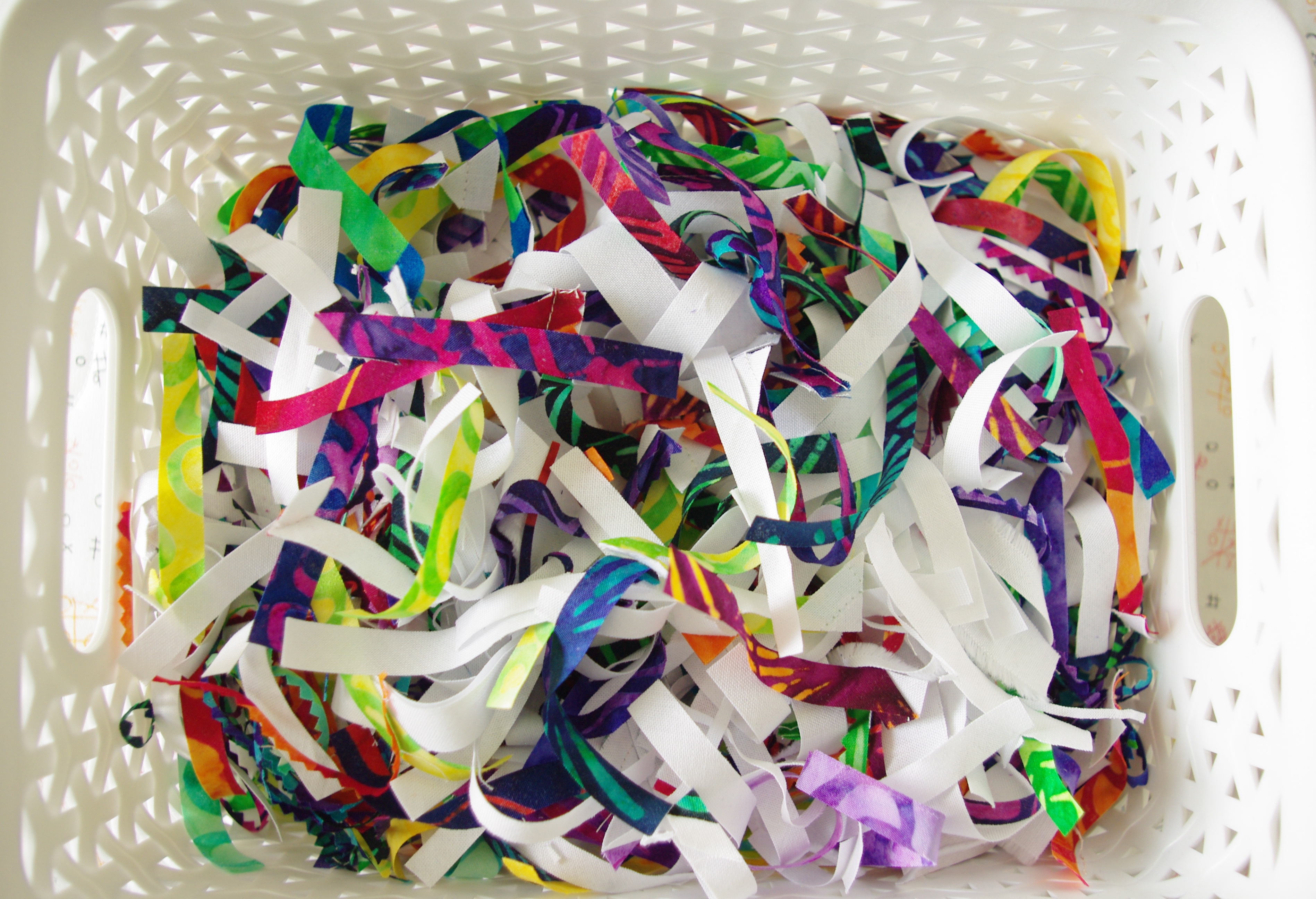
I absolutely loved the batiks. They’re so nice and crisp and are just a dream to work with. This collection has such vibrant colors that even the scraps were gorgeous. 🙂
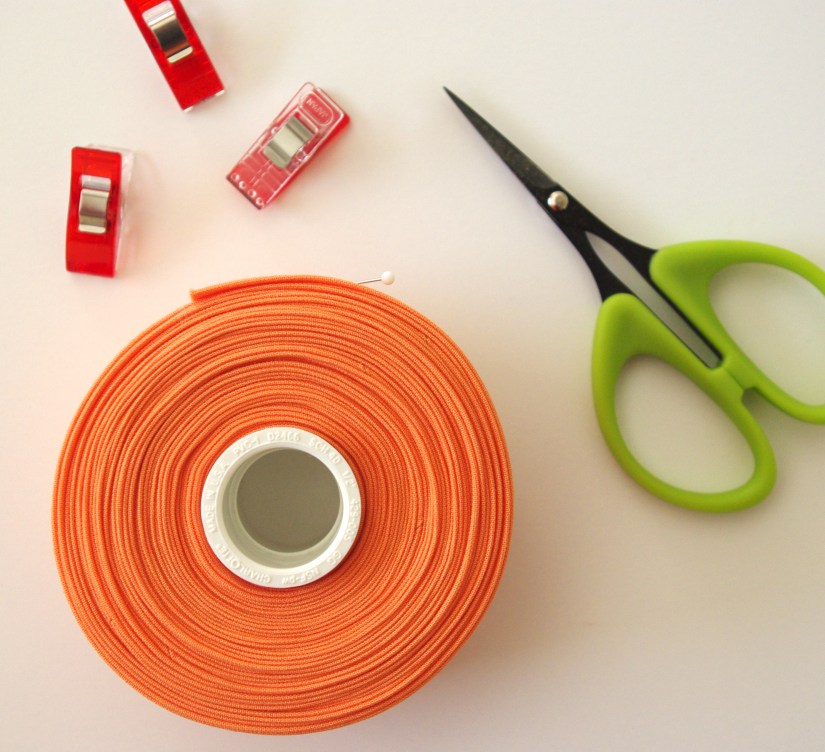
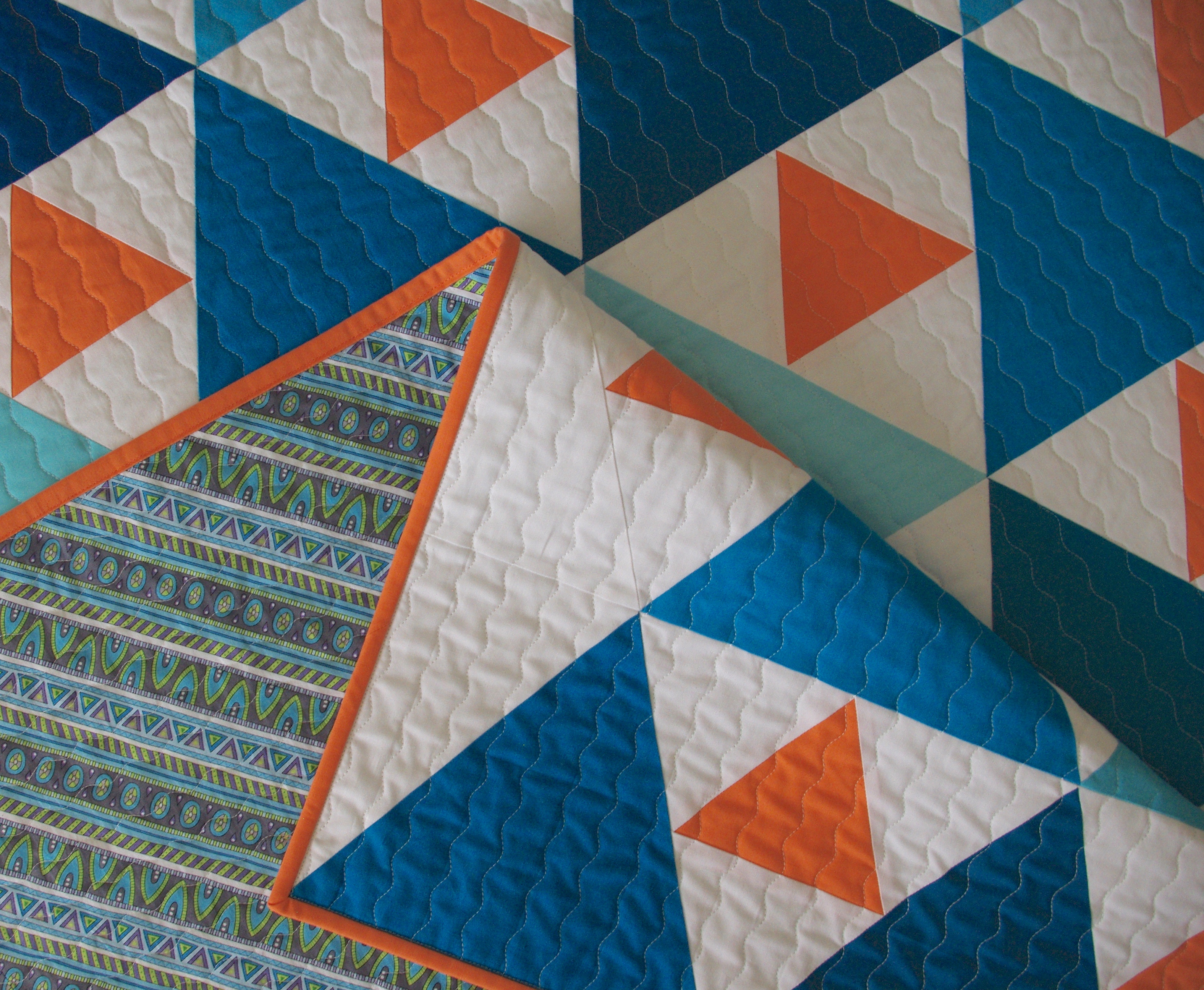
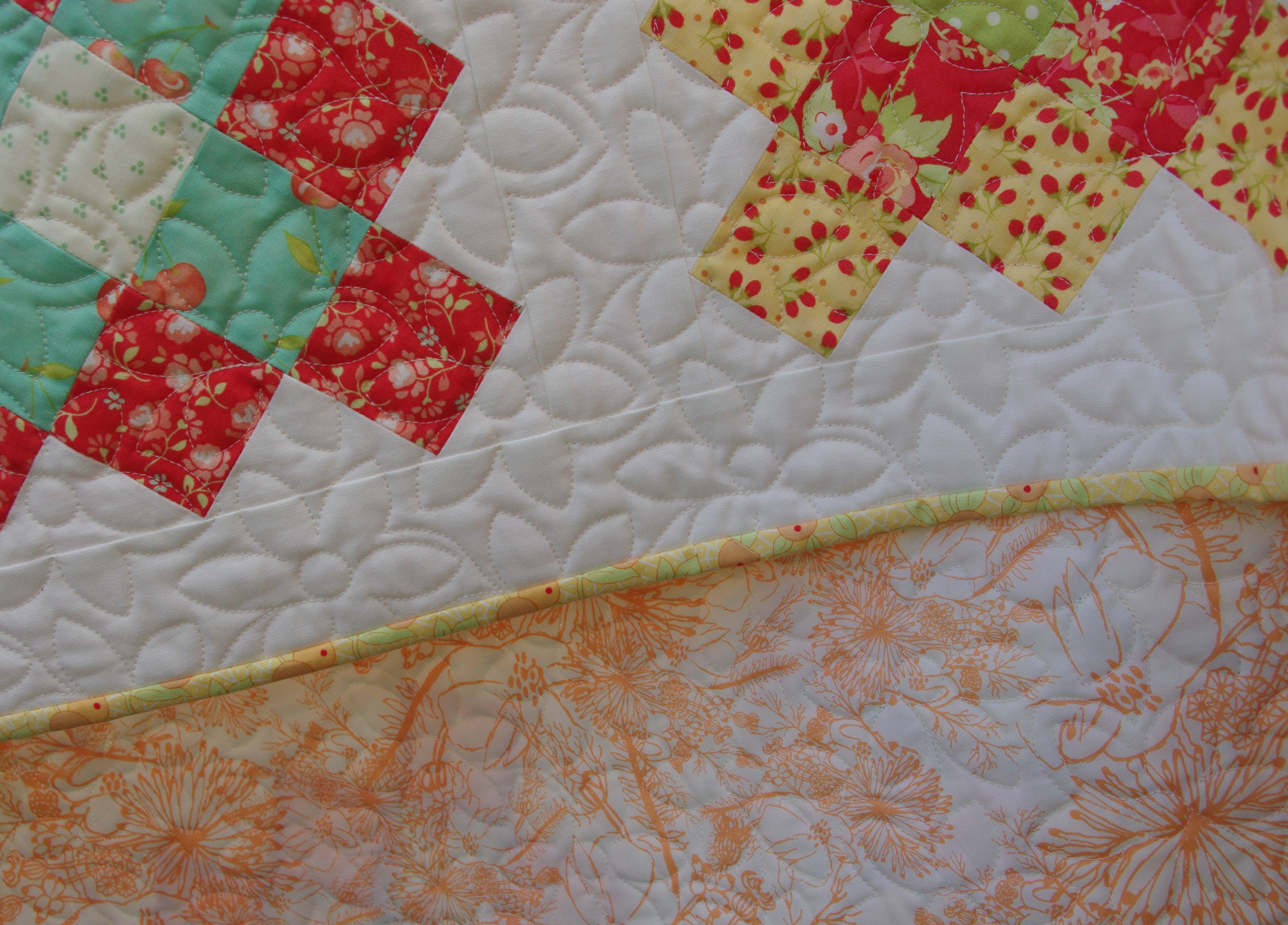
Because this quilt was so large I needed 9 yards of backing. So much fabric!
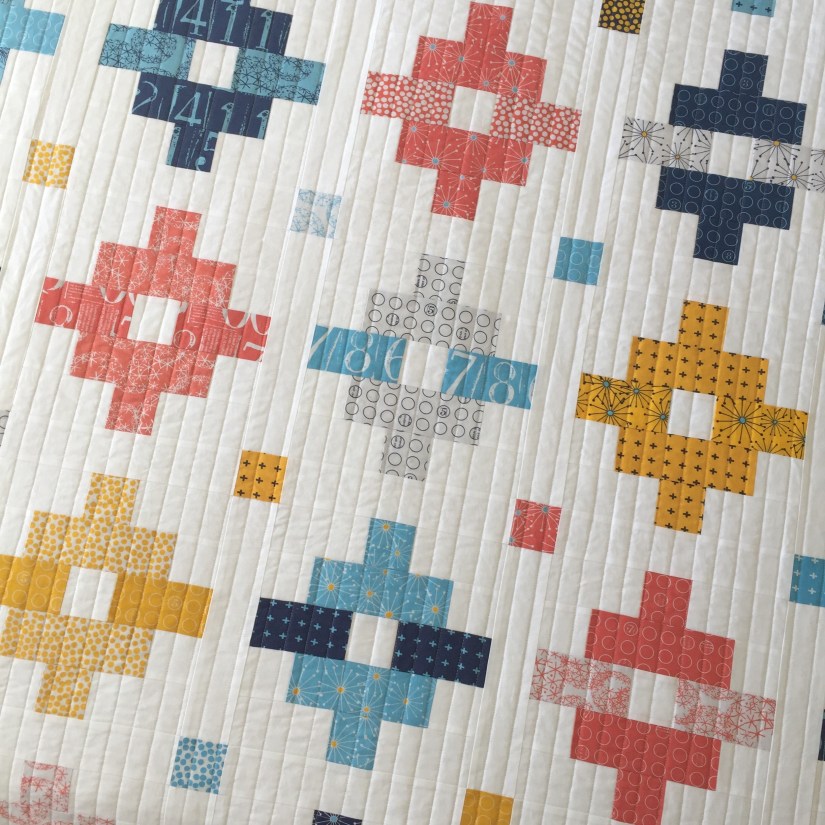
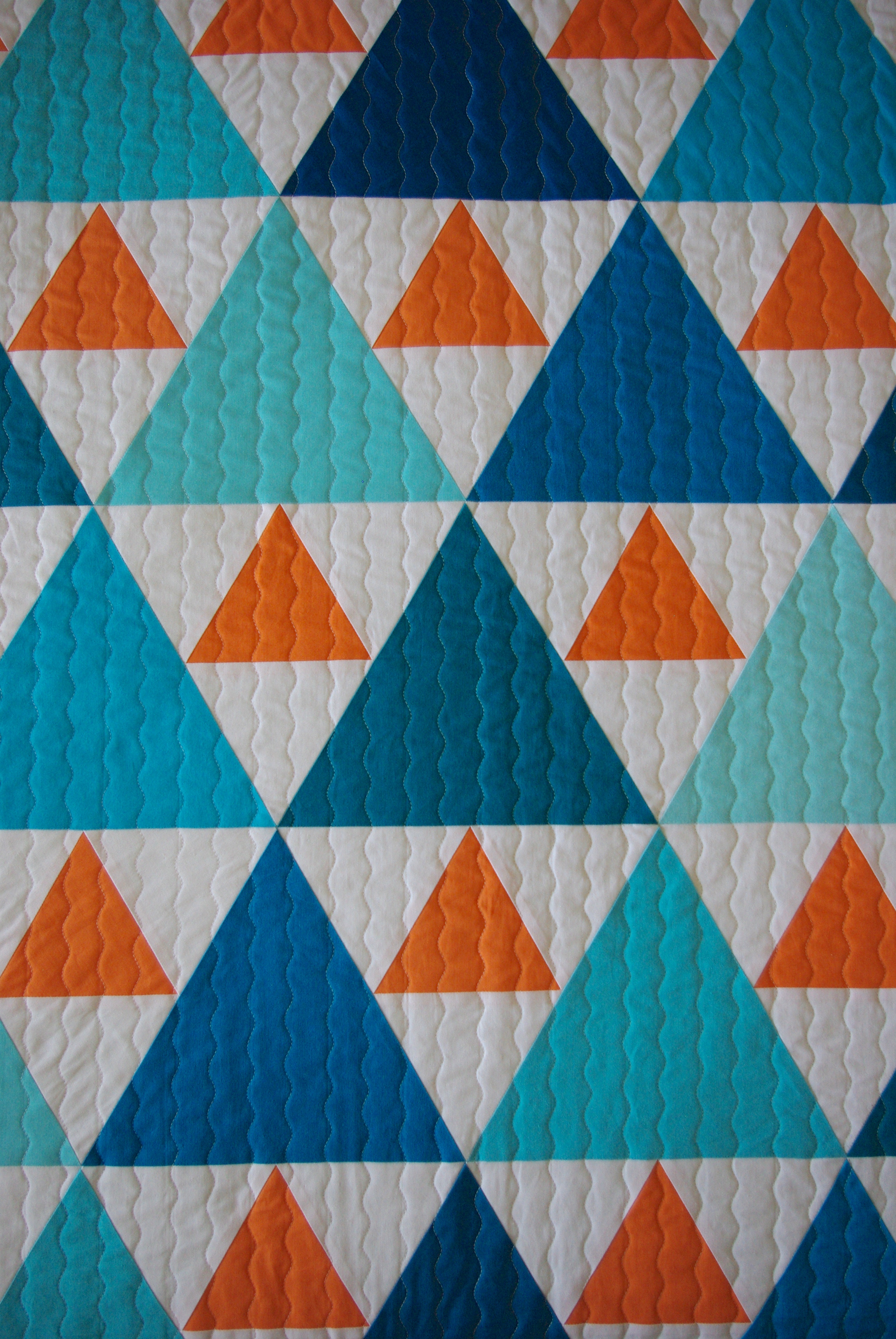
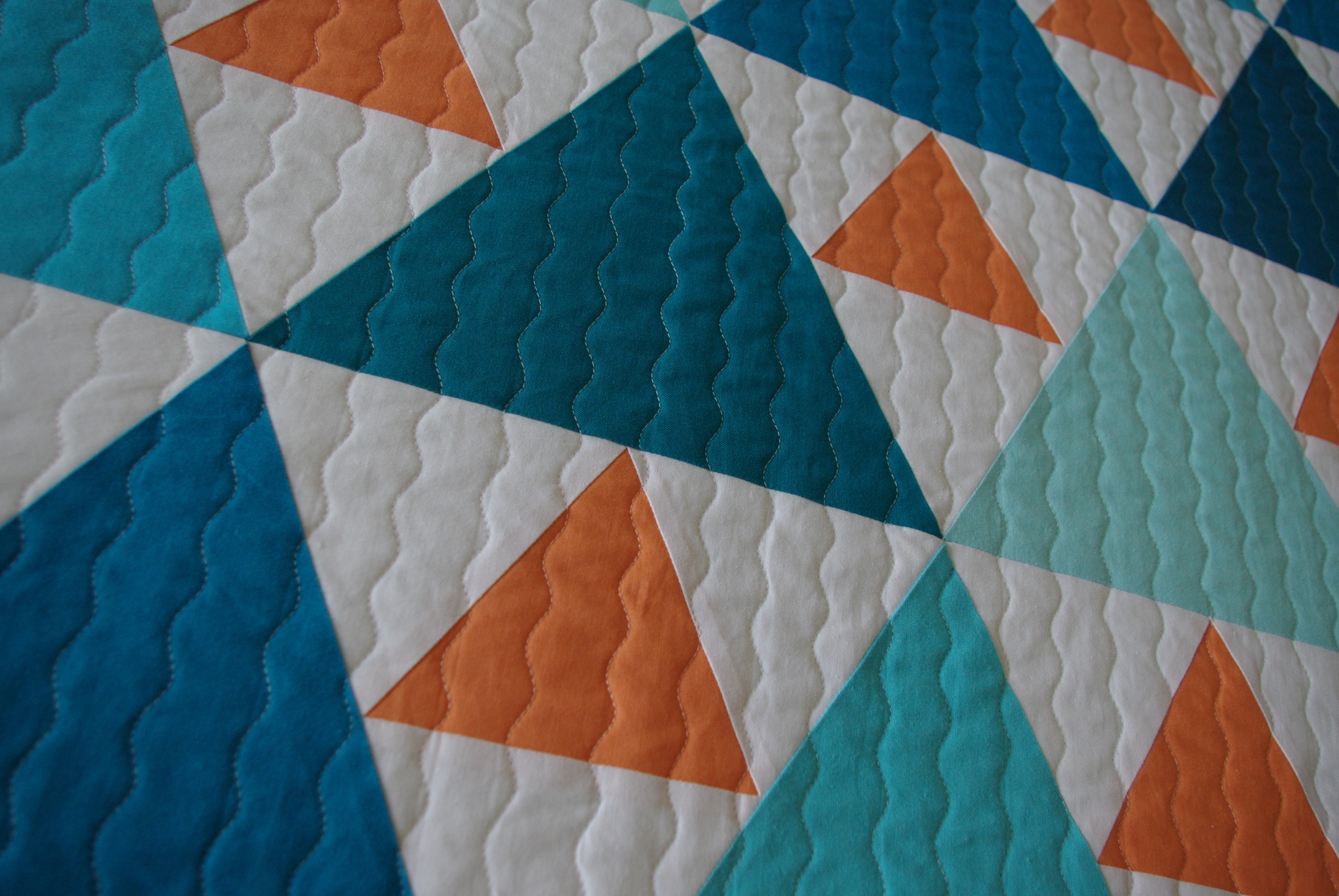
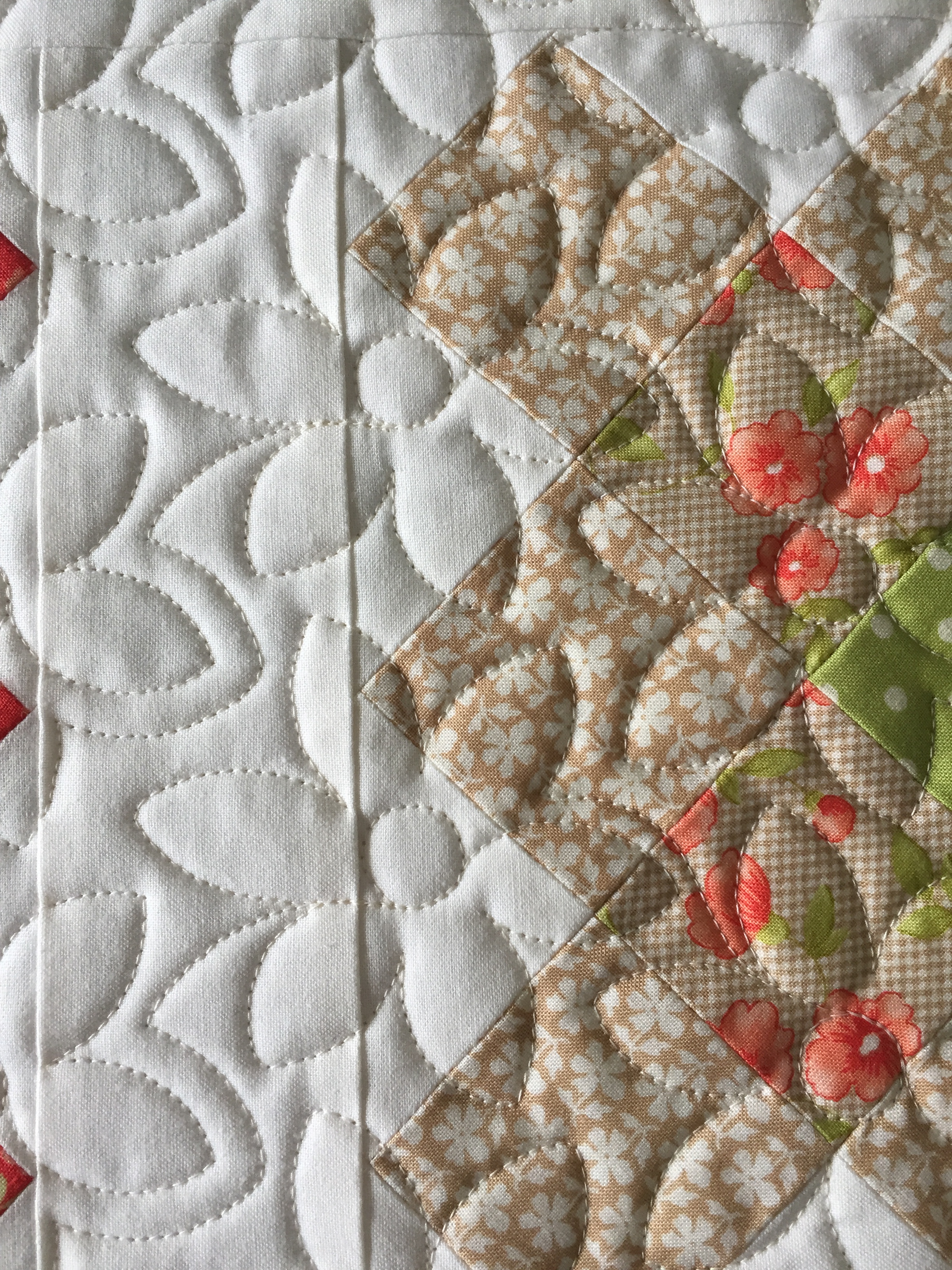
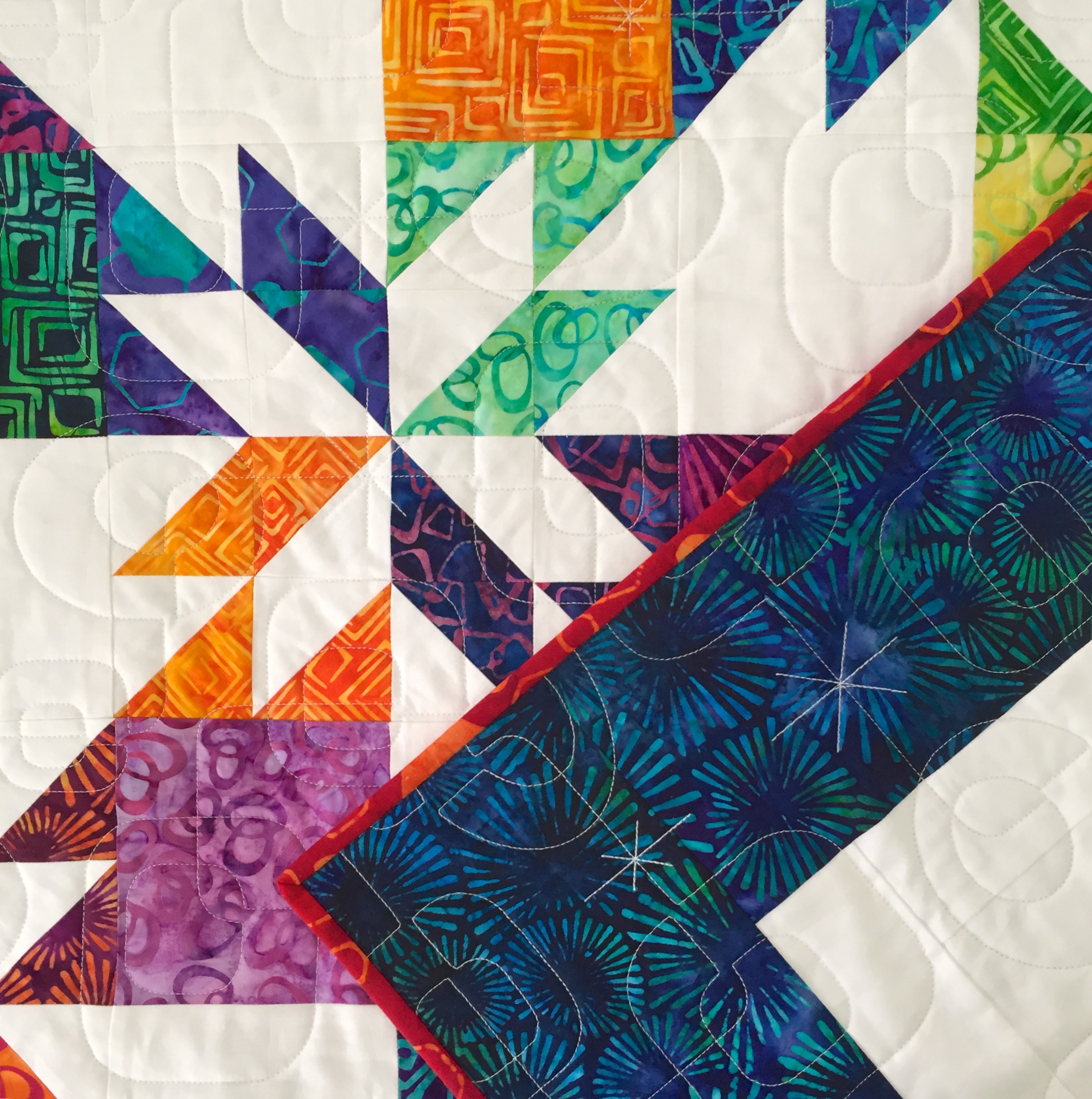
I also had my daughter choose what quiliting pattern she wanted. Here’s a close up of the mod squares motif she chose. I think it goes great with the fabric’s retro look.
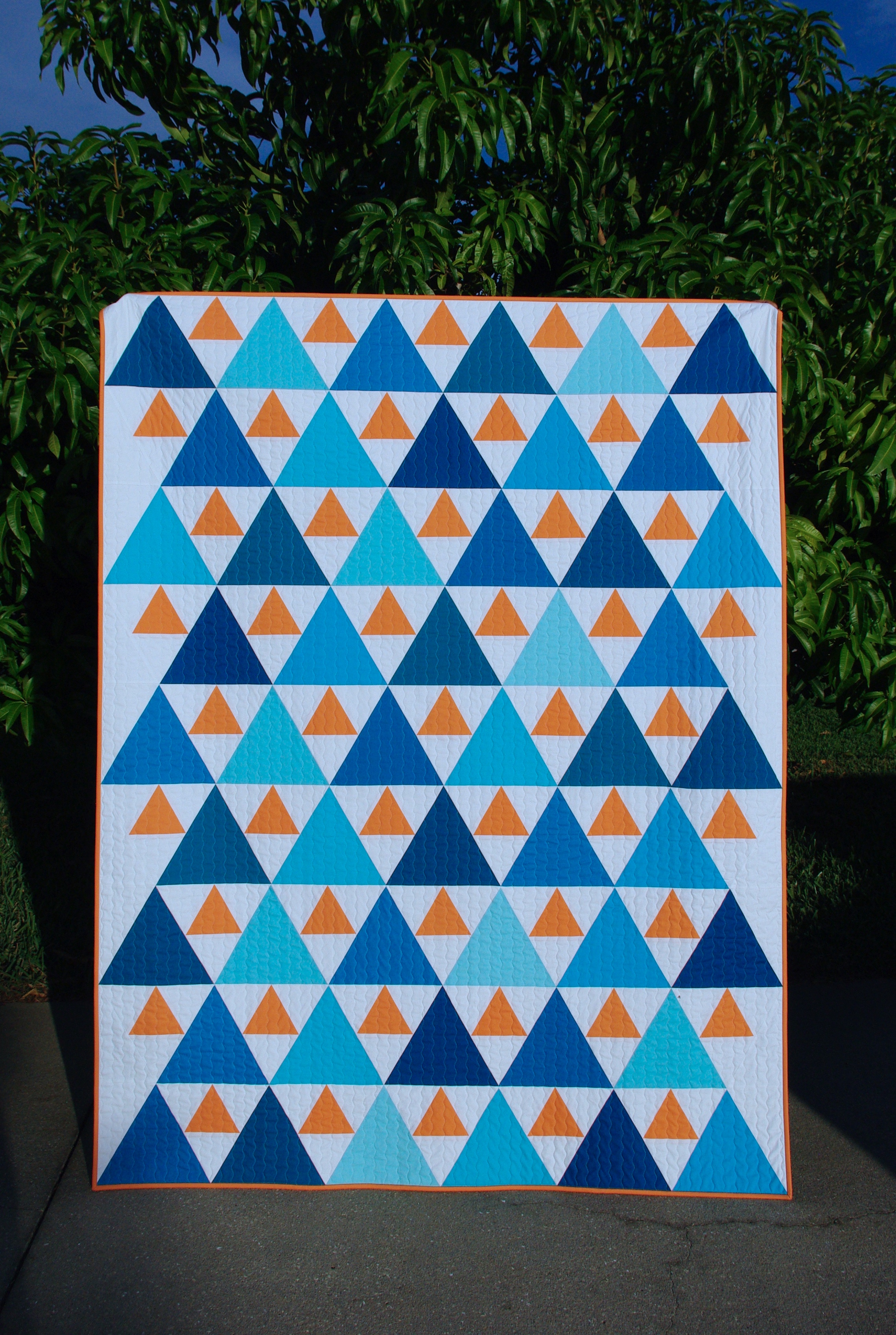
And finally, the finished quilt! By far, it’s the largest one I’ve ever made. It’s queen size and measures 95 ½” x 104 ½” which is pretty massive for a quilt!
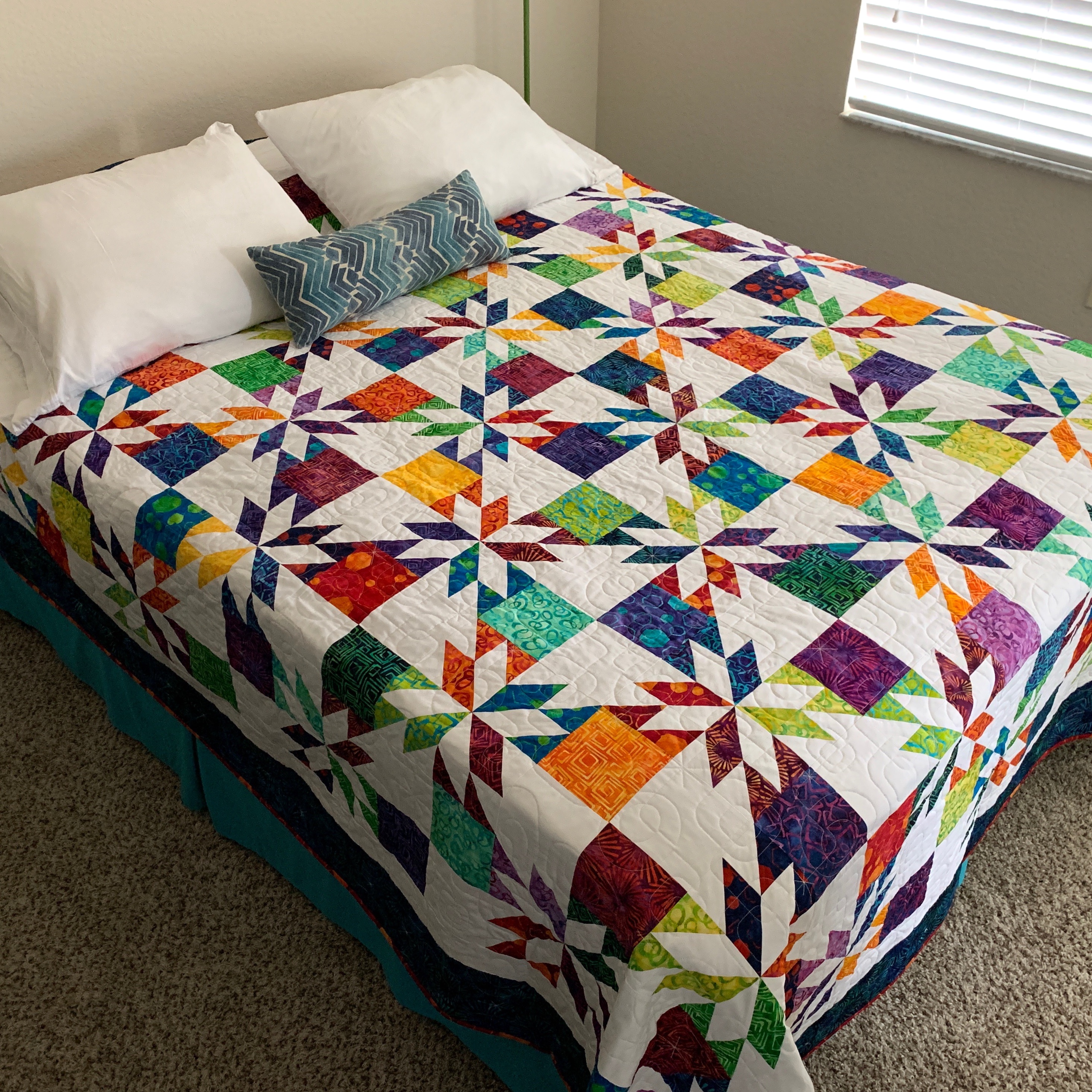
My daughter was so happy with it and it brings tons of color into her bedroom, just like she wanted. And I’m pretty pleased with how it turned out too. I do have to admit that this was a huge undertaking and I’m pretty sure I’d only work that hard for one of my kids!

I promised my son one this year…I guess I better get busy. 🙂
modern quilts, quilting, quilts, Uncategorized

A Gifted Quilt

Overall, a good portion of the quilts I’ve made I’ve given as gifts, and at this point I’ve given them to every family member that has expressed an interest in receiving one. It just happened that this particular niece ended up last, but for no particular reason!

As a surprise, I wanted to make her one for Christmas 2018, which I managed to pull off. If you’re one who makes quilts as gifts (and are on Instagram) you know how hard it can be to keep it a secret. No posting photos unless you block the recipient, but that leads to suspicion if you ask me! (I did sneak in one photo but she had no idea it was for her quilt).

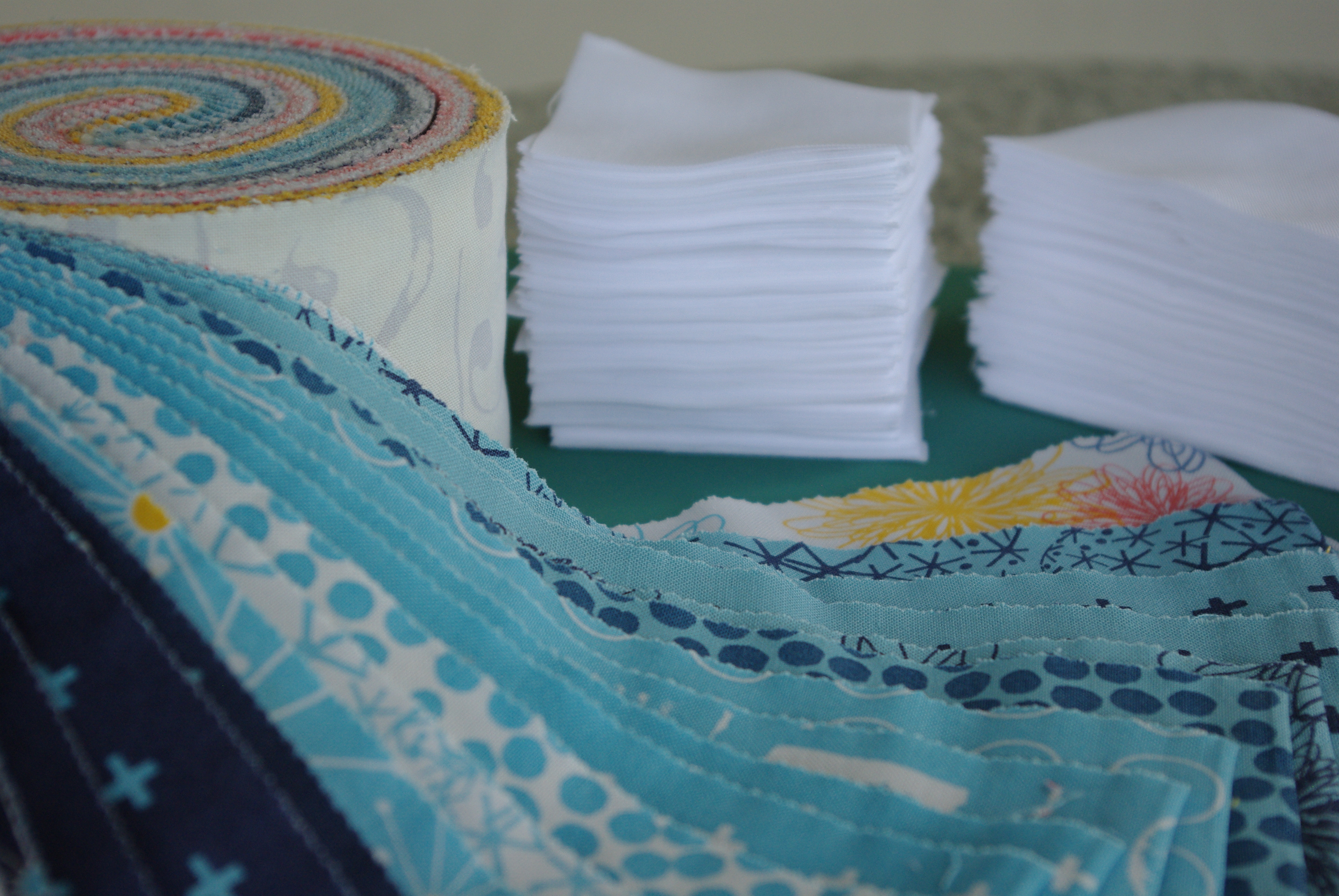
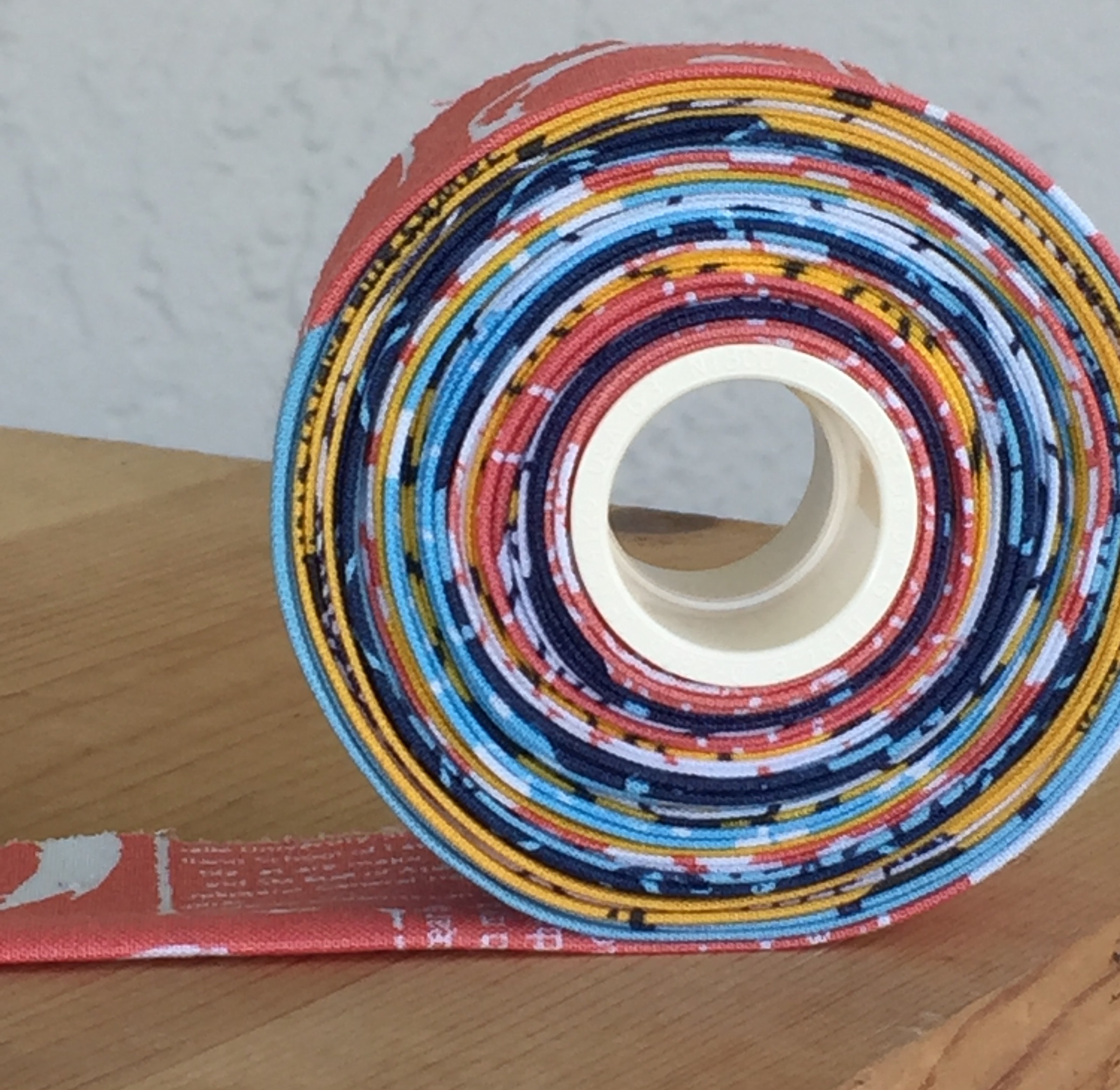
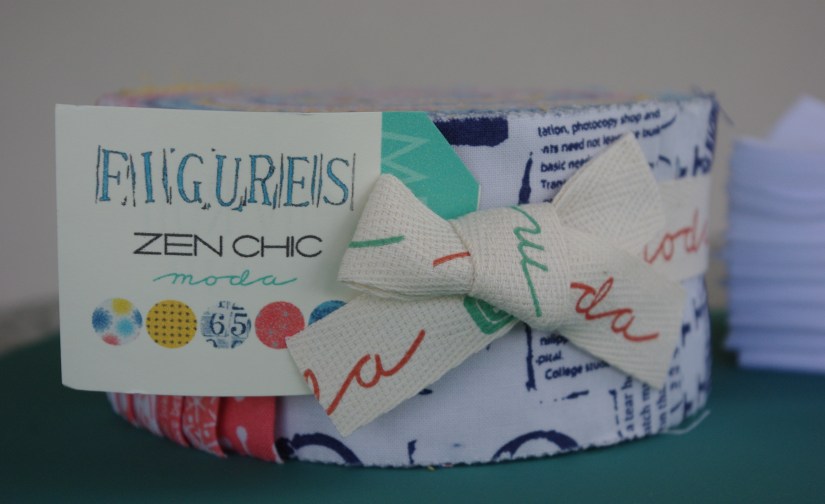
In keeping with the plan to sew with what I have, I decided on using a jelly roll I purchased a few years ago. She loves the color yellow and this Moda collection Figures had plenty of it.

Once the fabric was decided, I needed a pattern. I thought she’d like something more modern verses traditional, so I headed to the Moda Bake Shop and found a great jelly roll pattern, Tropical Punch Quilt.

This pattern is very easy and beginner friendly. Thanks to precuts and my stripology ruler, cutting was a breeze and done in no time.

I used Kona Cotton White for the background to give it a bright, fresh look. I paired two coordinating strips together for the block pairs so they would have opposite middles and outer edges because I prefer controlled scrappy over all-out scrappy.

Piecing the top went fast as the blocks are simple and a larger size. The layout took a bit of time because I wanted the coordinating blocks distanced from one another.

I chose to make the binding scrappy. Need instruction on how to make scrappy binding? Here’s my How To tutorial.

Here’s a trick I used to make sure the same colors in the binding weren’t next to the same colors on the quilt top once I sewed it on. After the top was complete and on my design wall, I laid out the binding strips around it in preferred order. I marked where I needed to start sewing the binding on the actual quilt sandwich so the layout remained as planned. It worked great!

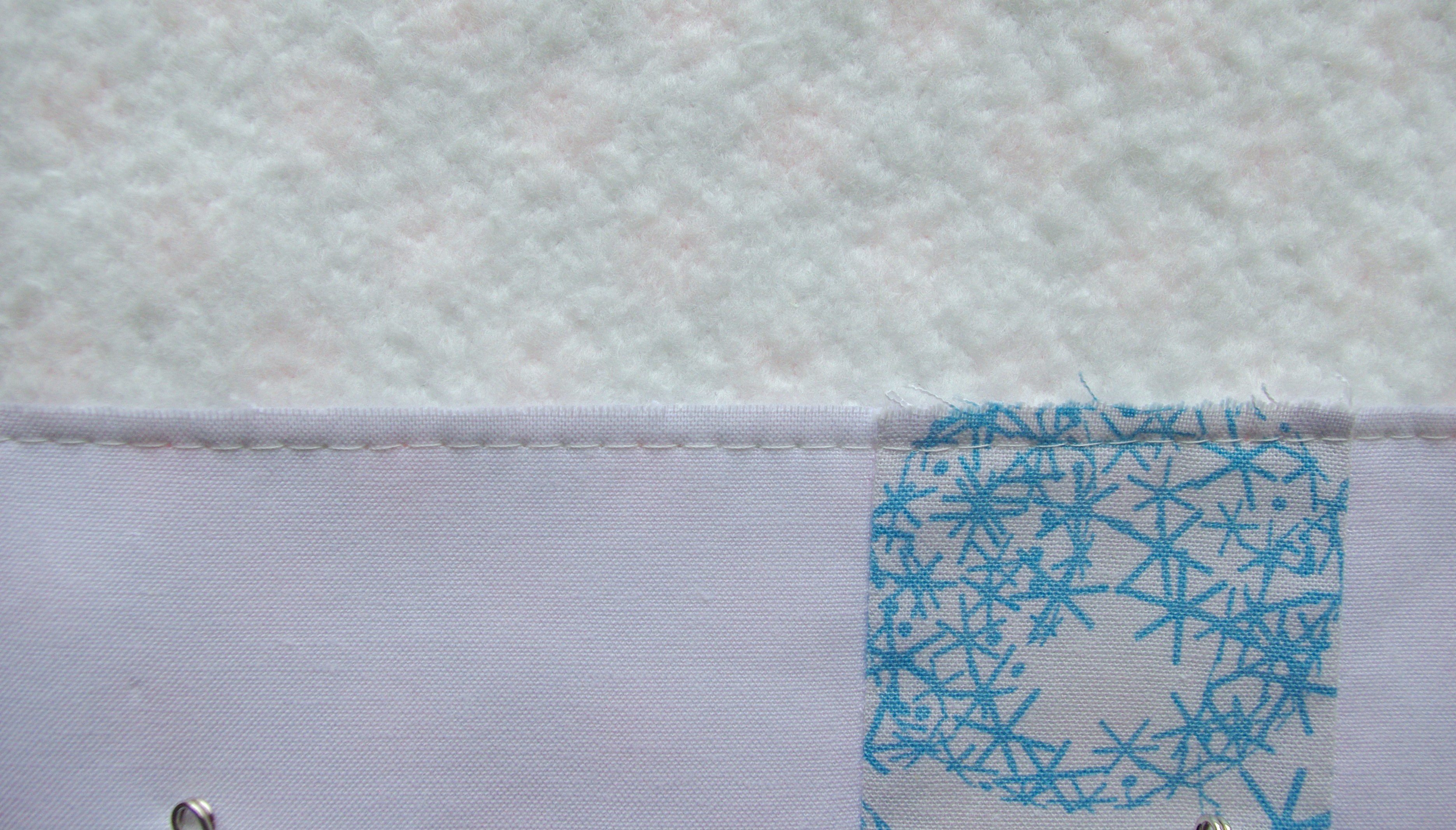
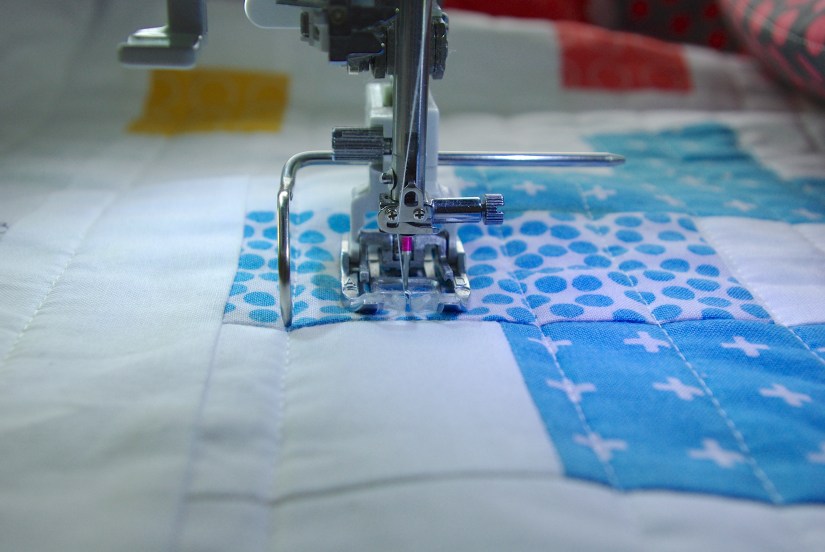
After sandwiching and before quilting, I sewed my basting stitch across the top to reduce pulling and shifting. This works wonders and I definitely recommend taking the time to do this step. Just set your machine on the widest stitch possible and sew within ¼” from the top. There’s no need to remove these stitches before sewing on your binding and it helps keep the sewn edge flat.

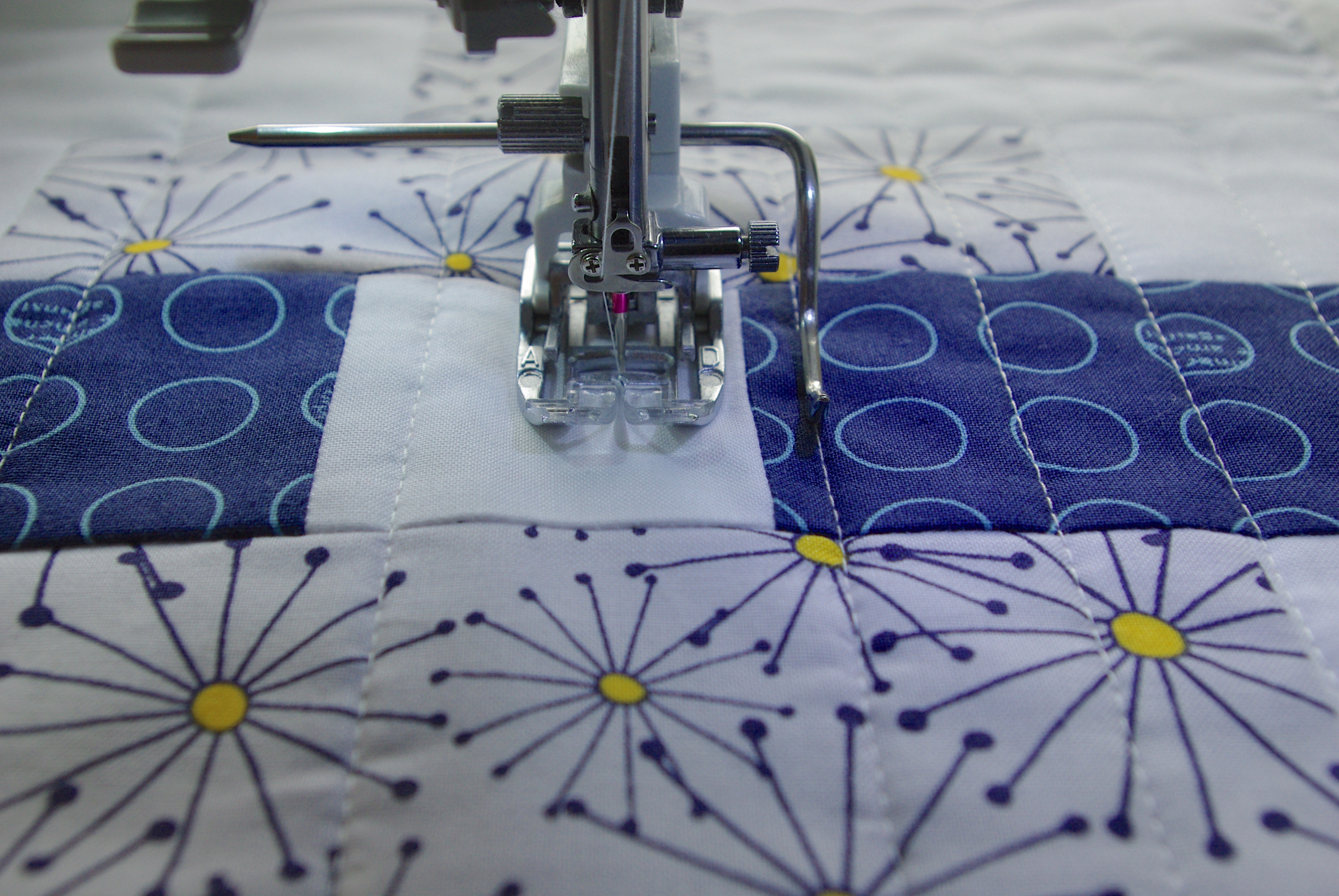
As usual, I used my hera marker to mark every line 1 ¾” apart and then used my guide for the lines in between.

I’ve never straight line quilted before but it came out pretty nice.

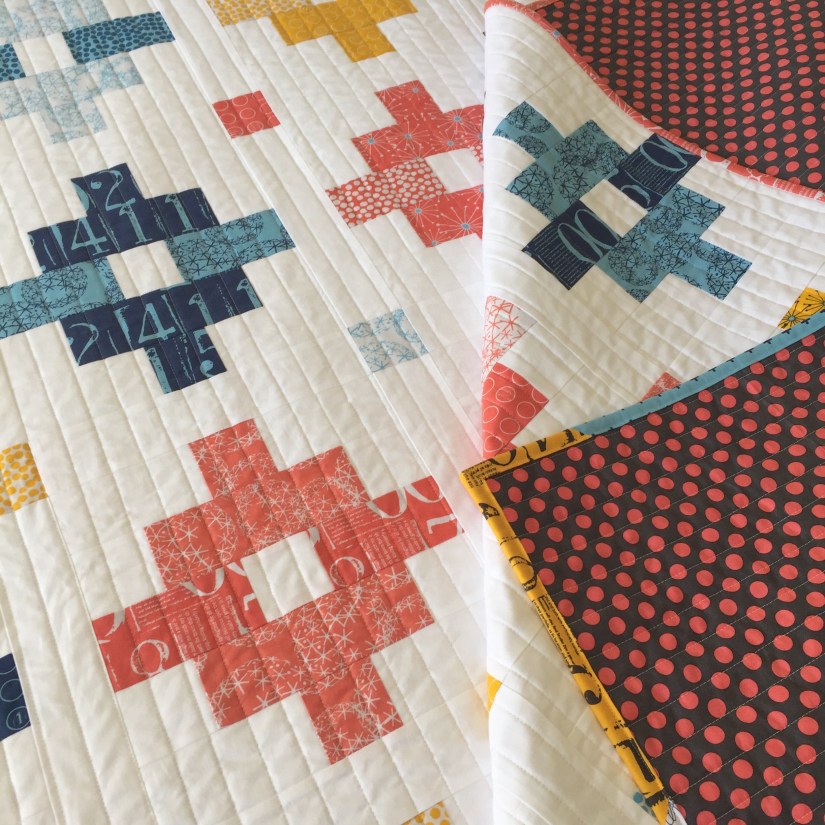
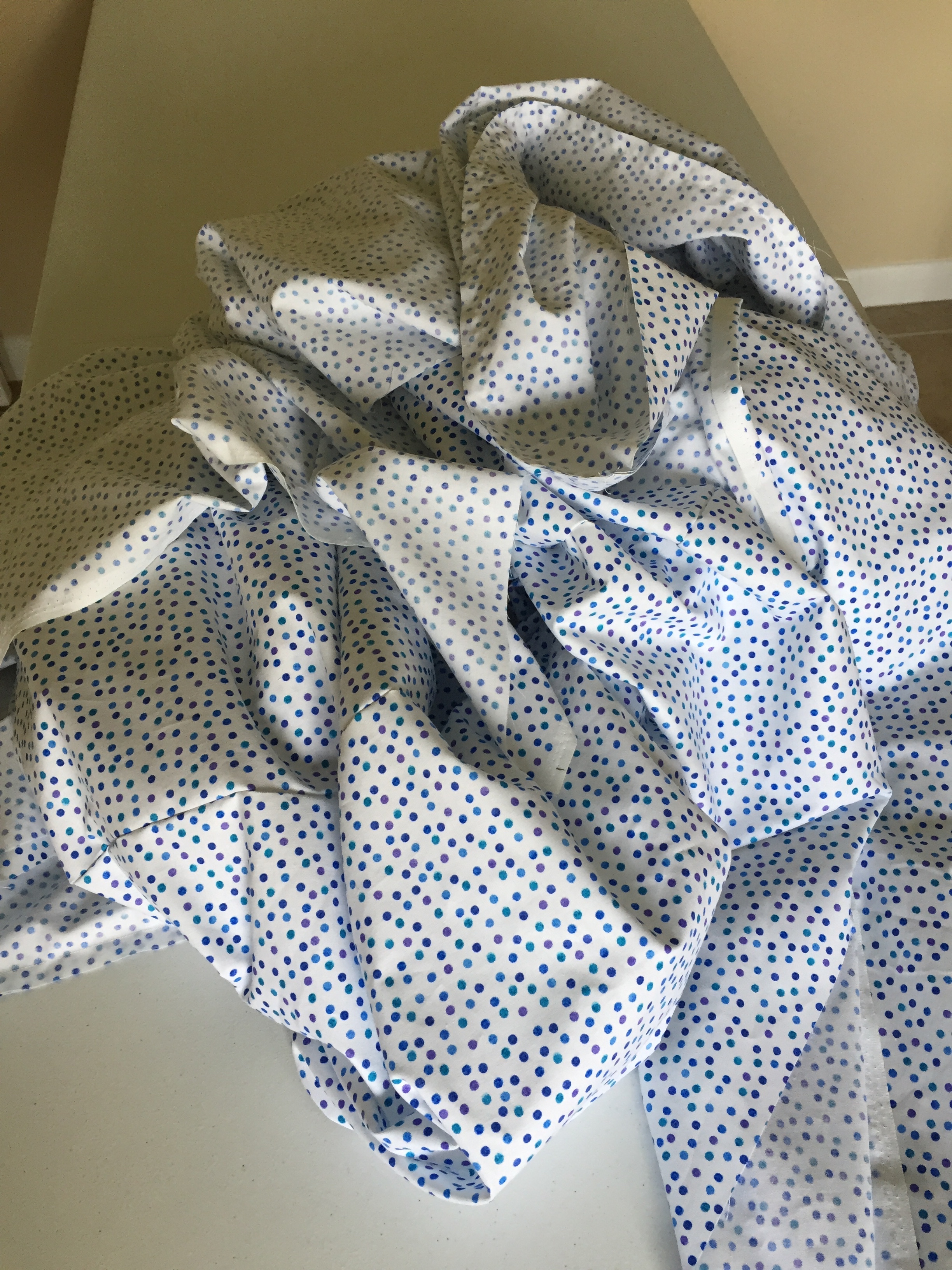
I also had this fun polka-dot backing on hand, I’m sure I bought it for something else that I never got around to making… 🙂

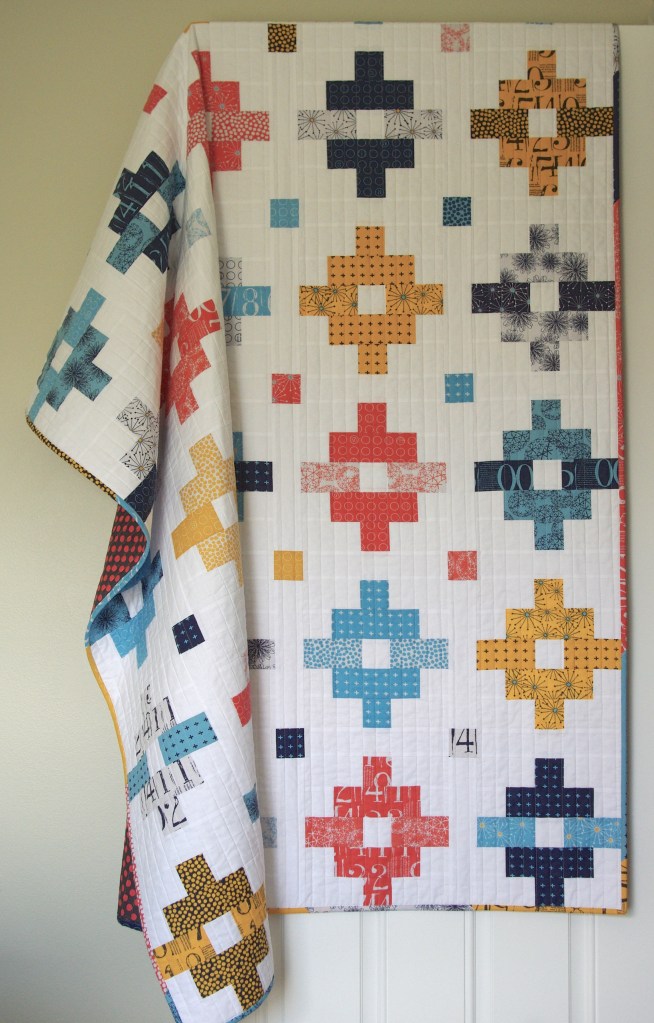
And the finished quilt!

I really enjoyed making this quilt, it was a lot of fun. I’m also very pleased that my niece absolutely loved it. And as always, I’m happy to spread around some quilting cheer. 😉

modern quilts, quilting, quilts

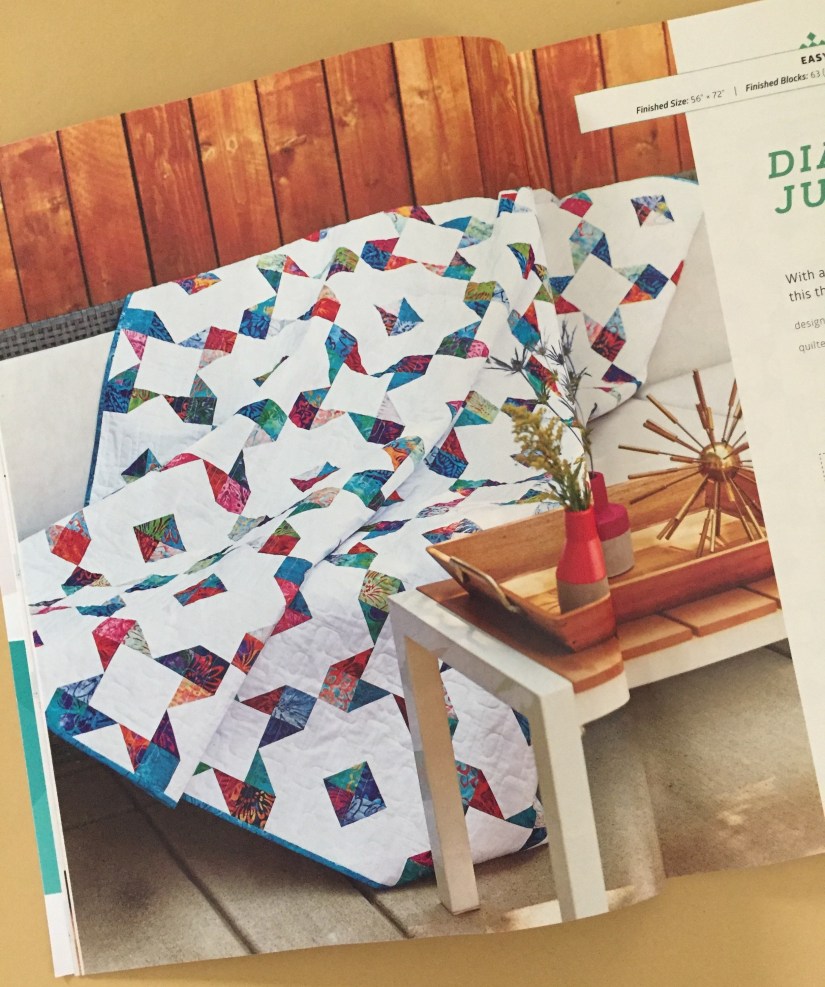
Published in Pre-Cut Patchwork Premier Issue Diamond Jubilee Quilt

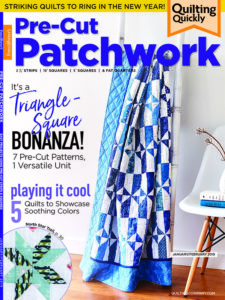
Hurray! It’s finally here, the January/February 2019 issue of Pre-Cut Patchwork magazine. This is the premier issue and I’m happy to be part of it. Pre-Cut Patchwork was previously known as Quilting Quickly but it still offers plenty of great patterns for using those precuts we know and love.

I’d like to share a bit of my publishing process…it took a long time but it was really fun. While I had been published in the September/October 2017 issue of Modern Patchwork, it was for small mug rugs that were accepted as finished projects. Pretty easy. But this time, because I had written the quilt pattern and tested it long before submitting, by the time it was accepted the fabric was no longer available so I had to remake it. Deadlines and all. Yikes!

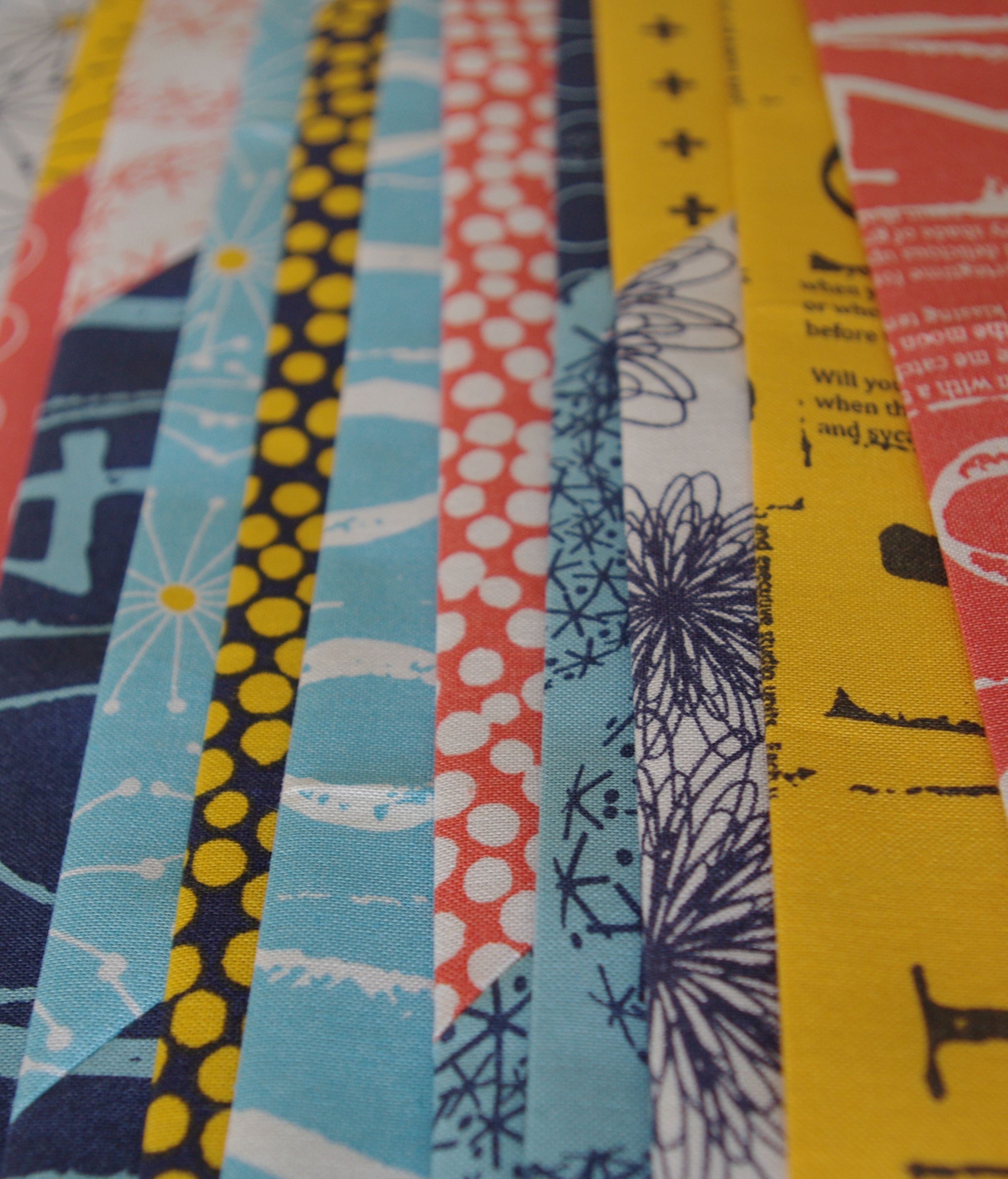
After sending in some necessary paperwork, I was assigned an editor who helped me with my fabric options yet I ultimately got to choose. I went with Bright Blooms by Lunn Studios and let me tell you, it was so fun to get fabric before it was released to the public, but it was also nerve-racking!

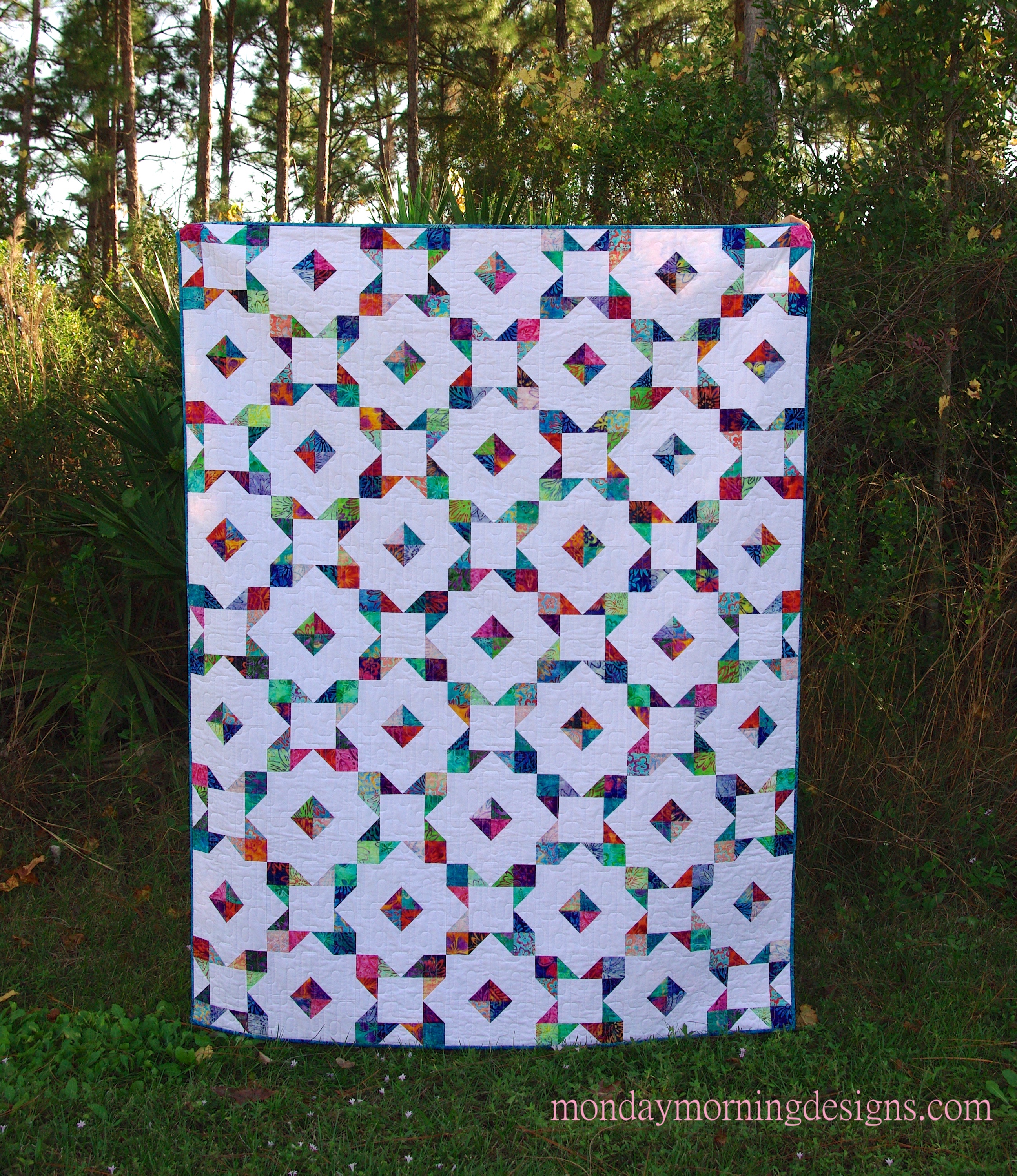
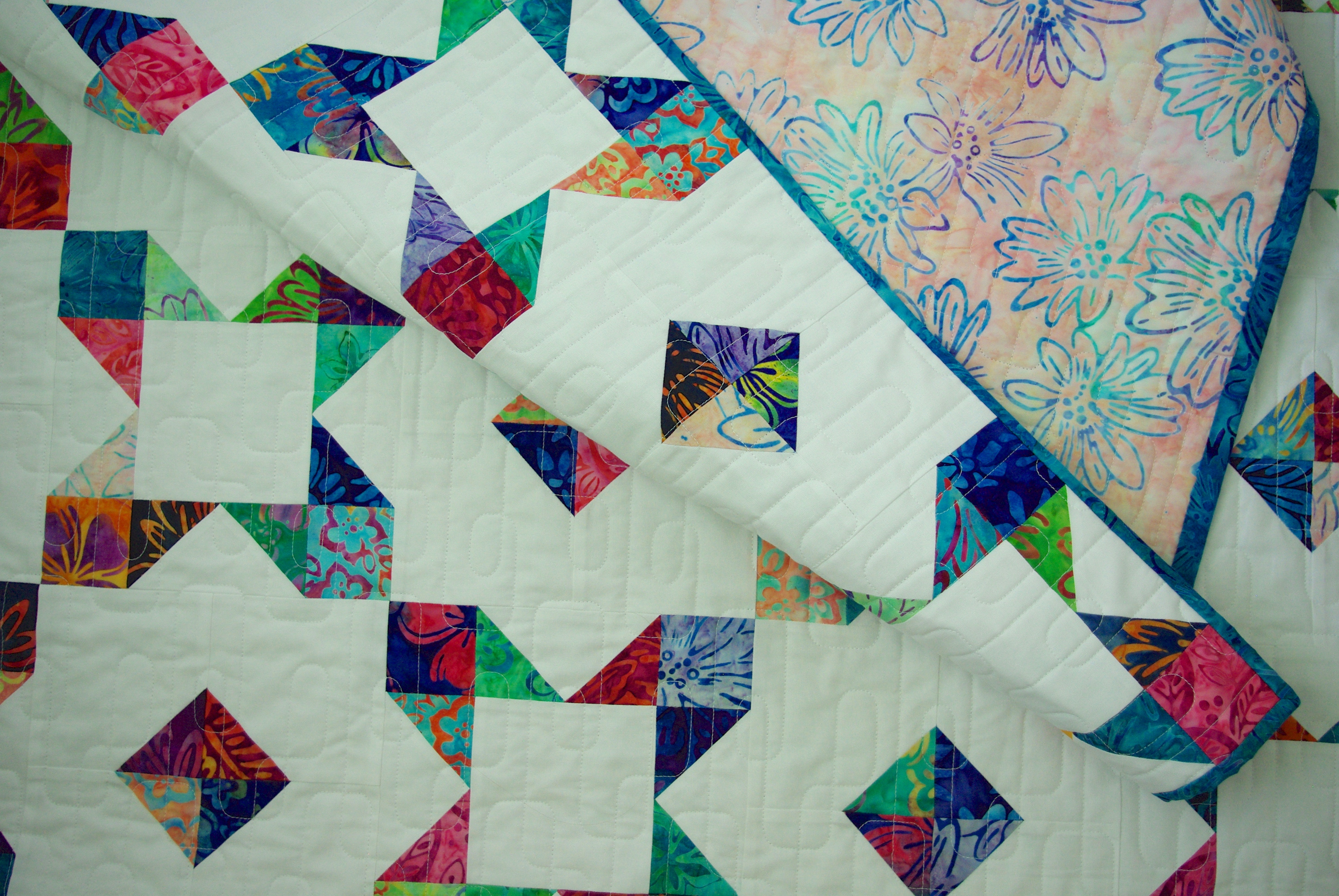
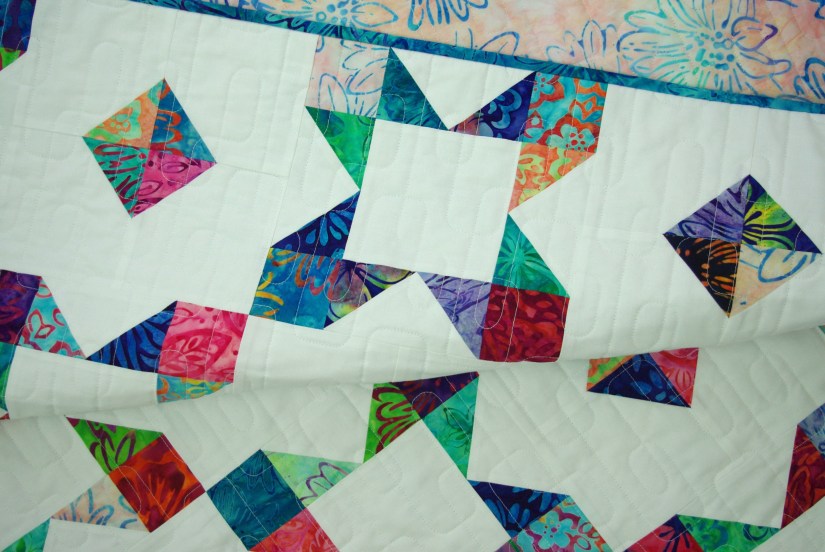
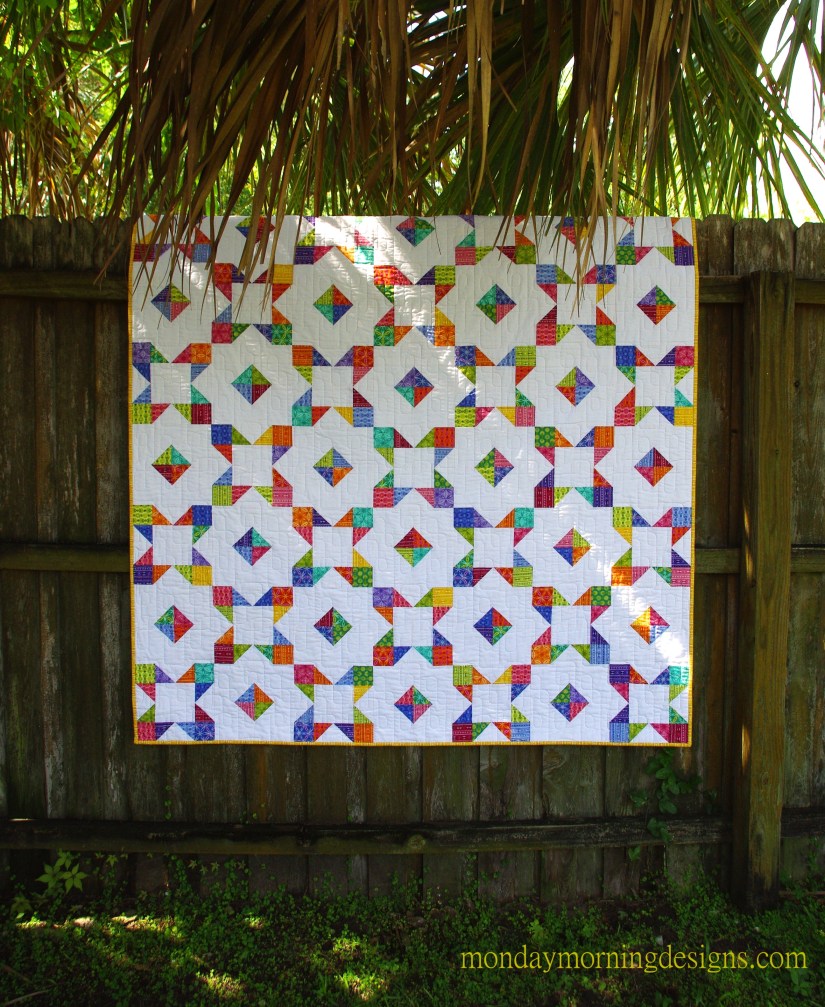
Because I had time restraints, I didn’t take any other photos of the process. The name of my quilt is Diamond Jubilee, it’s a throw size that finishes at 56″ x 72″. Fabric requirements include one roll up and background yardage (I used Kona Cotton White). I chose a medium blue batik from the collection for the binding and a light pink for the backing. My longarmer quilted it with a rounded squares motif. 

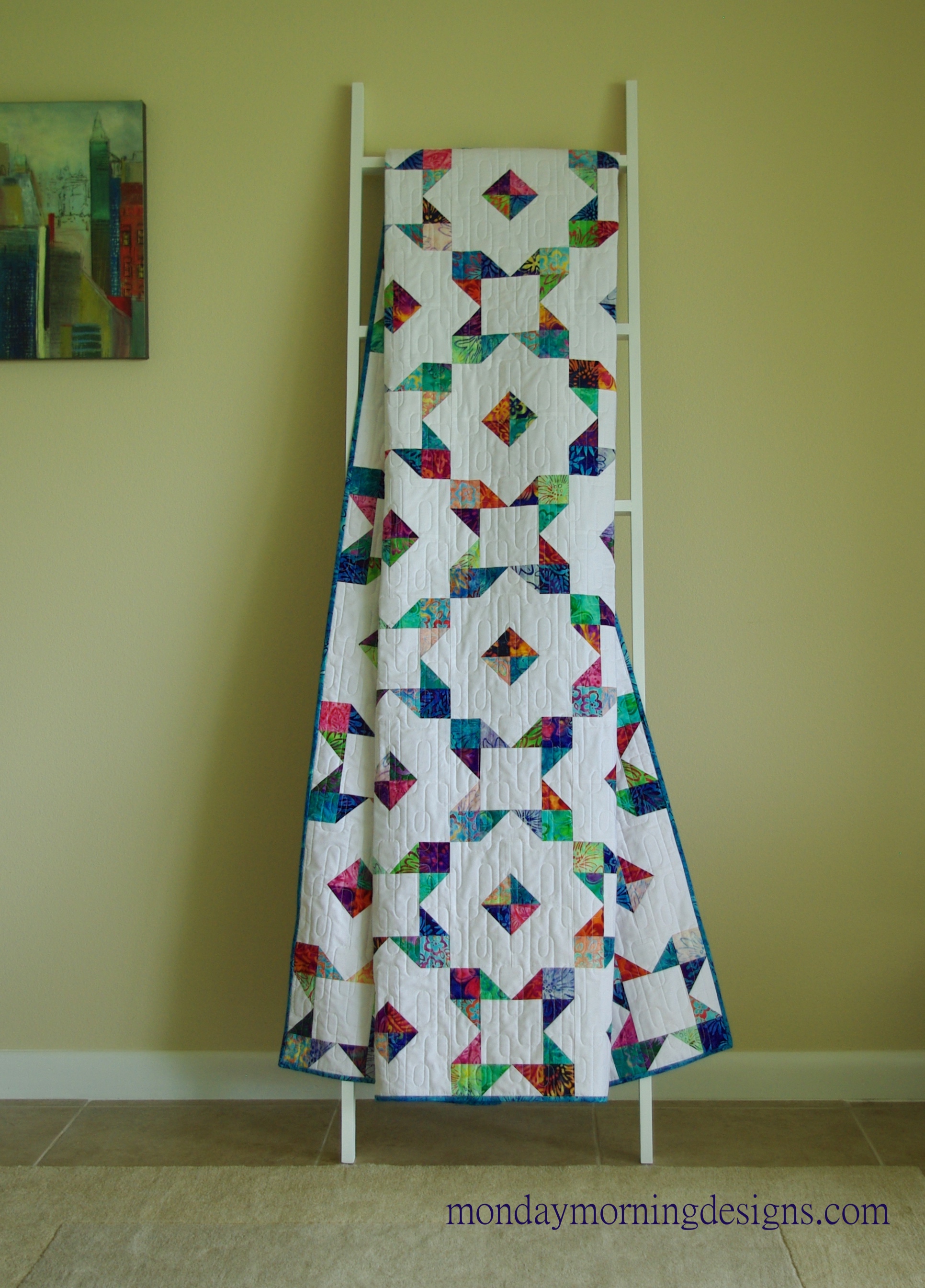
Here it is on my quilt ladder but I think this pattern is best showcased if the quilt is opened all the way.

And a couple of close up images…

As seen in Pre-Cut Patchwork 

This is the second quilt I’ve made with batiks and I absolutely love working  with them. 

Here are a few shots of the first Diamond Jubilee quilt I made with the Transformation collection by Benartex. Such rich, bright colors.

Now I have two of the same quilt…the first one I use around the house, the second one I’ll probably keep for displaying on my quilt ladder.

So that was my first quilt publication experience. If you have an idea and are considering getting it published, send it in, it’s definitely worth trying.

I hope to see other versions of this quilt, it’s a great choice for the quilter who enjoys making flying geese. There are several lovely projects in this issue so if you don’t have a copy grab one and use those precuts! Should you decide to make a Diamond Jubilee quilt, please post it and mention me on Instagram as I’d love to see your take on it. 🙂
Christmas, quilting, quilts, Uncategorized

Christmas Irish Chain Quilt

I’ve always wanted to make an Irish Chain quilt, so I finally did. I just love their simplicity. Earlier this year I purchased fabric for a Christmas tree mini quilt pattern, Wee Three Trees, and since it didn’t require a lot of fabric, I luckily had enough left for an entire quilt, scrappy binding included!

Greetings by Kaye England for Wilmington Prints

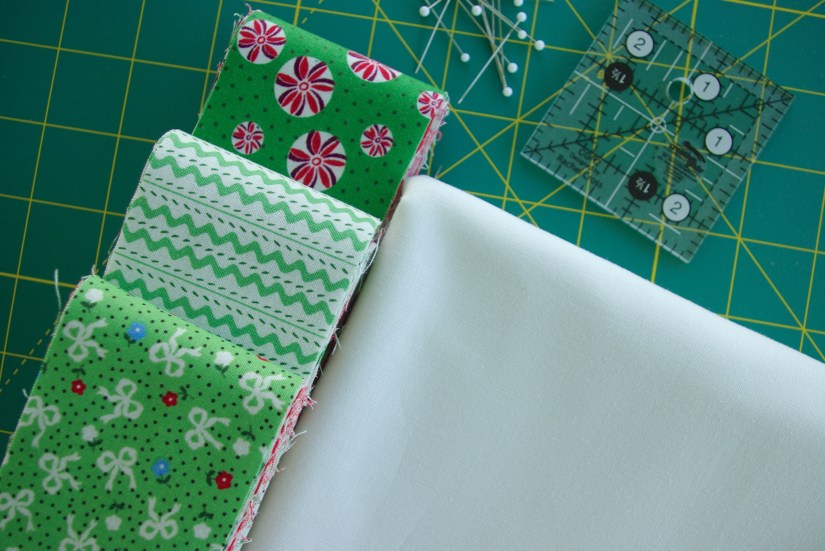
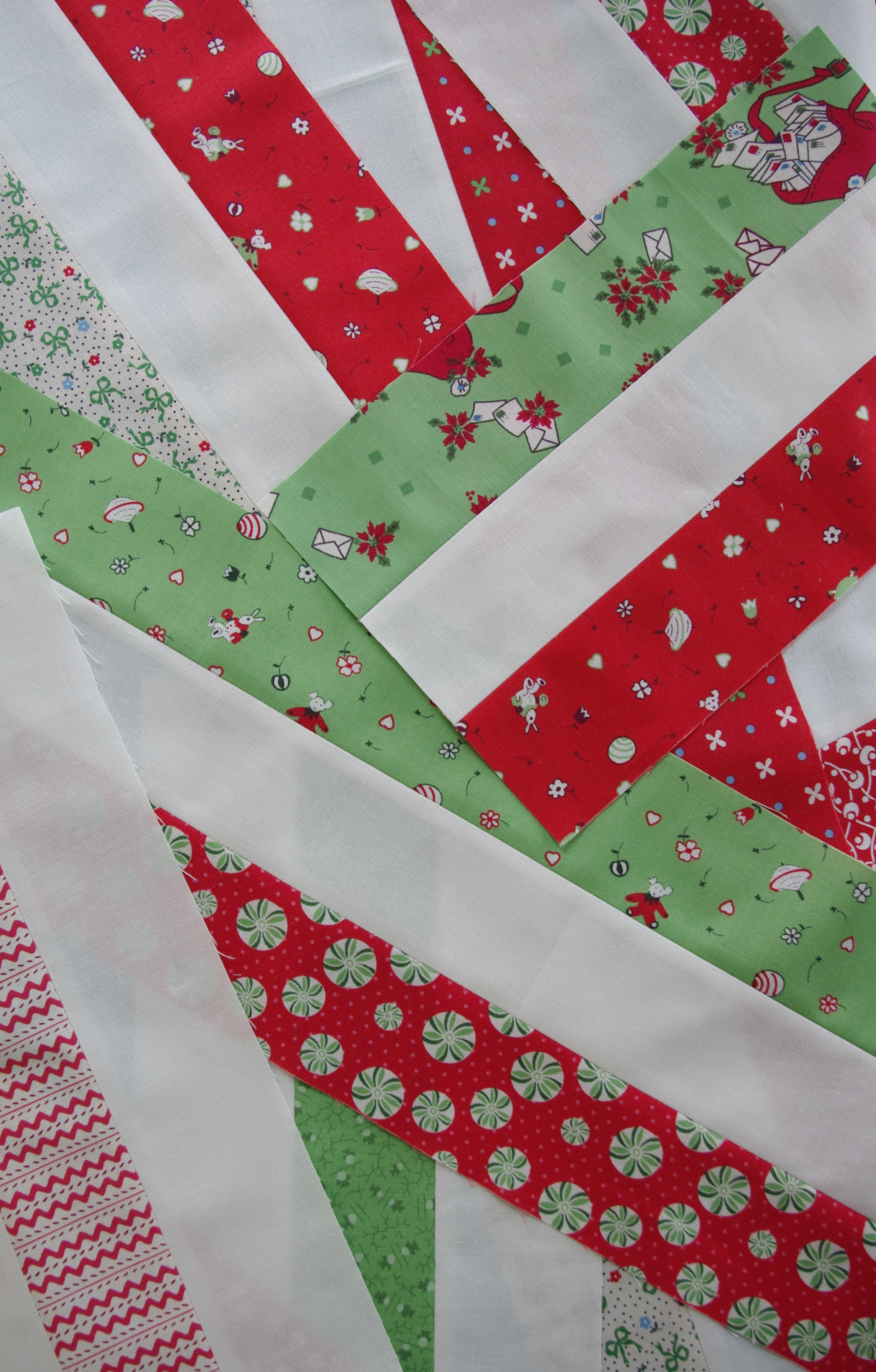
I definitely prefer traditional red and green Christmas colors and this fabric was a perfect choice as it offered peppermints, poinsettias, old-fashioned toy tops and letters to Santa for some old-style fun.

I started piecing this in May and finished in August which seems like it took me a long time, but I made a couple of other quilts in between, and overall, it went together relatively quick. I used precut 2 ½” strips so I was able to strip piece and chain piece the nine patch blocks.

IMGP7961.jpg

The background fabric is Kona Cotton Snow, which blended nicely with the light colors in the printed fabric. For quilting, I went with my ever-so-popular (and quite possibly ‘overdone’) crosshatch. I made my marks using a hera marker and as usual, it took a lot of time from start to finish.

IMGP8726.JPG

I thought the crosshatch would give the plain blocks some texture and I quilted my lines 1 ½” apart. I’m pretty happy with the results! It’s also a generous size, finishing at 64 ½” x 76 ½”.

IMGP9085.JPG

It’s hard to discern, but the backing is white with a faint gray/silver snowflake print. And for some reason that fabric is so soft!

Well, now I’ve got my traditional Irish Chain quilt that I can finally enjoy this holiday season.

IMGP9093.jpg

Merry Christmas!

modern quilts, quilting, quilts, Uncategorized

A Triangle Peaks Quilt

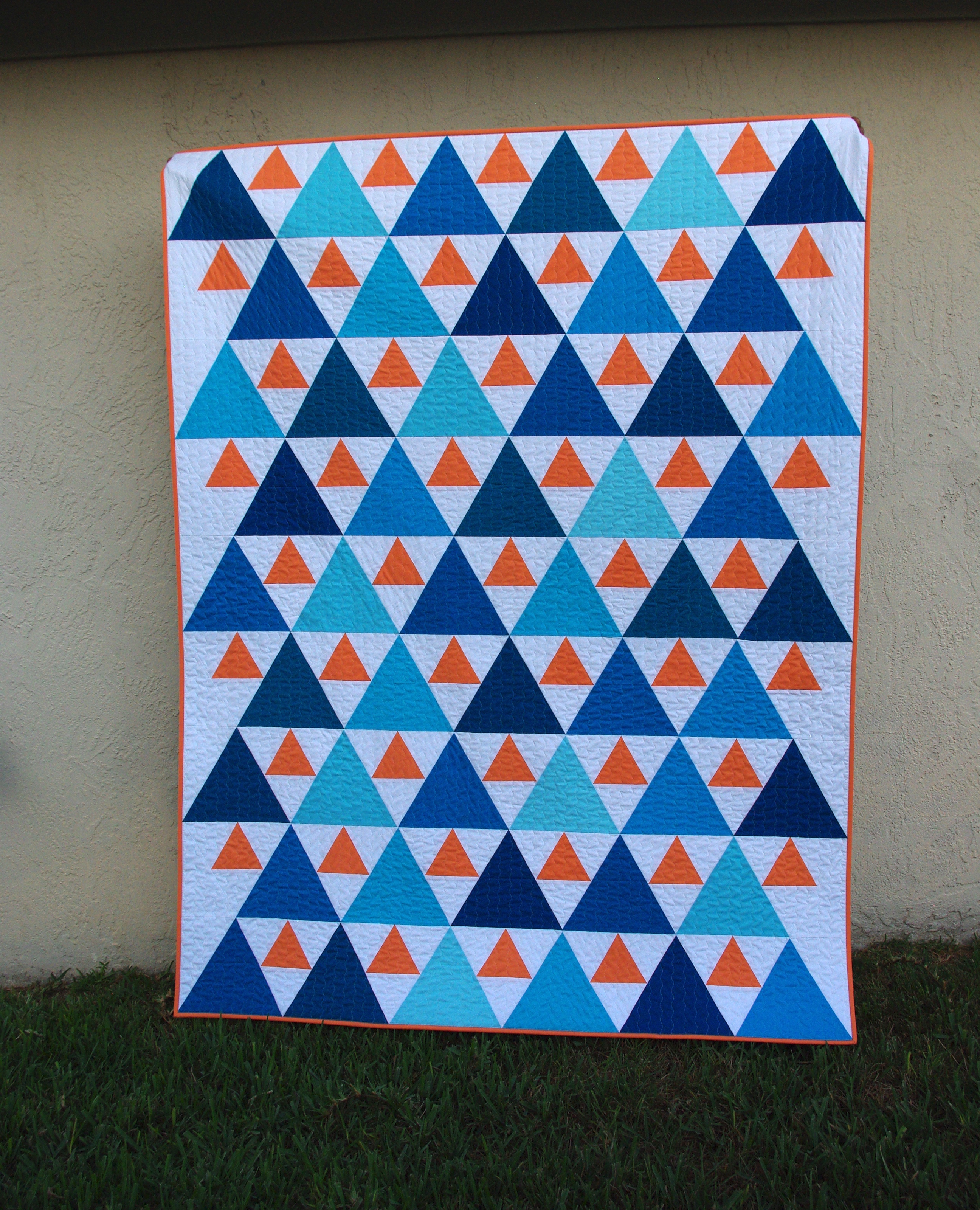
When I saw the Triangle Peaks quilt made by Emily Dennis I knew I needed to make one for myself. Lately I’ve been using fabric I have on hand, which isn’t a whole lot and is probably considered a relatively small stash for a quilter, but I was determined to make this pattern using what I had.

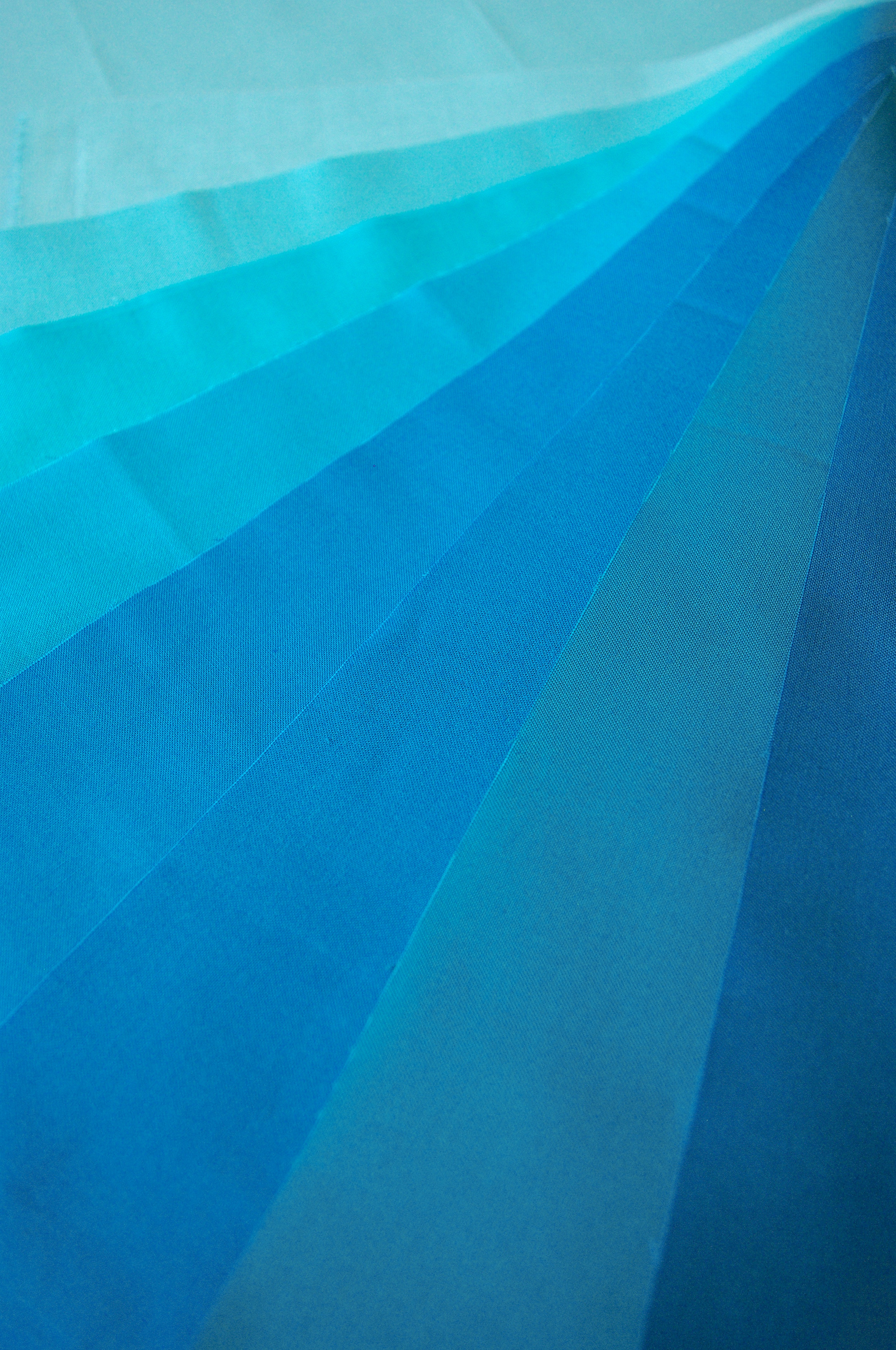
A couple of years ago, with another project in mind, I purchased a 12-piece Kona Cotton fat quarter bundle entitled Pool Party. This lovely collection offered a range of blues and aquas from light to dark with a few deep blue-greens mixed in.

While I don’t consider myself a ‘blue’ person, I really took a liking to this combination. And since that particular project never came to fruition, I pulled my fabric and set out to make my version of a Triangle Peaks quilt. To compliment the blues, I decided on Kona Cotton Mango for my ‘accent’ color (the small triangles) which I did have to purchase, along with backing fabric.

IMGP8870.jpg

This was my first time working with triangles, which I enjoyed, but bear in mind if you make anything with triangles every one has two bias edges that are prone to stretching if you’re not careful.

I completed the accent triangles first then everything else was ready to sew together. For me, deciding on the layout was the most difficult part. I used only nine of the twelve colors of blue which was enough to spread them out evenly, but it still took some time to make sure the like-colors were far enough away from one another.

IMGP8994.jpg

Once the top was finished it was time for quilting. If you’ve read my blog posts in the past you know I don’t exactly love the quilting aspect. If I could afford it I would have just about everything longarmed! But since I can’t, I end up doing quite a bit myself.

Since this quilt is so modern and angular, I felt the quilting needed to softened it up. That said, I decided on vertical lines using my serpentine stitch. Maybe subconsciously I thought it would give it a wavy, watery feel. 🙂
After sewing my basting stitches across the top (to help reduce shifting and pulling) I started quilting from the middle then to the right, marking lines every 1 ¾” with a hera marker. This process took forever! But I admit, I’m pretty slow.

IMG_8128.jpg

Once all the 1 ¾” lines were finished, I used my guide to quilt the lines in between. This saves time from marking rows, and it works well, my lines were fairly accurately spaced.

IMGP9037
Quilting with Aurifil thread 2026/Chalk

I think the serpentine stitch was a great choice.

It ended up that I didn’t mind quilting this one at all. I kind of went into auto pilot mode, just plugging away row after row. It took me more hours than I could count but I love the results.

I used Kona Cotton Mango for the binding.

Here’s my finished throw size quilt.

I’m really happy with this one and plan to get some good use out of it!

quilting, quilts, Uncategorized

My ‘Half Quilt’ Invention

Does this scenario sound familiar to you? The weather is cooling down so you get out all the necessary blankets and quilts. You have them nicely made into the bed only to hear your partner exclaim it’s too many covers. My husband and I simply cannot agree when it comes to this topic, he’s usually too hot and I’m usually too cold. This has been going on forever and it was time the problem ended!

After doing some thinking, I came up with an easy solution—the ‘half quilt.’ The half quilt is basically a quilt half the size of a bed quilt width-wise, made wide enough to cover just one person. Each person gets one so they can use it at their own discretion. Personal choices won’t affect anyone else; you can’t beat that!

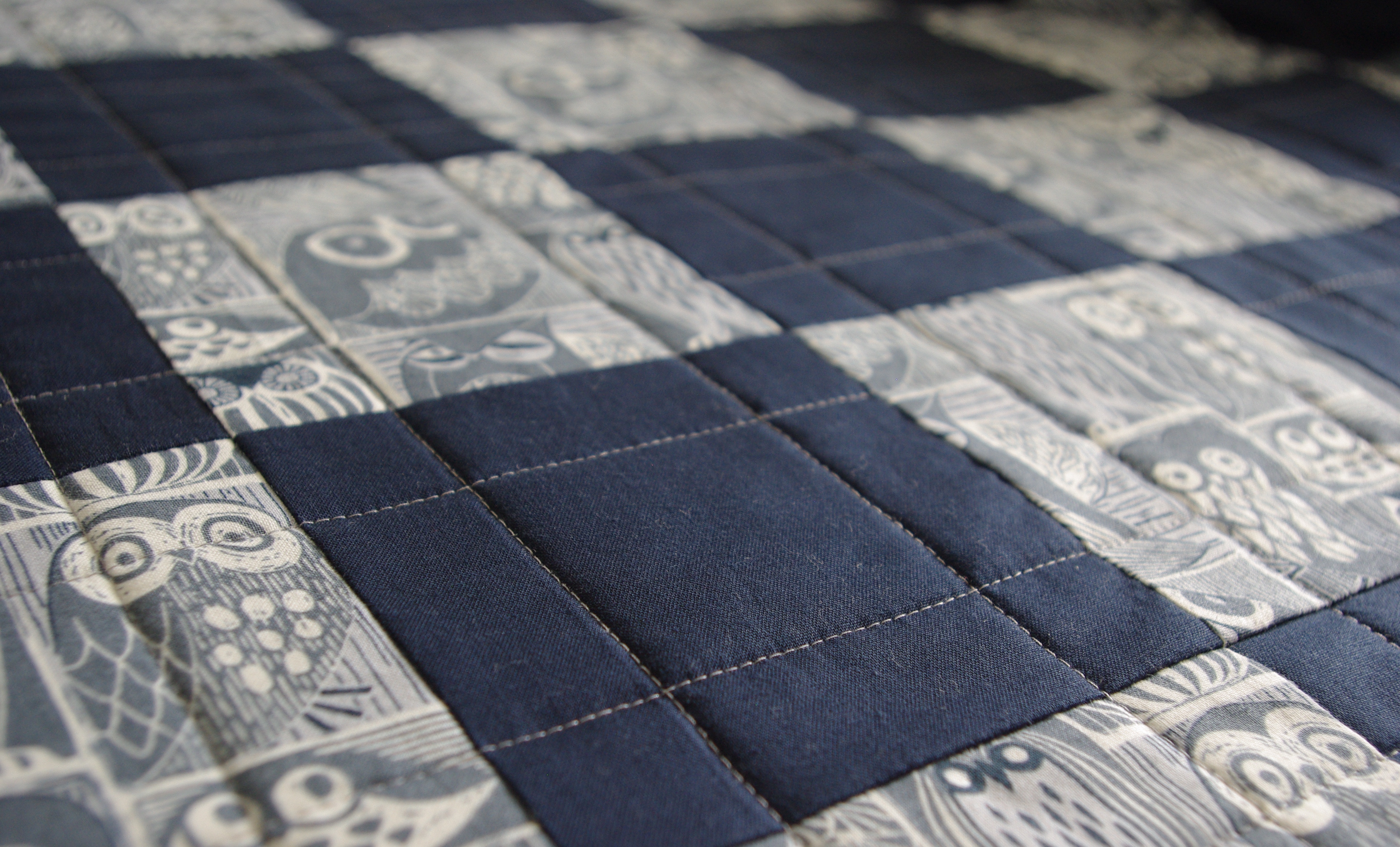
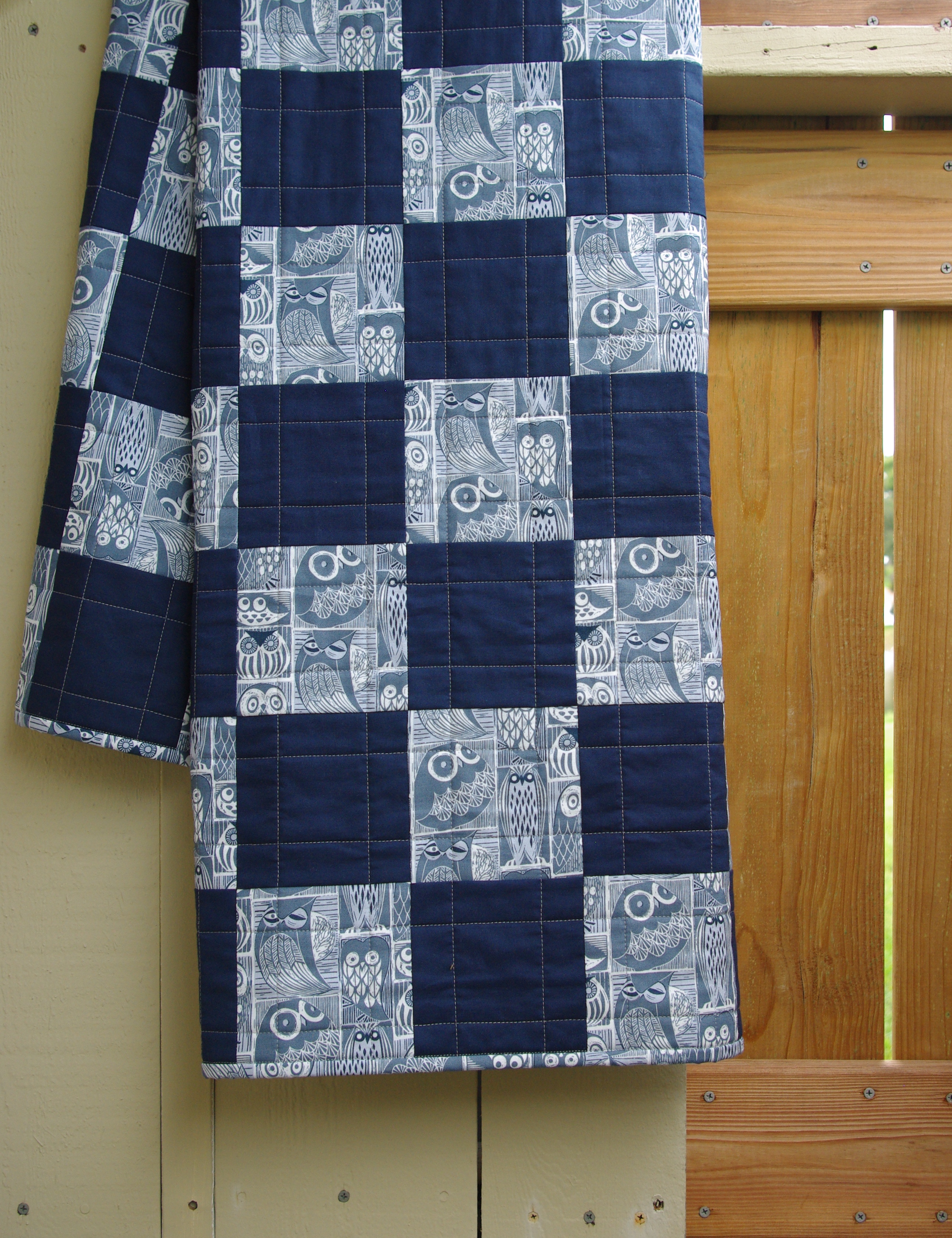
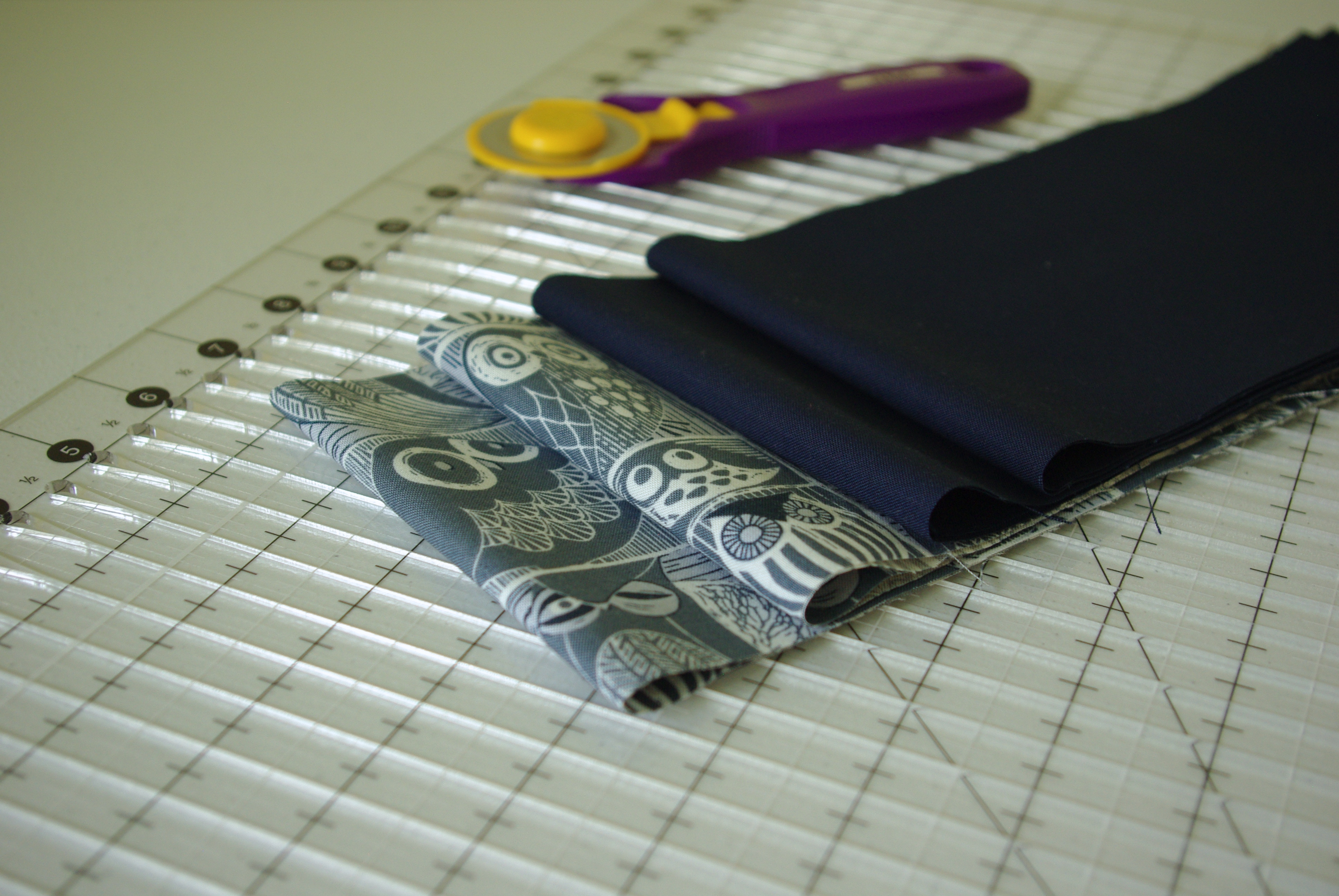
I recently made one for my husband by strip piecing just two fabrics. Because he’s an avid bird watcher, I chose Blue Moon Owl fabric by Dear Stella and Kona Cotton Navy.

IMGP8843.JPG

IMG_7984

It’s a simple 5″ patchwork design, nothing flashy or complicated, made mainly for functionality. I quilted it in simple squares and machine sewed the binding figuring it would hold up better to frequent laundering.

IMGP8999

IMGP8997

There’s not a lot of math involved, just figure out how wide and long it needs to be to cover the person comfortably. This quick quilt finished at 40 ½” x 71″.

IMGP9005.jpg

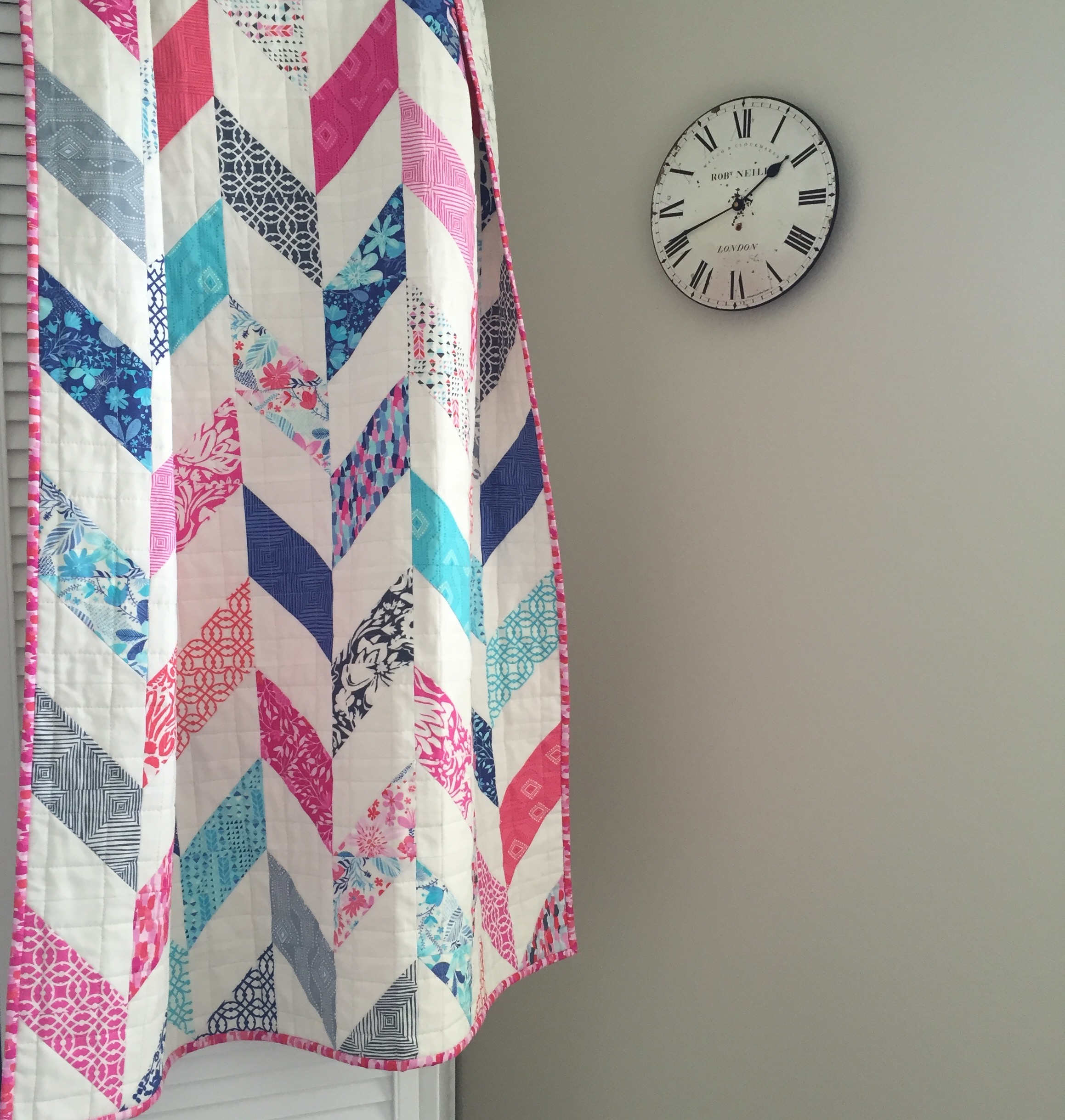
My half quilt idea is not entirely new, I made one for myself two years ago. I chose a classic herringbone pattern made with Moda’s Paradiso charm packs and Kona Cotton Snow. It measures 40 ½” x 63 ½”.

IMG_4603.jpg

Just to illustrate differences, I’ve had mine out for a couple of weeks now and my husband hasn’t even used his yet.

The weather is getting chilly and it’s time for warmth. I highly recommend making a couple of these half quilts, they’re the perfect solution for the ‘too hot, too cold’ sleeping issue! And of course it’s a great excuse to make another quilt. 😉

quilting, quilts, tutorials, Uncategorized

Quilting on a Whim (A Granny Square Quilt)

I admit, this is the first time I’ve ever made a quilt on impulse. It happened while scrolling Instagram and granny square posts kept showing up from the Moda Bake Shop. Almost instantly it clicked—I knew I wanted to make a granny square quilt and I had the perfect fabric for it. And since I recently finished a rather challenging and labor intensive queen size quilt, I needed something easy!

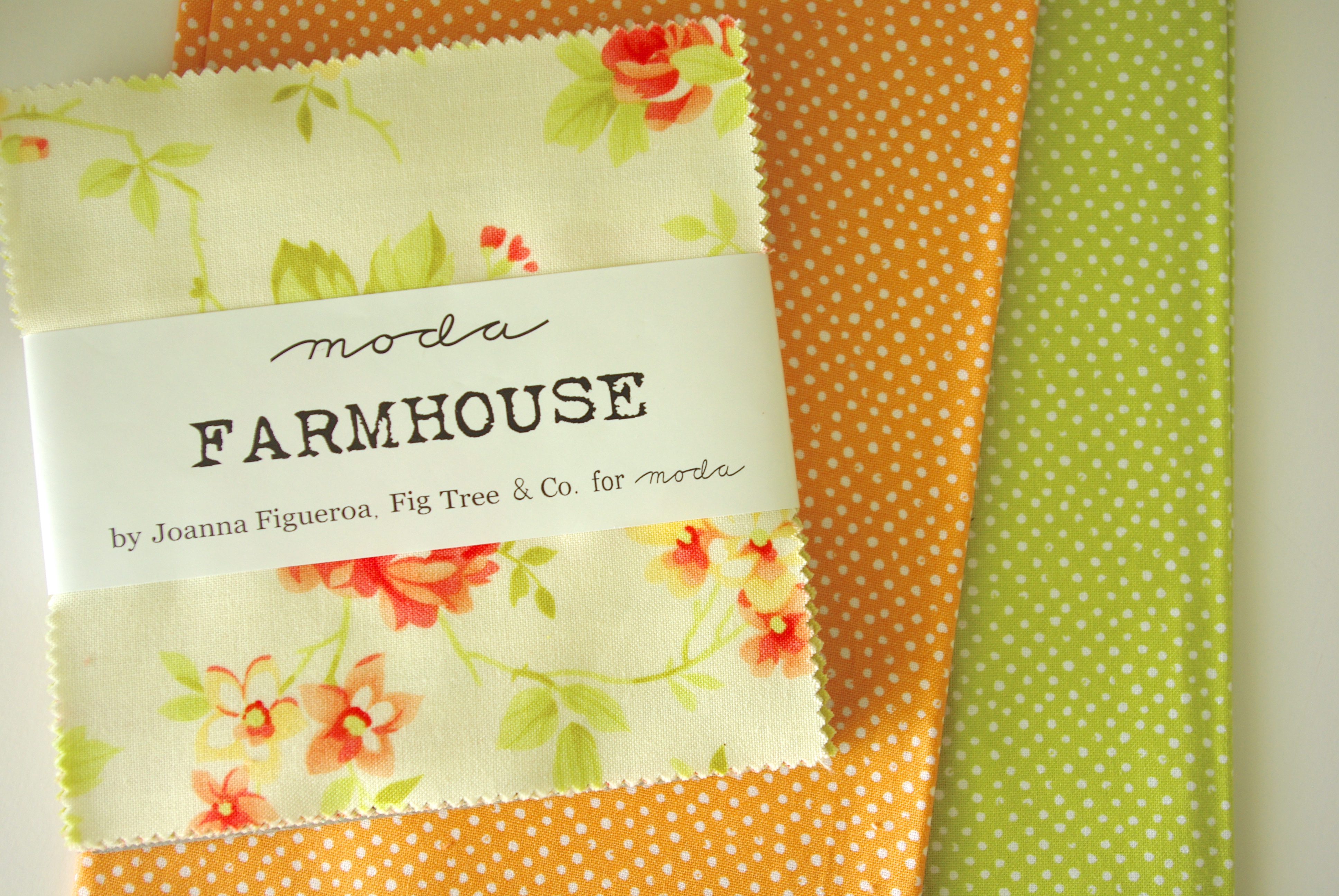
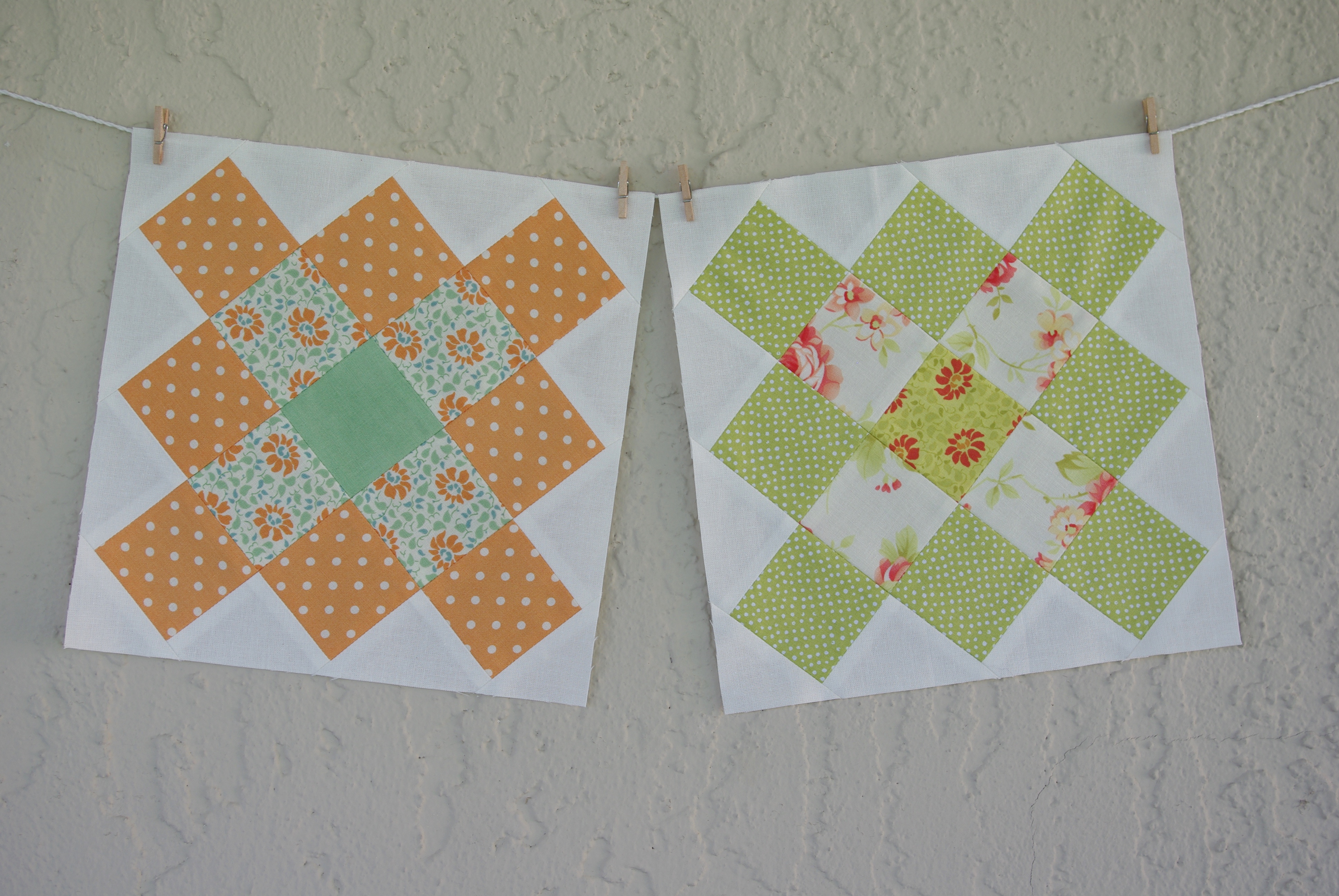
A while back I ordered a fat quarter bundle of Moda’s Chestnut Street for a fall quilt. While I cut what was needed for the pattern, I never made the quilt because I couldn’t decide on a background fabric. Since I had plenty of Chestnut Street left over, along with additional fabrics from other Fig Tree collections, I knew I had enough fabric and variety (plus I added two Dear Stella Mini Dots). I’d also been intent on stashing down, so it was definitely a go! I stopped what I was working on and started pulling fabric. And let me tell you, it was FUN. 🙂
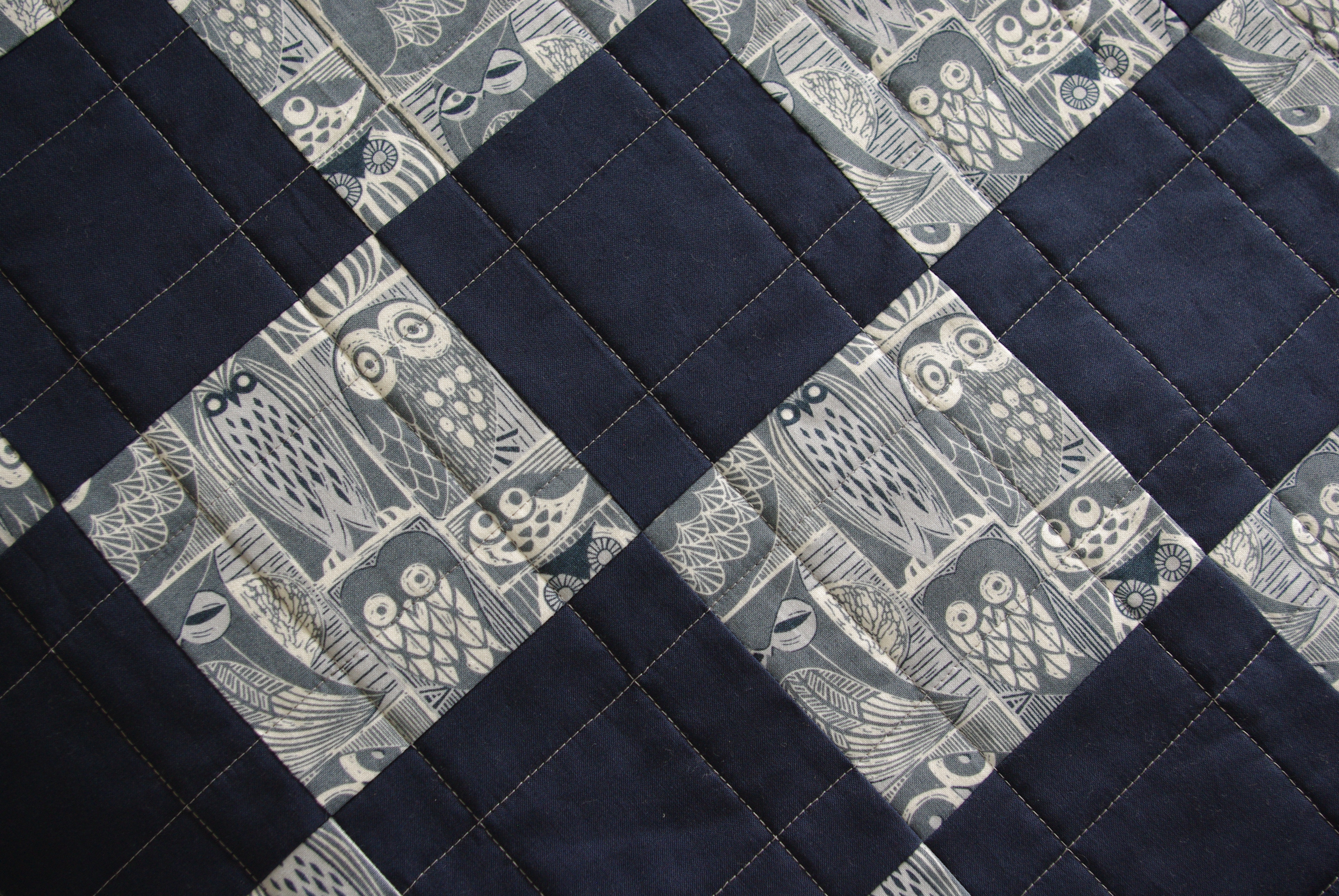
Image-1.jpg

IMGP7220

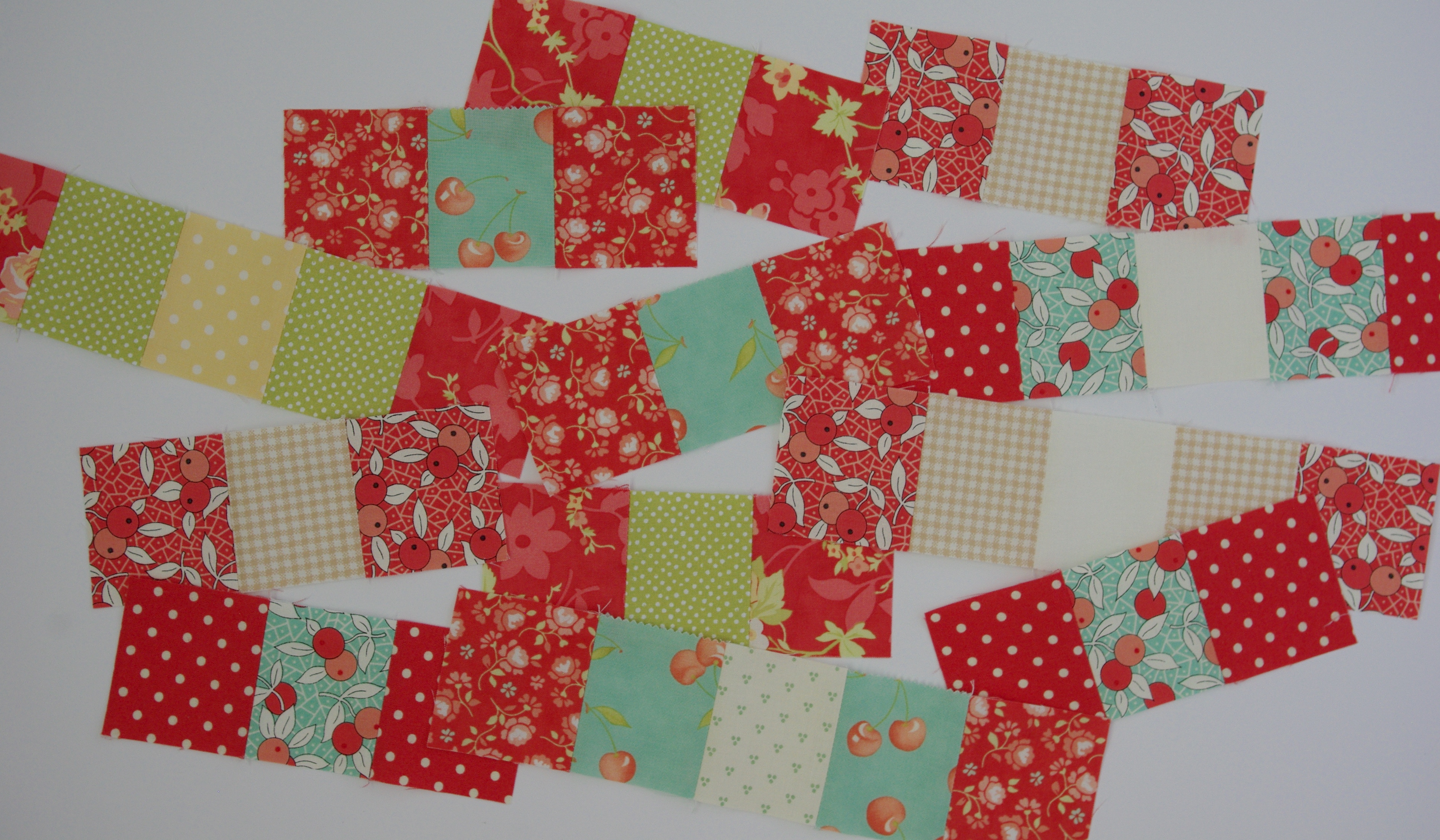
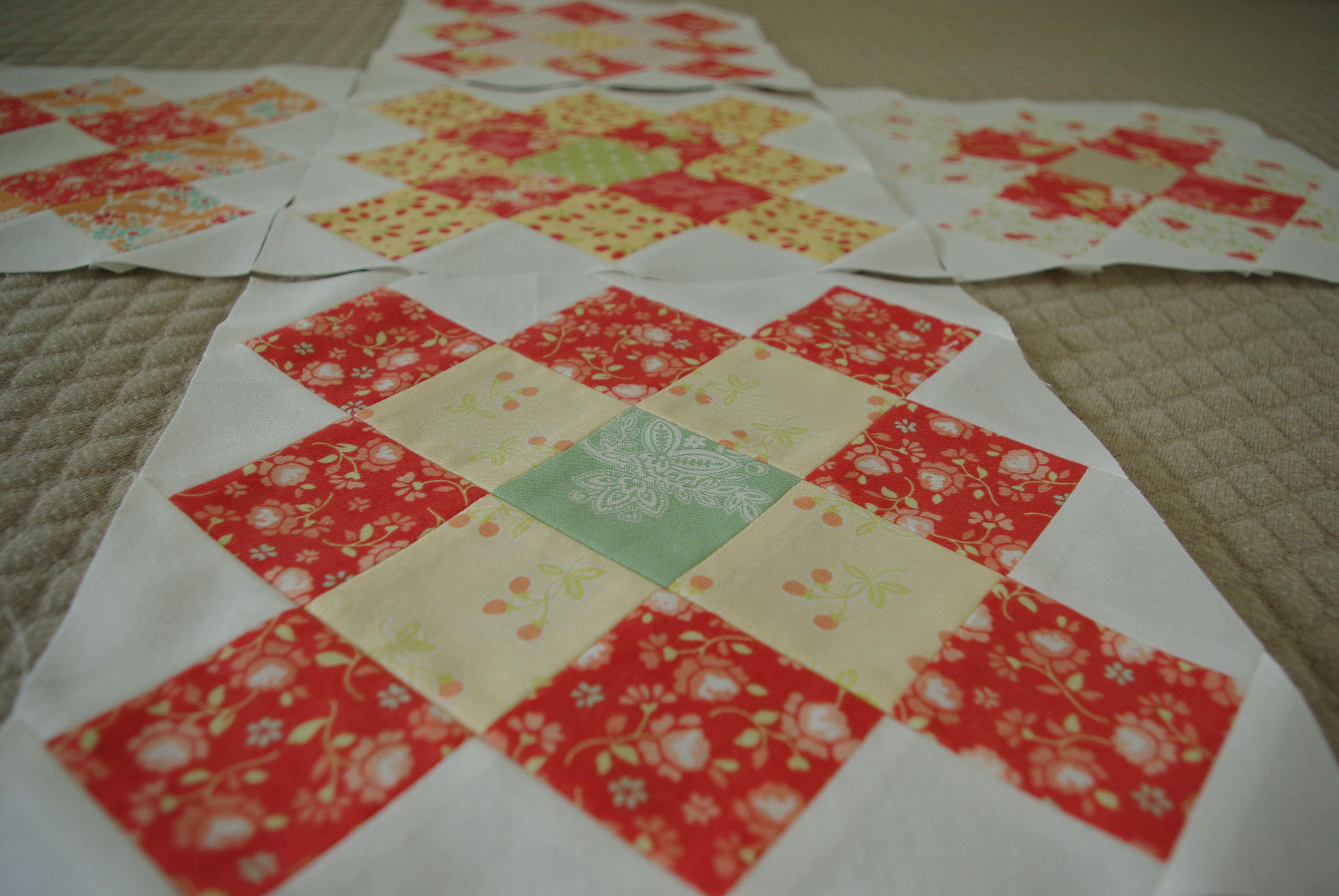
There were so many things about making this quilt that made it fun…for example, I had no plan, it was literally on a whim. I randomly mixed and matched fabric, whatever I felt went together got put together. I was using what I had, and of all cuts – an older charm pack, scraps, fat quarters, yardage…including the background fabric, Kona Cotton Snow. I truly enjoyed the entire process.

IMGP8567.jpg

Once I finished 28 squares, I figured it was time for a plan. I decided on a throw quilt with six blocks per row, seven rows (42 squares total), 2″ sashing and a background border.

IMGP8601

IMGP8636

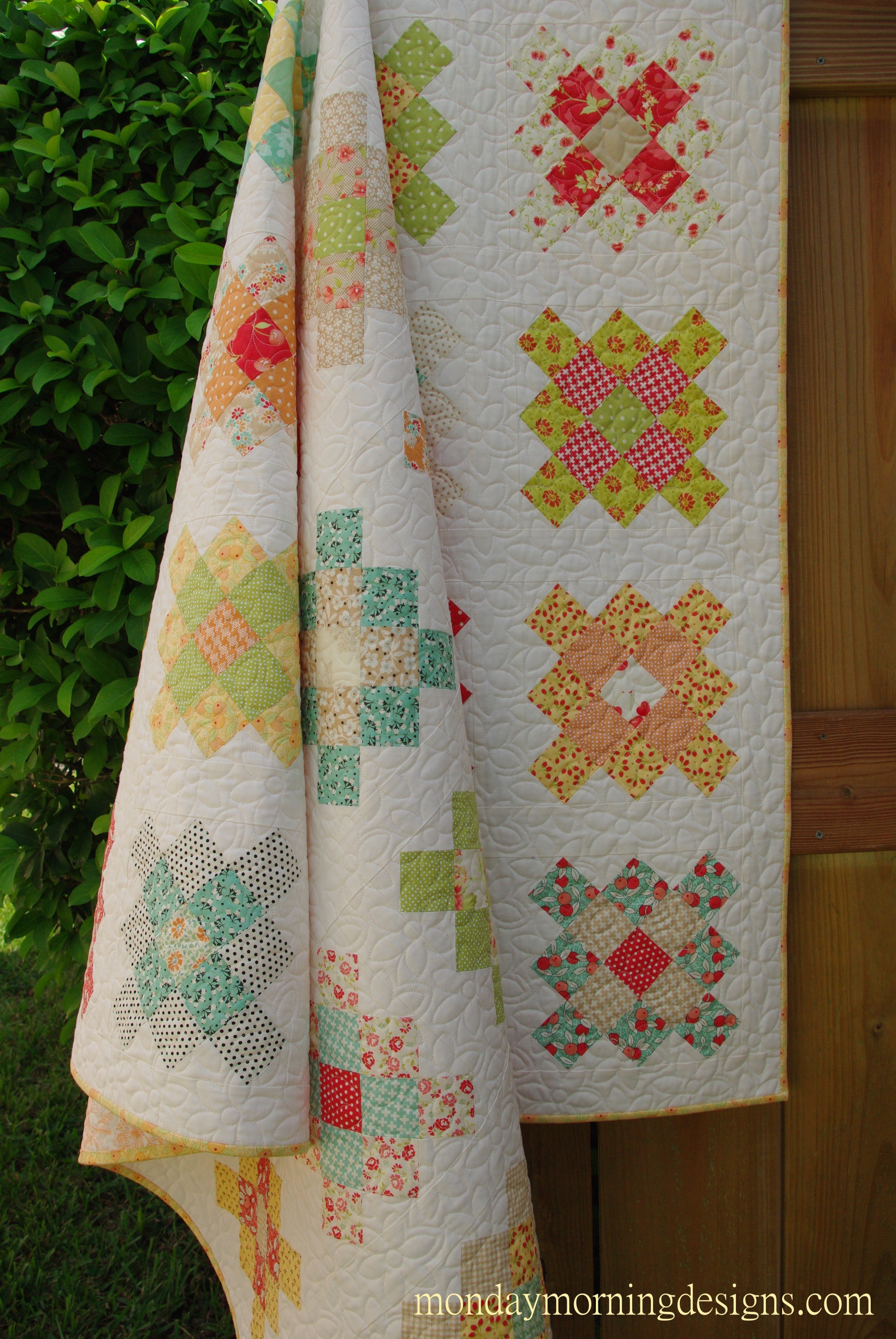
Because it came out so lovely, I had it professionally quilted with the digital pattern Daisy Delight.

IMG_7815.JPG

I did have to purchase binding fabric, luckily I found what I wanted from the Chestnut Street line. I also had to purchase the backing. Since the quilt has a lot of orange in it, I wanted to incorporate it onto the back as well. I decided on Tule Quietude in Sunset by Leah Duncan for Art Gallery Fabrics. I loved how this print blended nicely with the colors on the front.

IMGP8814.JPG

My Granny Square quilt finished at 64 ½” x 74 ½”. And I just love it!

IMGP8794.JPG

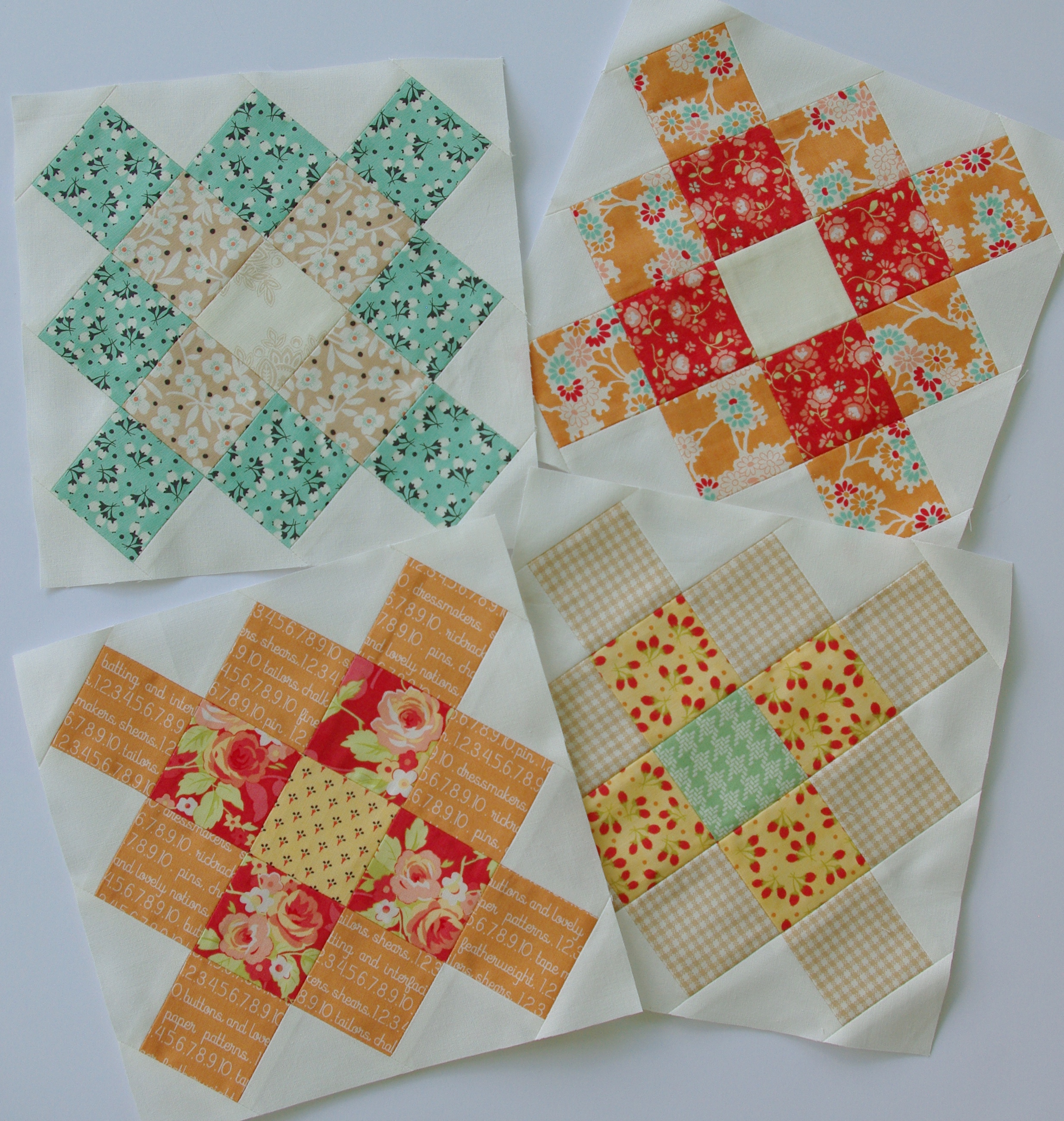
I mentioned that the granny squares popped up on IG from the Moda Bake Shop, so I visited their site for block instructions. Because I wanted to use scraps that I had already cut into 2 ½” squares, I had to do some recalculating for a more petite block. Also, this size block is great because it can be easily made with precuts, including 2 ½” strips, 5″ squares and 10″ squares.

IMGP8409

IMGP8478

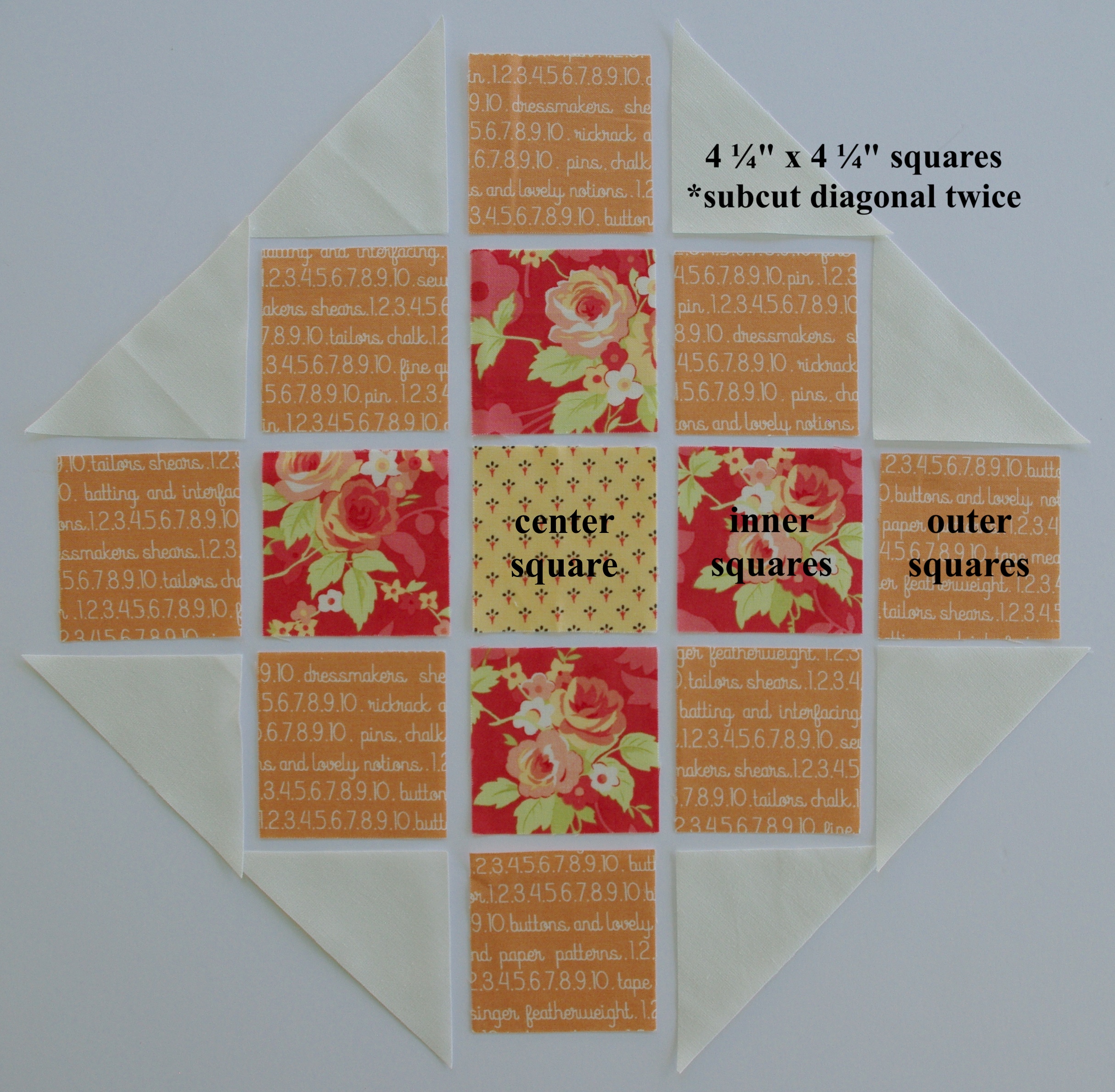
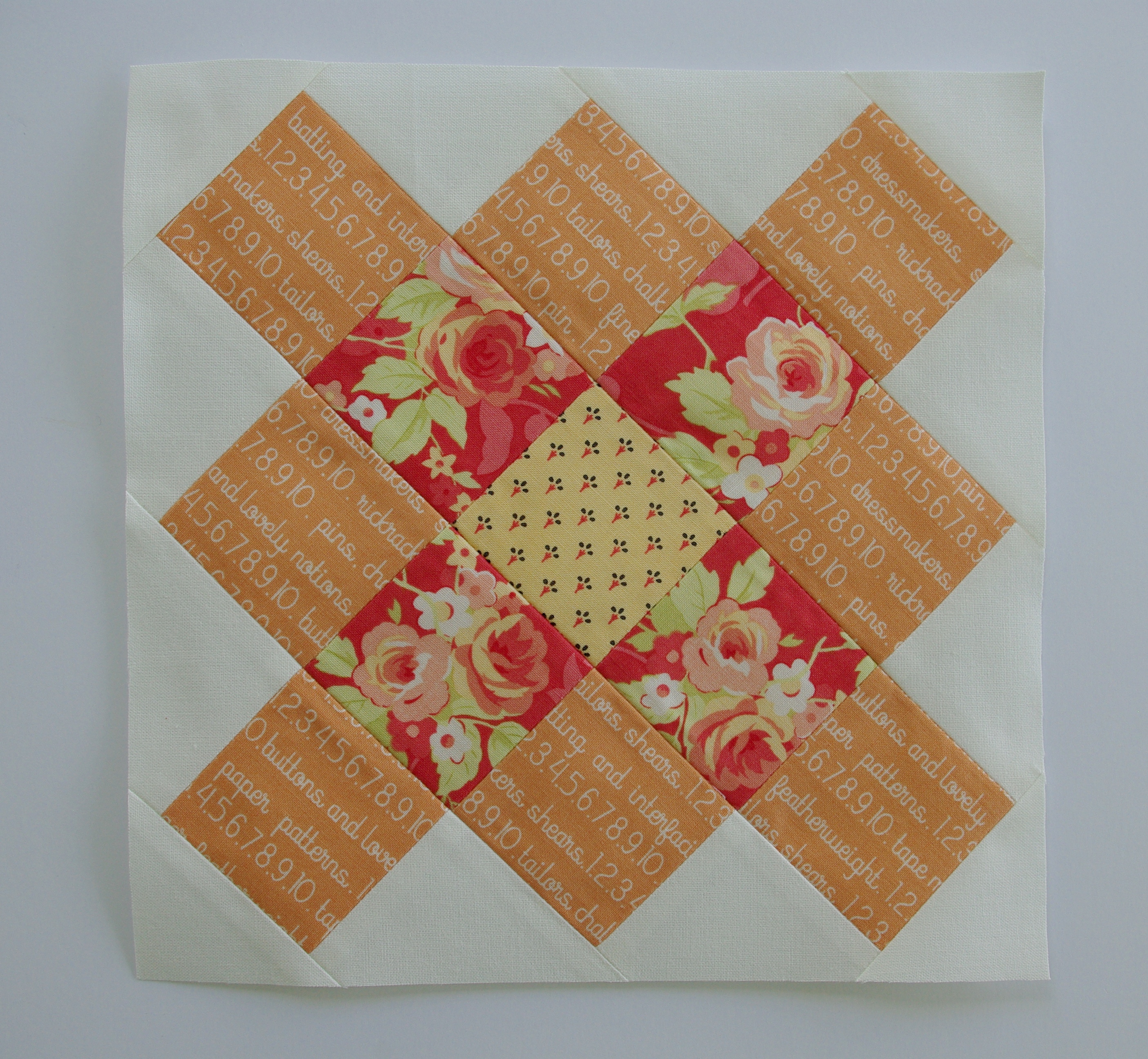
Here’s a quick tutorial on how to make a granny square block with the dimensions I used. My blocks finished at roughly 8 3/8″ square.

FROM COLOR/PRINT FABRIC, CUT:

(1) 2 ½” x 2 ½” square (center square)

(4) 2 ½” x 2 ½” squares (inner squares)

(8) 2 ½” x 2 ½” squares (outer squares)

FROM BACKGROUND FABRIC, CUT:

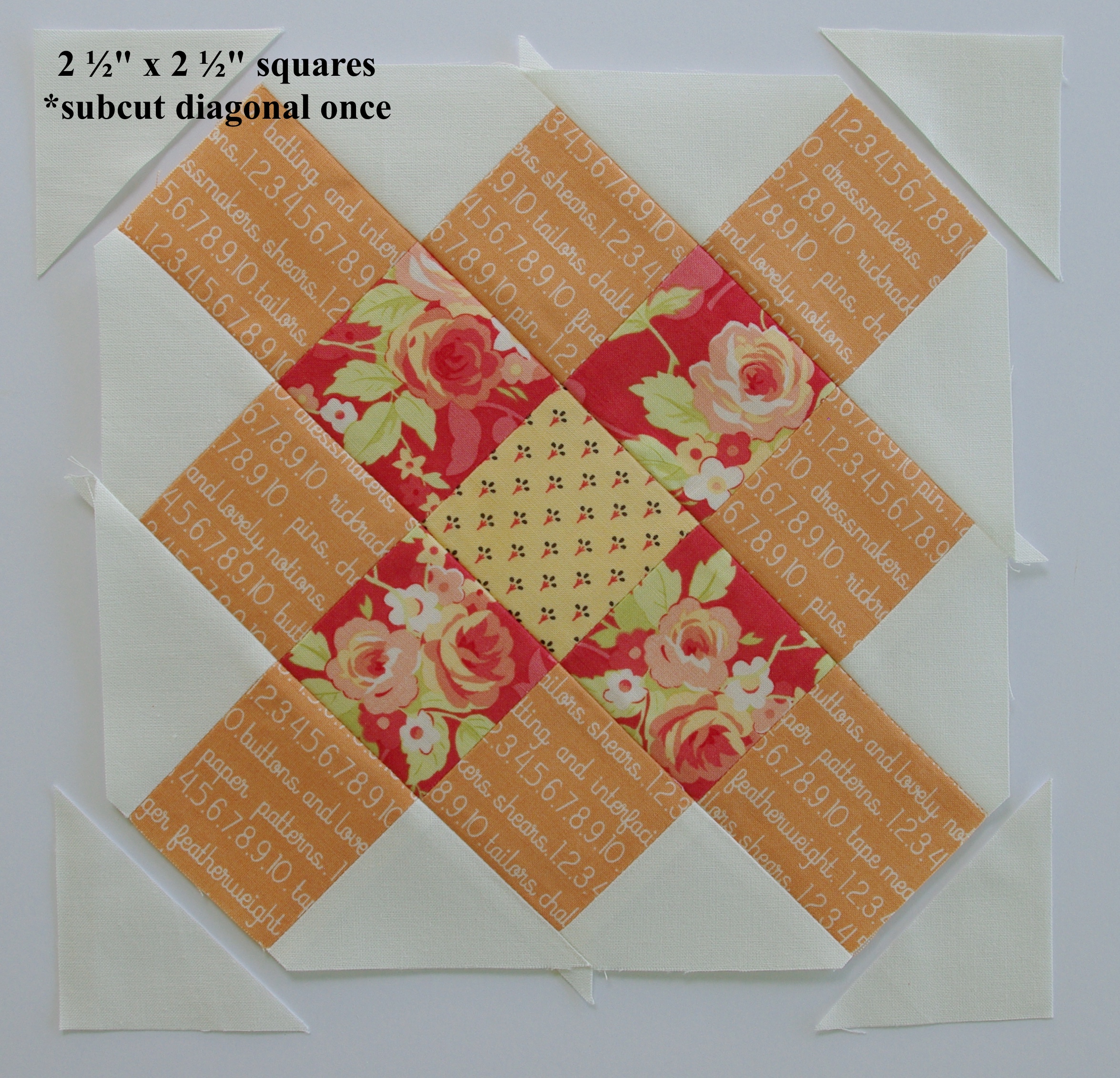
(2) 2 ½” x 2 ½” squares

*subcut diagonal once

(2) 4 ¼” x 4 ¼” squares

*subcut diagonal twice

Lay out fabric as illustrated below:

IMGP8576.jpg

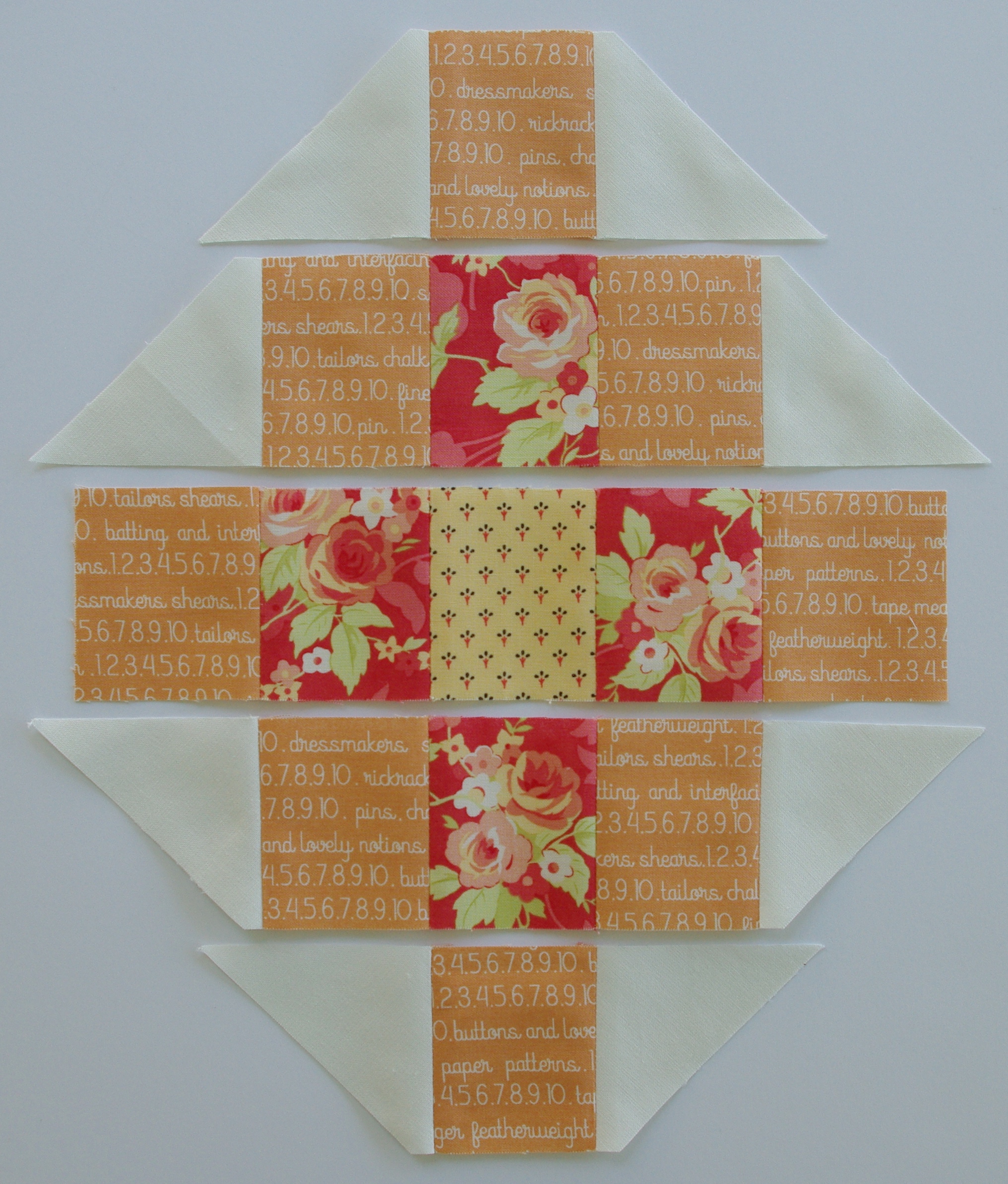
Sew pieces together into rows using ¼” seam allowance. I recommend pinning! Be sure to trim away dog ears. Pressed rows will look like this:

IMGP8577.jpg

Because sewn pieces are relatively small, I pressed all my seams open to reduce bulk. It definitely helps the blocks to lay nice and flat.

Next, turn the block sideways, as shown. Place the remaining triangle pieces in the four corners. Sew and press.

IMGP8585.JPG

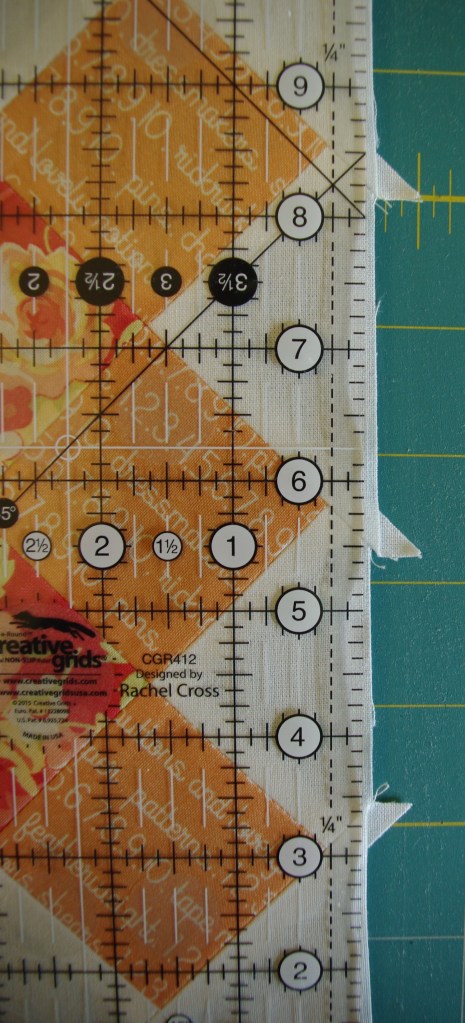
The final step, trimming your block (and the remaining dog ears). Line up your ruler with the ¼” mark placed at the corners of the outer squares, as shown. Trim.

IMGP8590

Give your block one last press and you have a beautiful granny square!

IMGP8592.jpg

I know it’s common for quilters to finish a quilt and say it’s their new favorite, but this one really is for me. It’s different from most of the quilts I’ve made, mainly because of the fabrics, many were soft and feminine floral prints.

IMGP8810.jpg

I think every quilter needs to make a granny square quilt, well, just because…don’t you agree?

mini quilts, quilts, Uncategorized

Patriotic Flag Mini Quilt

The month of May always brings out patriotism here in the US, with Memorial Day kicking off the summer season then Flag Day and the Fourth of July not too far behind. Right now I have two quilts in the making, a Christmas gift and a new pattern of mine, and I could use a break from larger projects so I set out to find something patriotic that I could finish quickly using left over fabrics.

I usually don’t sew with blue (I don’t know why, I just don’t seem to choose it) but since I made my Americana Stars & Four Patches quilt last year, I had enough blue fabric for something small. Same with red, I don’t use it a lot, but I had some on hand from previous projects plus I got a small fat quarter bundle freebie with some lovely reds included.  🙂

IMGP7940.JPG

After quite a bit of searching, I decided on a free flag tutorial from Cluck Cluck Sew. While she made a lovely pillow, I wanted something for my sewing room door so I added a light blue border and made mine a mini quilt.

IMG_7293.jpg

For the star and stripes, I used a white low volume fabric with handwriting that reminded me of old-fashioned handwritten letters and historic signatures; I thought it was fitting for a flag. It’s kind of difficult to see it unless it’s close up…

IMGP7937IMGP7939

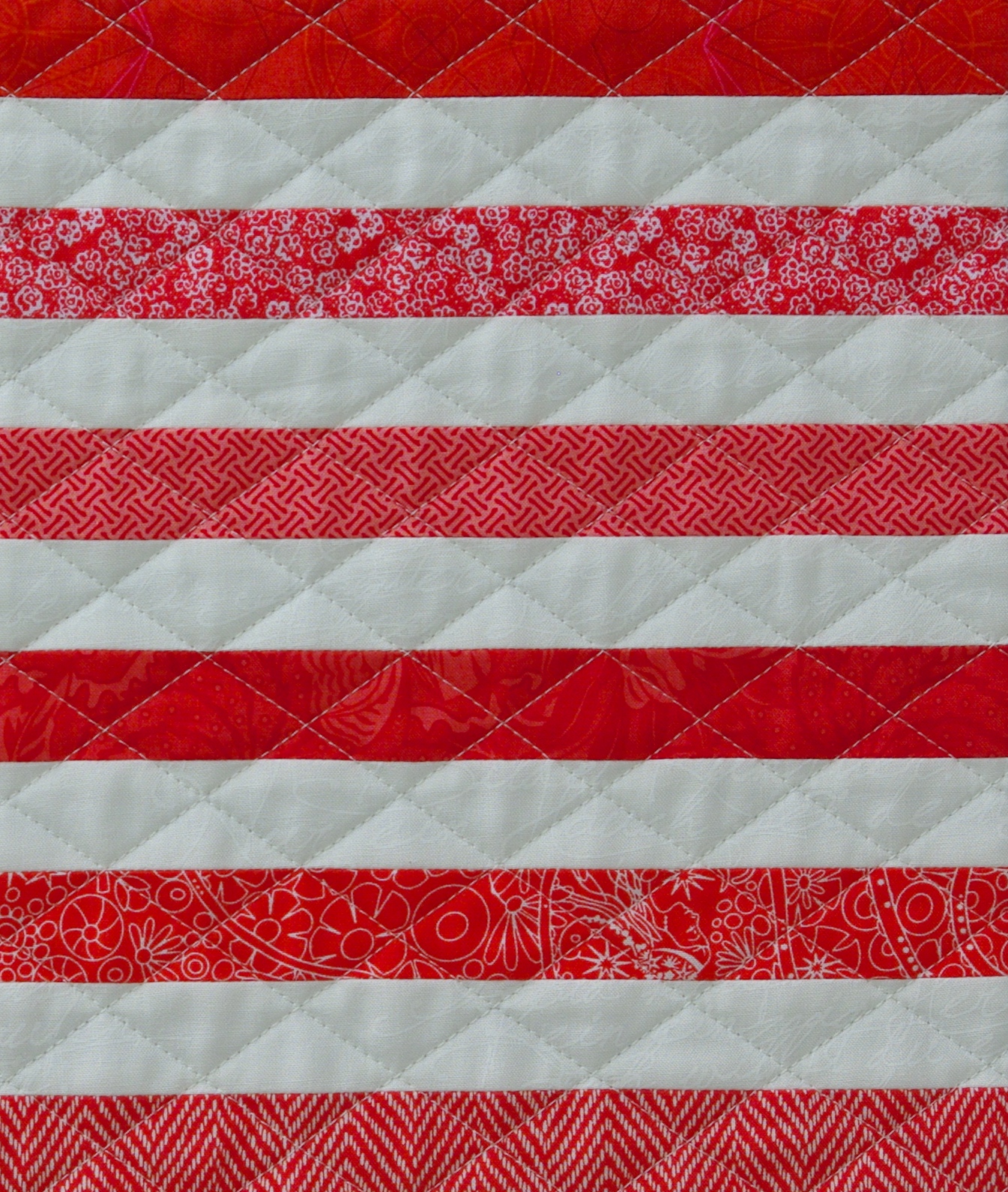
Before I began quilting, I did some ‘thread painting’—my quilting tip that consists of laying out thread on a project to help decide on a quilting pattern. To read more about it, click here. I do tend to gravitate toward crosshatch quilting, especially on rectangular blocks because the end results are diamonds, and I love the look! So yes, I went with crosshatch quilting, yet again.

IMGP7954.jpg
thread painting

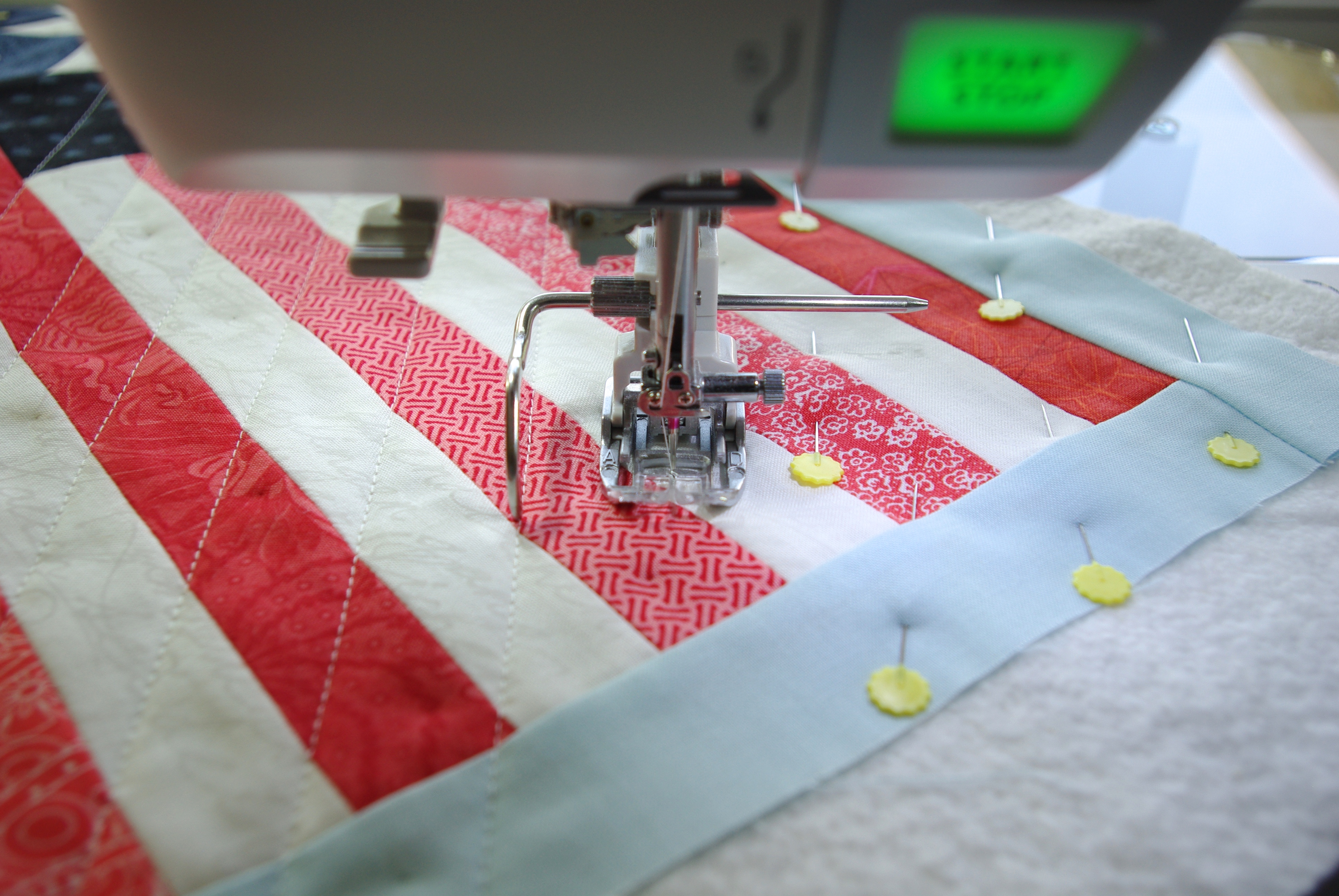
When basting a mini quilt, I always use my flower straight pins instead of actual quilting pins. Reasons being: they’re easier to put in and take out, they’re nice and sharp and long, and they seem flatter than other pins.

IMGP7979

I used my guide for quilting accuracy and it gave me very precise results!

IMGP7988.JPG

I was happy to have had enough red and white striped fabric for this project, left over from a Christmas tree skirt. And of course, striped binding is always a favorite.

IMGP8008.JPG

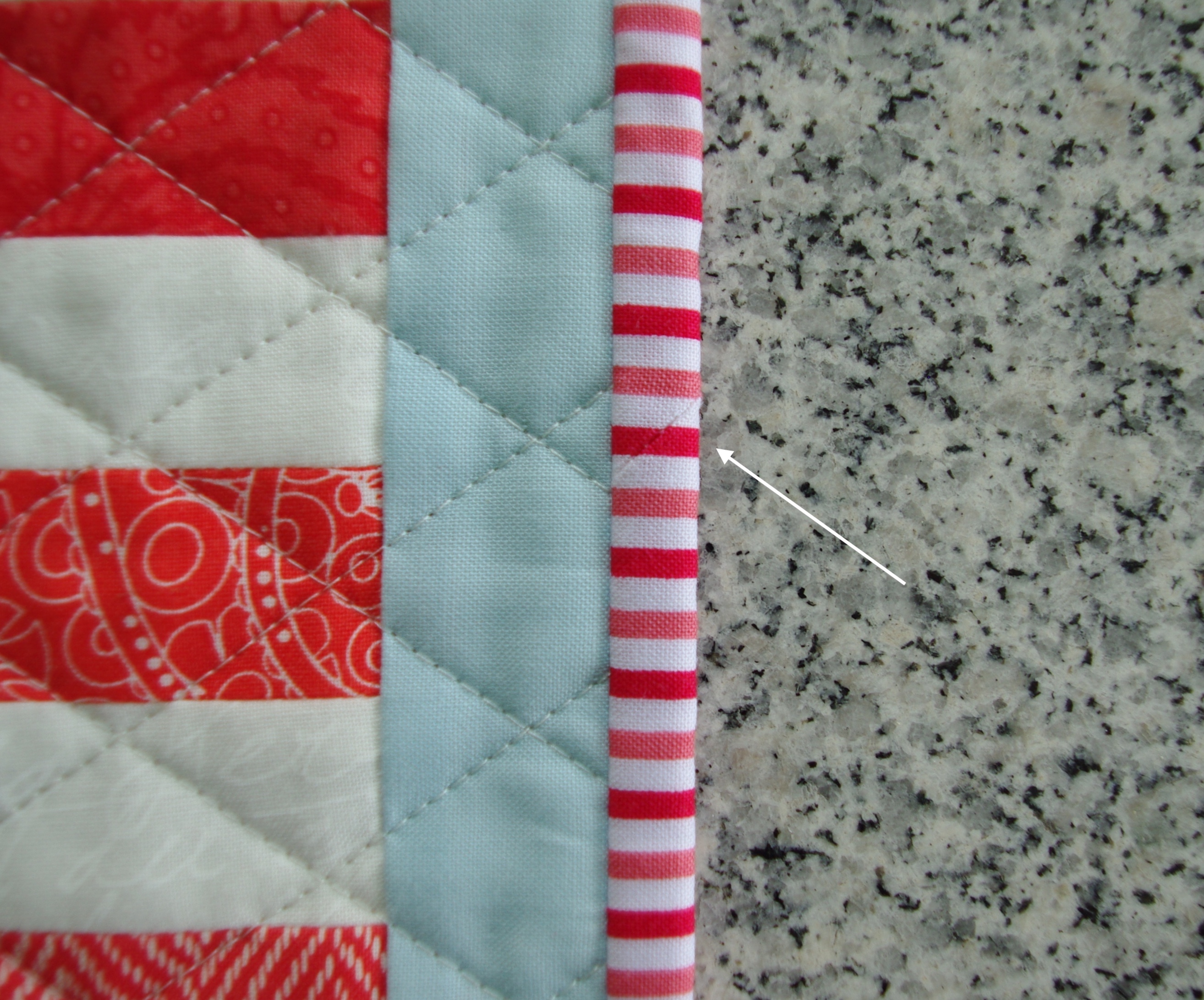
And speaking of binding…how lucky was I to get this tiny stripe to align when I finished off my binding? Absolutely pure luck! Doubt that ever happens again.  🙂

IMGP8022.jpg

For the back, I had this very appropriate fabric from my Stars & Four Patches quilt. As far as backing goes, it’s easy to match up prints, especially on a small project. I have more information on this topic on my Matching Fabric Patterns blog post.

IMGP8019.jpg

And…here’s the finished project!

IMGP7982.JPG

I love everything about this mini—it’s cute, a great size for my sewing room door and I can get it out to enjoy several times a year. Lastly, it was a small but significant scrap buster!

IMGP8000

Happy Memorial Day

quilting, quilts, Uncategorized

Scrappy Nine Patch Quilt

It seems as though a lot of quilters plan out their projects; I see plenty of Instagram posts with lovely planners available for purchase along with planner images of scrawled notes and ideas. While I’m an organized person to a fault, I just couldn’t see myself planning out my quilts. I’m not exactly sure why, I suppose it’s because I just like to wing it from time to time. Enter my Scrappy Nine Patch quilt.

A while back I had been thinking about making something scrappy, mainly because I rarely do and I was tired of looking at fabric left over from so many past projects. One day while working on something else, I completely switched gears and began pulling fabric and putting together scraps in color combinations. Now I know why scrappy projects are so much fun; you don’t need an exact plan (other than a pattern), anything goes and nothing is considered wrong.

I set to work making a variety of nine patches—if a fabric looked good, it went in. It’s funny how I still can remember what projects I used those fabrics for, what collection they’re from, why I bought them, etc. I guess that’s why scrappy quilts are also called ‘memory quilts.’

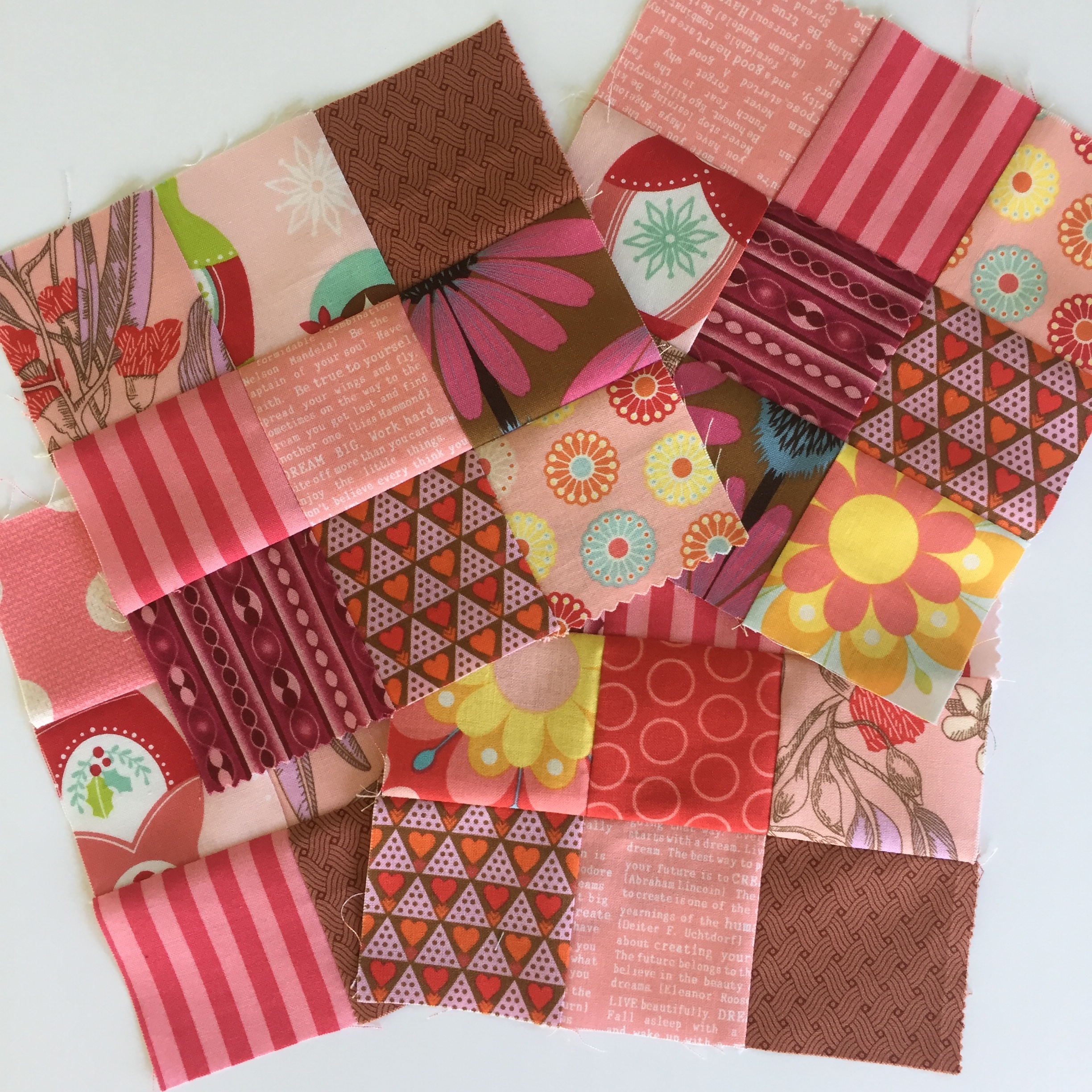
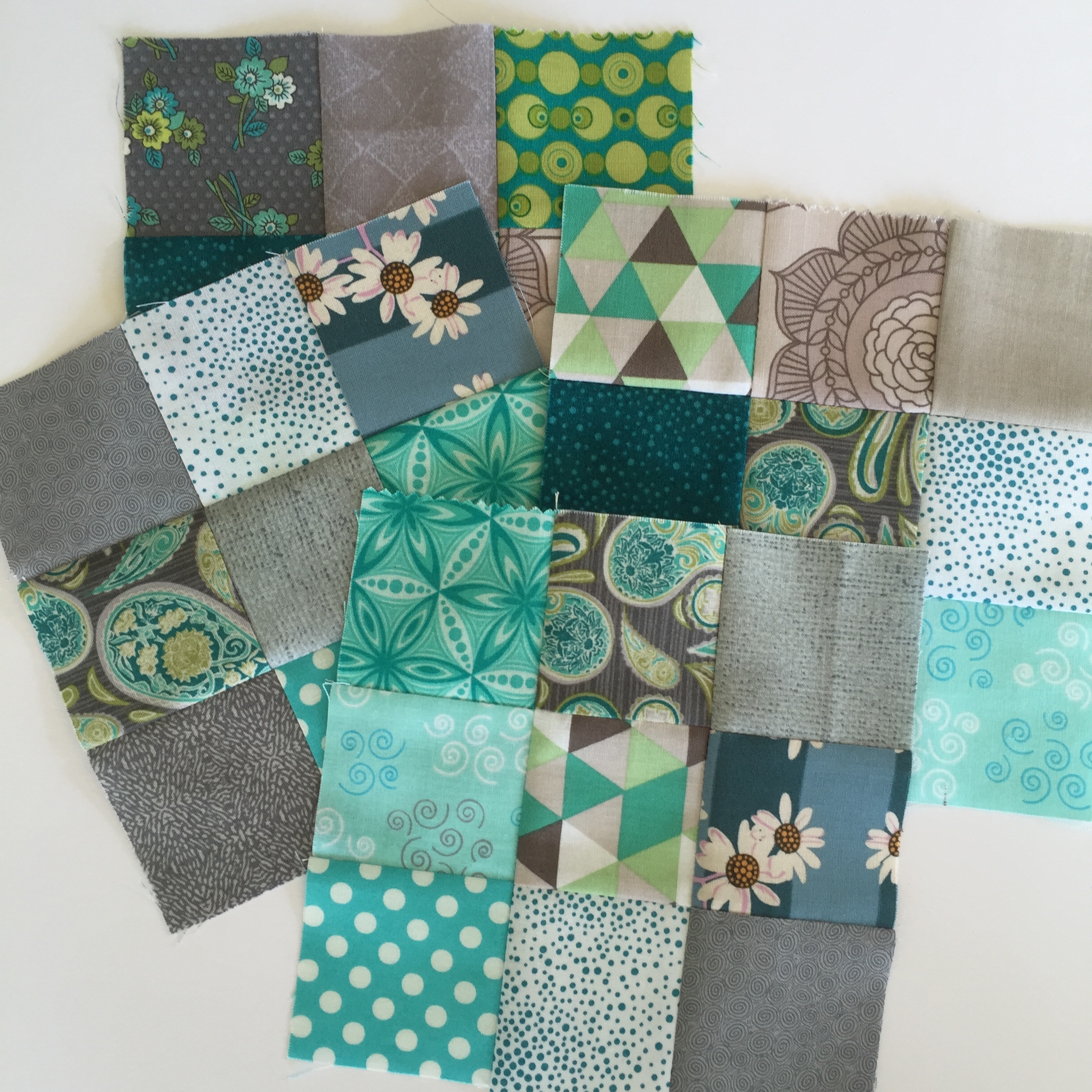
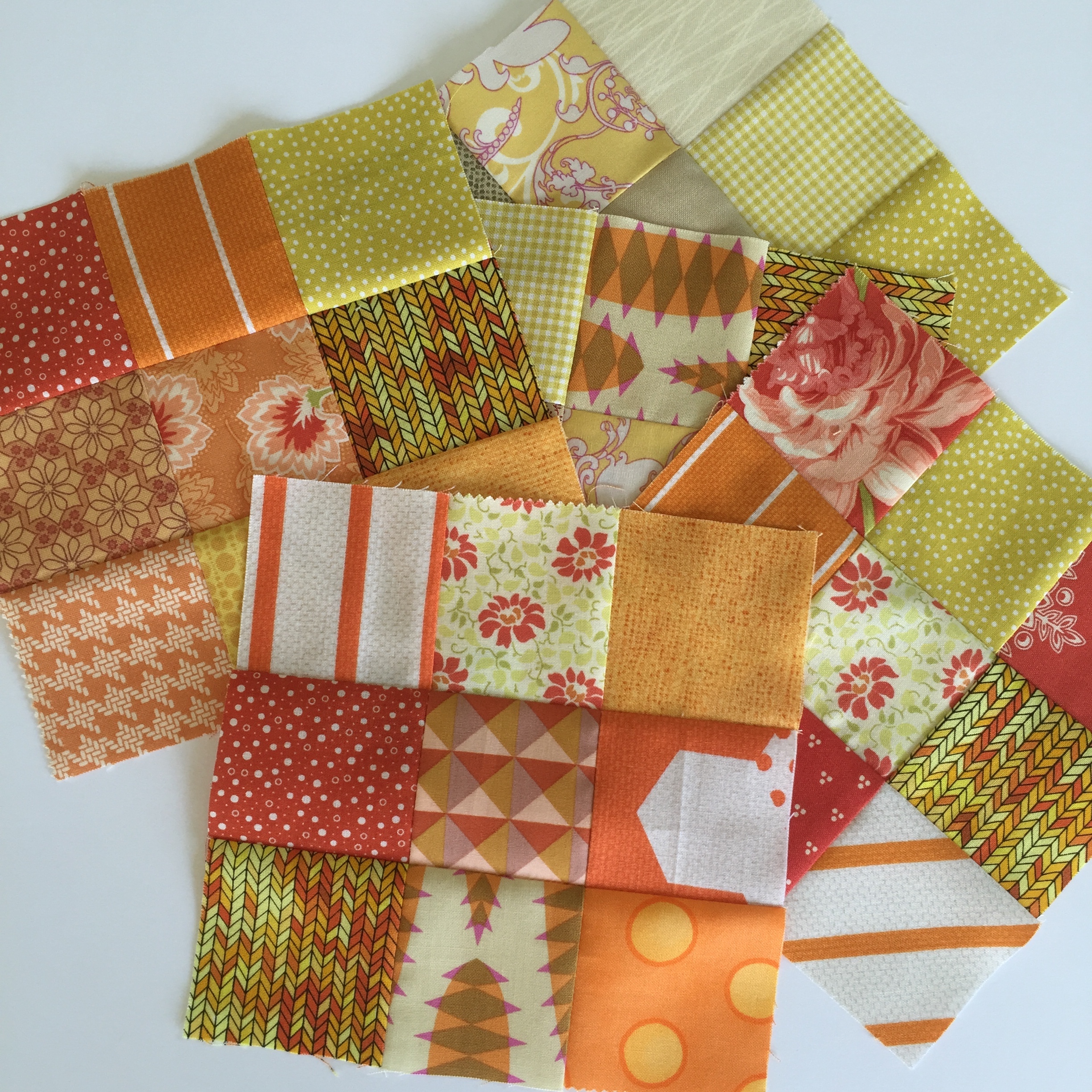
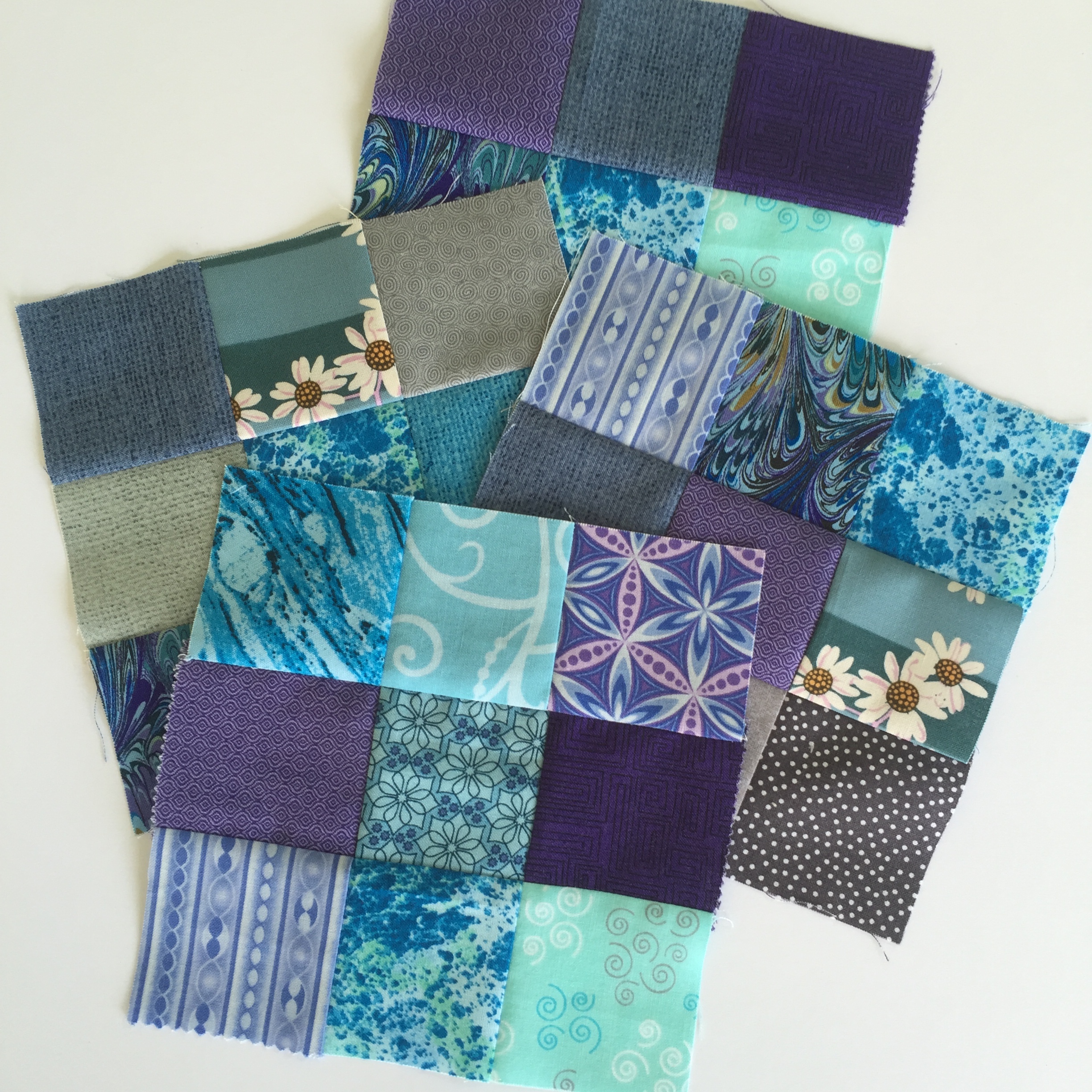
Here are a few of my block groups.

IMG_4047

IMG_4055

IMG_4054

IMG_4052

Had a little fun putting this together…

IMG_4068

Upon completion, I was surprised that I ended up using 144 different fabrics! I wouldn’t have guessed I even had that much variety in my stash at the time. In all, I made 48 blocks, added sashing, and ended up with a throw quilt measuring roughly 49″ W x 57″ L. And it definitely helped with my stash down.

IMGP8176

I’ve since gifted this quilt, but because it was so fun to make I’m thinking about making another one, with an entirely different selection of fabrics, of course. And I won’t be planning it either! 🙂